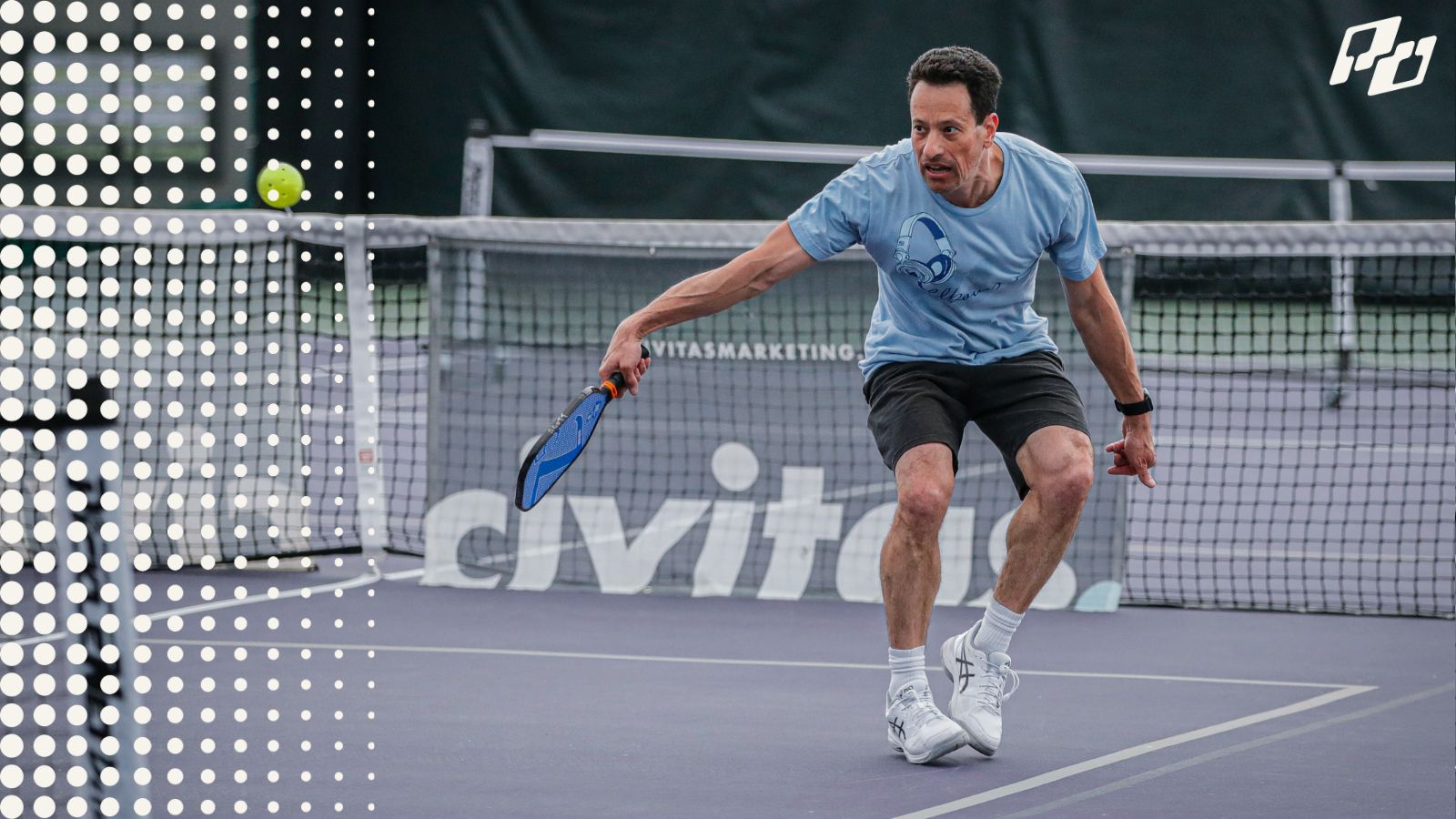
You know that moment — you’re in a smooth kitchen rally, trading clean, soft dinks back and forth. Then your opponent slides one just a little deeper… right toward your toes.
Instant panic.
You freeze for half a second, lunge late, and end up catching the ball too close to your body. The result? A desperate wrist flick that sends the ball either into the net or up into attack range.
Every rec player has been there. Deep dinks are deceptive — they look harmless, but they quietly expose your balance, footwork, and timing.
The good news: you don’t need faster hands or trick shots. You just need to move smarter, contact earlier, and trust the bounce.
Here’s how to turn that awkward, low ball near your feet into a calm, controlled, confidence shot.
Why Deep Dinks Cause Chaos
Let’s start with why this shot feels so uncomfortable.
A deep dink does two sneaky things:
- It takes away space. When the ball lands close to your feet, you no longer have room to swing or extend your arms naturally.
- It tempts you to rush. You see it dropping fast and think, “I’ve got to get there before it dies!” So you reach or stab — and lose balance.
Most players either:
- stay static at the kitchen line and end up jammed, or
- step forward when they should step back and diagonally.
Both errors pull you out of position. The fix? A single, simple movement pattern that creates time instead of stealing it.
The Dynamic Drop-Step: Your Secret Reset
Here’s the golden rule: don’t fight for space — create it.
Instead of lunging or half-volleying that deep dink, do this:
- Read it early. The moment you see that arc dropping near your toes, prepare to move — not react.
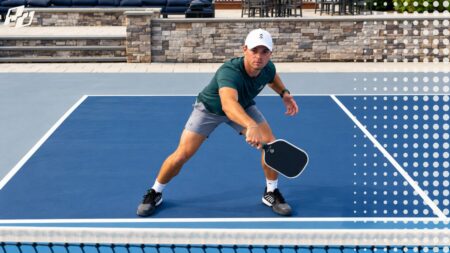
- Take a diagonal drop-step backward and slightly outward (like opening a door with your lead foot).
- This gives you extra space and time for the bounce.
- It also keeps your body balanced and athletic instead of cramped.
- Stay low and relaxed. Your goal isn’t to retreat — it’s to float back just enough to meet the ball out front.
Think of it as a “mini retreat” — not a full backpedal. The diagonal angle allows you to stay connected to the kitchen while giving you breathing room for the shot:
Catch It Early and Out Front
Now comes the magic moment: contact.
If there’s one thing that separates consistent dinkers from shaky ones, it’s where they meet the ball.
Here’s the rule:
Catch the ball early and in front of your body — never beside or behind you.
When the ball gets too close to your feet, you lose leverage. Your brain panics, your wrist overreacts, and you start flicking to compensate. That’s when consistency evaporates.
Instead:
- Keep your paddle slightly ahead of your body line.
- Imagine you’re “receiving” the ball, not “chasing” it.
- Maintain a light grip (3–4 out of 10) so you can soften the impact.
This gives you stability, control, and predictability — all the things that make deep dinks manageable.
The Technique in Motion
Let’s visualize the full sequence:
- Opponent hits a deep dink toward your feet.
- You take a small diagonal drop-step back.
- Paddle out front, elbow slightly bent, wrist neutral.
- Ball bounces — you wait, calm and balanced.
- Soft push from the shoulder (not the wrist).
- Controlled dink arcs crosscourt or middle, safely landing in the opponent’s kitchen.
- You step forward and reestablish your position at the NVZ line.
It’s fluid, efficient, and surprisingly calm. You’re no longer reacting in panic — you’re orchestrating rhythm.
The Hidden Benefit: More Time = Better Vision
Here’s the deeper truth: the diagonal drop-step isn’t just about positioning — it’s about visual clarity.
By stepping back and giving the bounce space, you extend your reaction window by fractions of a second. That’s enough time for your eyes to lock onto the ball’s trajectory and make micro-adjustments.
Players who stay rigid at the kitchen line often hit blind — they never fully see the bounce because they’re already reaching.
So think of it this way:
“The drop-step doesn’t just buy you space — it buys you vision.”
And vision = cleaner contact, smarter resets, and fewer pop-ups.
The Deep Dink Drill
Here’s a practical, on-court drill that cements the habit:
The Deep Dink Ladder
- Stand at the NVZ line with a partner.
- Your partner alternates between short and deep dinks.
- On every deep one, you must execute the diagonal drop-step before contact.
- Focus on staying relaxed, contacting in front, and re-stepping forward after.
- After 10 reps, switch roles.
This rhythm forces your body to build timing, not just reaction. It’s one of the best balance-training drills for rec players.
Pro-Level Add-Ons
Once you’ve mastered the fundamentals, try layering in these details:
- Adjust paddle angle slightly open for deep balls so you lift softly rather than drive.
- Aim crosscourt more often — it gives you extra net clearance and time.
- Add a bit of underspin if you’re confident — it helps keep the ball low after it crosses the net.
- Recover fast. The deep dink is a test of rhythm, not aggression. Don’t stay back longer than necessary.
Real Talk: The Mindset Shift
Deep dinks are psychological. They make you feel rushed even when you’re not. The best players stay patient.
Remind yourself mid-rally:
“I have time. I just need to move early and make space.”
The more you practice that calm awareness, the less those “uh-oh” moments bother you.
Eventually, you’ll see deep dinks not as traps — but as opportunities to reset and rebuild control.