TLDR: Pickleball desperately needs to grow young to grow up, which means player development pathways are needed globally. From formal high school programs, private academies and competitive youth leagues, these industry leaders are hard at work bolstering the industry's future.
Here is a sentence that should not be possible: pickleball is sixty years old, and it is only now trying to figure out how to grow up.
The sport was invented in the summer of 1965 on Bainbridge Island, Washington, a backyard improvisation by Joel Pritchard, Bill Bell, and Barney McCallum, designed, in their own words, as a game the whole family could play together. It was born casual, accessible, and multigenerational. And for most of its existence, that’s exactly what it stayed.
For six decades, pickleball grew slowly and quietly, spreading through retirement communities, senior recreation centers, and the kind of parks where you’re more likely to see lawn bowling than lacrosse.
When the Arizona Senior Olympics introduced pickleball in 2001, it drew 100 players and was celebrated as the largest event in the sport’s history to that point. In 2003, there were just 39 known places to play in all of North America.
By 2008, the first mass media exposure the sport had ever received was a brief segment on ABC’s Good Morning America. The United States Amateur Pickleball Association wasn’t even formed until 1984, nineteen years after the sport’s invention.
None of this is a knock on those decades. Pickleball built a loyal, passionate base. It gave millions of older adults a sport their bodies could handle and their whole family could share. But it built that base without building the infrastructure that turns a recreational activity into a lasting institution: no professional tours, no youth academies, no junior circuits, no coaching credentials, no pathway from beginner to elite.
Then, in the span of five years, everything changed.
The APP Tour and PPA, pickleball’s first professional tours, were both founded in 2019, fifty-four years after the sport’s invention. By then, there were an estimated 3.3 million players in the United States, with an average age of 41. COVID-19 arrived the following year and became an unlikely accelerant: outdoor courts, low equipment costs, and a game accessible to all ages drove participation through the roof. USA Pickleball membership grew 43% in a single year in 2021.
By 2022, the Sports & Fitness Industry Association named pickleball the fastest-growing sport in America for the second consecutive year. Celebrity investors arrived. TV deals followed. Major League Pickleball, which launched in 2021, began to accelerate the team-based side of the pro game. By 2023, an estimated 8.9 million Americans were playing, nearly double the year before. The fastest-growing sport designation came for a third straight year.
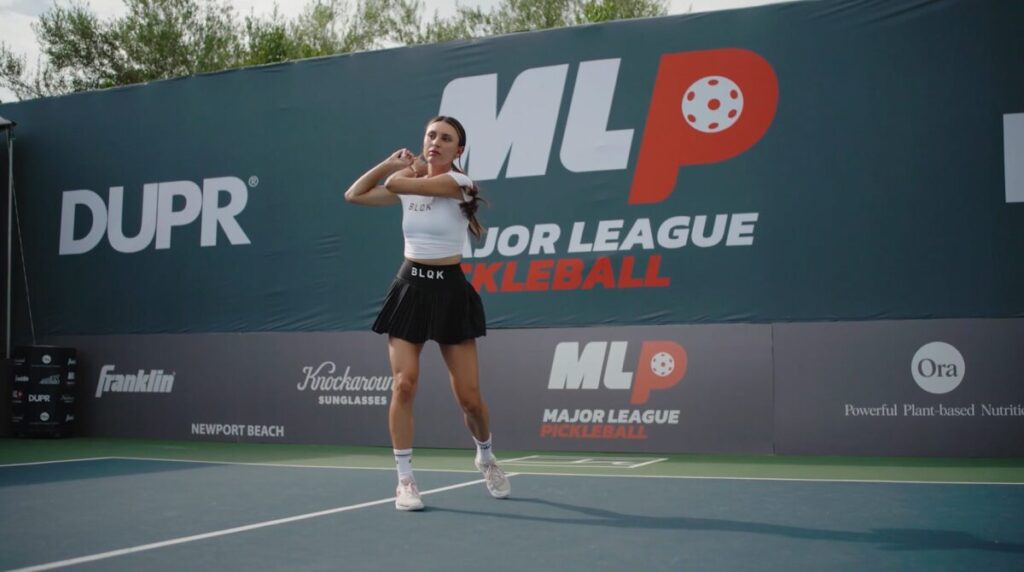
In roughly half a decade, pickleball went from a beloved senior recreational sport to a $50 billion valuation conversation. Tours, media rights, sponsorships, arenas: the commercial infrastructure materialized almost overnight.
The youth development infrastructure did not.
That is the pickleball paradox. And it’s one that has no real precedent.
The sport didn’t grow from the bottom up, the way conventional wisdom says sports should. But it also didn’t grow the way most people assume it did, with a sudden explosion out of nowhere. It grew old first, went viral second, and is now trying to grow young. Trying, urgently, to build the foundation after the house is already standing.
Whether it can, and quickly enough, may be the most important question in pickleball right now.
What the other sports actually did
To understand what pickleball is building, and what’s still missing, it helps to look honestly at how other major sports developed. The story is more complicated than the standard “they built youth first” narrative, and in at least one case, more instructive than most people realize.
Soccer’s grassroots structure genuinely did precede the professional game. The Football Association codified the rules in England in 1863. The FA Cup launched in 1871. Professional football wasn’t officially permitted until 1885, and the first professional league didn’t launch until 1888, meaning club structures, school leagues, and organized amateur competition were the foundation for at least two decades before professionals were even allowed. FIFA followed in 1904. The first World Cup wasn’t until 1930. The sport built upward from communities and institutions, and the professional game emerged from that base.
Basketball’s story is even cleaner. Dr. James Naismith invented the game in 1891 at a YMCA in Springfield, Massachusetts, explicitly as a recreational and educational activity. It spread through YMCAs, schools, and colleges for more than fifty years. The BAA, which became the NBA, wasn’t founded until 1946. College basketball was a major institution for decades before the professional game achieved cultural dominance. Youth and amateur structures weren’t an afterthought; they were the entire sport for most of its first half-century.
Tennis, however, is the sport that pickleball should actually study most carefully, because tennis didn’t get it right from the start either. Wimbledon launched in 1877, making elite competition one of the sport’s earliest institutions. The International Tennis Federation wasn’t founded until 1913. A formalized global junior pathway took most of the twentieth century to develop. The Open Era, allowing professionals to compete alongside amateurs, didn’t begin until 1968. Tennis ran elite competition for nearly a century before it built systematized junior development infrastructure globally. The sport eventually got there, but the pathway wasn’t built early. It was retrofitted, and the sport is stronger for having finally built it.
The honest version of this history isn’t “other sports got it right and pickleball didn’t.” It’s that every major sport eventually built a real developmental pathway. The ones that didn’t are cautionary tales. West Shaw, CEO of RacketPro.org, names the most obvious one: “There’s absolutely a version where pickleball participation stays high but the sport doesn’t really mature, and you can draw a direct line to racquetball.”
Racquetball never built a real professional pathway. Development pathways never followed. The sport, despite once rivaling tennis in American popularity, flamed out, declining by 75% from its peak. “Making sure there’s a viable career path within pickleball and pickleball facilities is critical,” Shaw says. “It’s how you create the environments and systems where people actually want to keep learning and growing, not just show up for open play and plateau.”
What pickleball needs to do isn’t historically unusual. What’s unusual is the timeline pressure it’s doing it under, and the demographic inversion it’s doing it from.
What a real player pathway actually requires
The infrastructure that makes a sport sustainable isn’t complicated in concept, but it takes deliberate effort to build in practice.
Start with instruction. You need credentialed coaches who can teach beginners, especially young beginners, in structured and age-appropriate ways — not just enthusiastic rec players who picked up the game last year.
From there, you need organized junior competition: ranked circuits where kids can measure themselves against peers, progress through levels, and actually have somewhere to go after they beat everyone at open play.
Above that, development environments, the academies and training centers where the most serious young players get professional-caliber coaching and competitive exposure. Then a bridge to the professional level — feeder tours and challenger circuits where emerging players can test themselves without getting crushed on day one of their first main draw.
And at the top, a professional game stable enough that a talented teenager can look at it and see a real career, not just a hobby with a prize purse.
When those layers exist and connect, the sport becomes legible. A ten-year-old with talent and ambition can look up and see the whole ladder. Parents can invest in development knowing a pathway exists. Coaches can build careers around player development rather than just recreational instruction. Sponsors can commit to a sport with a generational story to tell.
For most of its sixty-year history, pickleball had none of this. Now, in the span of a few years, it is trying to build all of it simultaneously, while the professional game at the top is already running.
The grassroots layer: where it all has to start
The most important rung is the most unglamorous one. Before any kid can dream of a college scholarship, let alone a professional career, they need somewhere to learn the game properly, from someone who actually knows what they’re doing.
That second part matters more than it might seem. Pickleball’s explosion produced an explosion of self-described coaches alongside it.
Rob Campbell, a varsity pickleball coach in Montgomery County, Maryland and a clinician with RacketPro.org, describes the problem directly: “A lot of people started getting taught the game of pickleball, but not necessarily taught the right way.”
He draws an uncomfortable parallel to online degree mills: “There are some certifications out there that will just take your money, you’re not getting any value from that.”
The coaching quality problem has a structural layer too. West Shaw identifies something that rarely gets said out loud: pickleball’s coaching base is aging along with its recreational base.
Pickleball exploded recreationally with adults first, so the coaching base reflects that, a huge number of coaches are over 65. They’ve been playing longer and it’s a sport their bodies can handle. But for kids and younger people, we’re competing against a ton of other sports and career paths. They could be tennis coaches, basketball coaches, there’s a limited amount of time and attention younger people have, and the question is real: why should I choose pickleball over all of that?” The answer, Shaw argues, must be a credible professional pathway, not just growth hype.
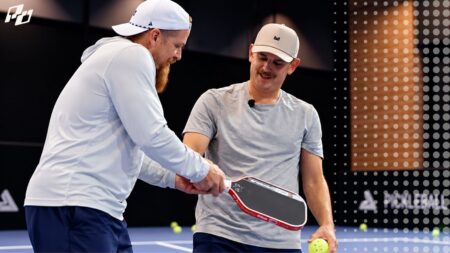
This is the credentialing gap that platforms like RacketPro.org exist to close. Built around a professional coaching network and membership model, with curriculum developed in part by pro player Collin Johns, RacketPro is working to establish what every mature sport eventually develops: a floor of qualified, vetted instruction that players at every level can trust.
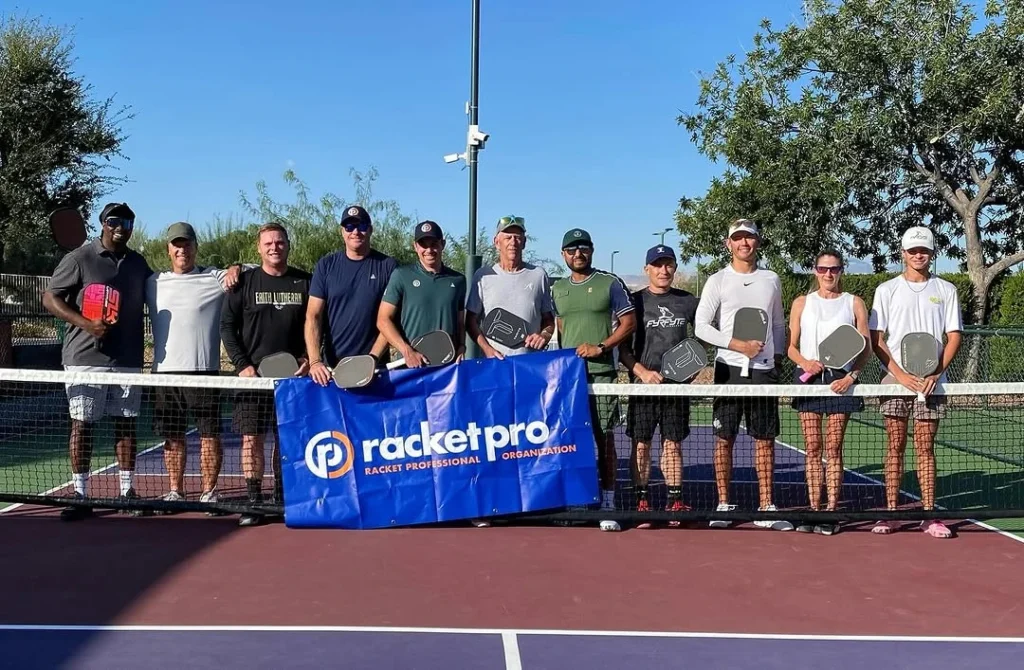
What coaches describe, beyond the curriculum, is something harder to manufacture: community. “The shared knowledge of coaches is something that other certifications can’t do for me,” says Mike Stromberg, a high school pickleball coach at Mount St. Joseph in Baltimore and an RPO clinician. “You have some coaches of other sports that don’t know this sport well. They need a community of support, or they will have less likelihood of success.”
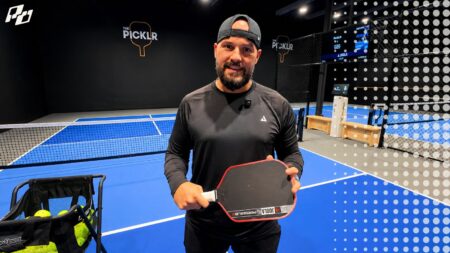
The Picklr Junior Academy is the most scalable answer to the youth instruction challenge currently operating in the U.S. Built within The Picklr’s growing national franchise network, it brings structured youth programming to communities without waiting for a standalone facility to emerge.
As The Picklr expands into new markets, junior programming comes with it, infrastructure that scales commercially rather than relying on individual passion projects.
The high school frontier: where it gets real
Somewhere between recreational instruction and serious competitive development sits a layer that most sports take entirely for granted: the high school program.
In soccer, high school competition is a given. Every school has a team, state championships exist, college scouts attend games. In tennis, the high school season is a formal rung on the developmental ladder. In pickleball, until very recently, there was essentially nothing.
Mike Stromberg decided three years ago that he wasn’t going to wait. A tennis coach and Mount St. Joseph alum in Baltimore, he put together a detailed program proposal and got a wall of no’s. No facilities. No budget. No transportation. Wrong time of year. “I’m persistent,” he says simply. “I want to push past that.” He solved the money and transportation problems himself. Year one: 23 players. Year two: 52. This past season: 54, plus 23 girls from sister school Mount de Sales Academy in their inaugural year.
The milestone that captures where the sport actually stands came three years ago, when Stromberg’s team faced off against another local school in what appears to have been the first documented competitive head-to-head high school pickleball match in the country, 10 versus 10, five sets of doubles. Fox & Friends covered it the next day.
A local TV station followed.
“It felt like something really special happened that day.”
Mike Stromberg
It was the first real evidence, at the high school level, that a developmental ladder could actually exist.
Progress since has been quiet but consistent. The Maryland Intramural Athletic Association just formed its first pickleball committee, what Stromberg describes as “that first acknowledging stage that this will be an official sport.” Institutions tend to follow energy, and the energy around high school pickleball in Maryland is now real enough that a governing body is paying attention.
Rob Campbell, who runs a varsity pickleball program in Montgomery County’s public school system, captures the breadth of who this sport reaches:
“I coach kids, I coach disabled veterans, I coach high school kids, adults, any age, any demographic, I’ll coach them. Mobility issues, no issues.”
Rob Campbell
That range isn’t a curiosity. It’s what makes pickleball categorically different from almost every sport that preceded it, and it’s part of why building real infrastructure matters far beyond competitive development alone.
In Chicago, David Selvaggi of Chicago Pickleball Academy is watching the entry points shift in real time. He identifies three distinct groups currently coming through his doors.
First, kids whose parents are already in pickleball, still the biggest entry point, often from tennis or club backgrounds.
Second, crossover athletes: “high-level soccer, tennis, and even basketball players who are starting to take pickleball seriously once they realize there’s a real competitive pathway, these players tend to accelerate quickly because they already have a strong foundation and understanding of movement, spacing, and competition.”
Third, kids finding pickleball entirely on their own, through social media, local exposure, and watching older juniors compete. “It’s still a smaller group, but it’s growing.”
The timeline from first pickup to competitive play is compressing.
“We’re seeing juniors come in with no racket background and within six months they’re actively competing and having success. That didn’t really exist even a couple years ago. The gap between entry and competitive play is shrinking, which tells you the ecosystem is starting to build.”
David Selvaggi
The competitive ladder: learning to win under pressure
Instruction gets a player ready. Competition makes them grow.
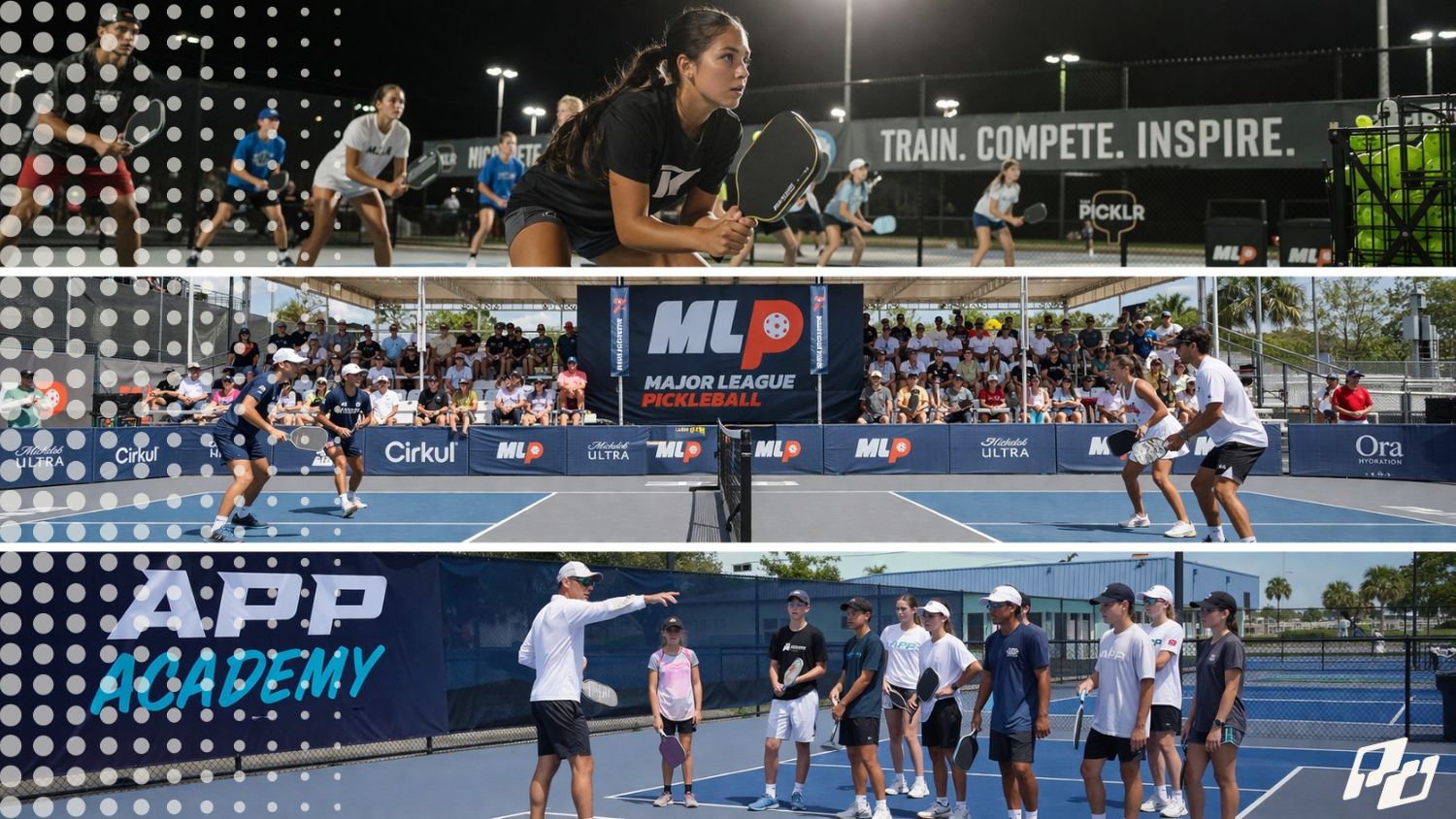
Junior MLP, the youth extension of Major League Pickleball, uses the same MLPlay team competition structure and DreamBreaker tiebreaker as the professional game — not a simplified youth version, the actual format. Young players aren’t just competing; they’re learning the specific rhythms and team dynamics of pro play. The 2026 season runs five events from June through August across Austin, New York, Newport Beach, Dallas, and San Diego.
Every participant gets grounds passes to watch the professional MLP events at the same venues, a piece of pathway-building that lets young players see exactly what they’re working toward.
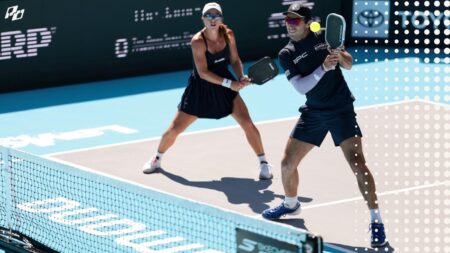
The PPA Challenger Series, operating across more than a dozen national events in 2026, explicitly describes itself as “an avenue for players across America to break into professional pickleball and earn their way onto the Carvana PPA Tour.” That’s a formal minor league: a structured environment designed to prepare emerging players for the next level, spanning Newport Beach to Rochester, Boise to Peachtree City.
The APP Tour has built parallel infrastructure through two programs. APP Next targets players aged 16-23, with three-day developmental tournaments, a $15,000 prize fund, and on-court coaching from senior professionals. Match results count toward official APP Tour pro ranking points, a direct on-ramp to professional competition. The program’s alumni already include JW Johnson and Dylan Frazier, two of the sport’s biggest current names.
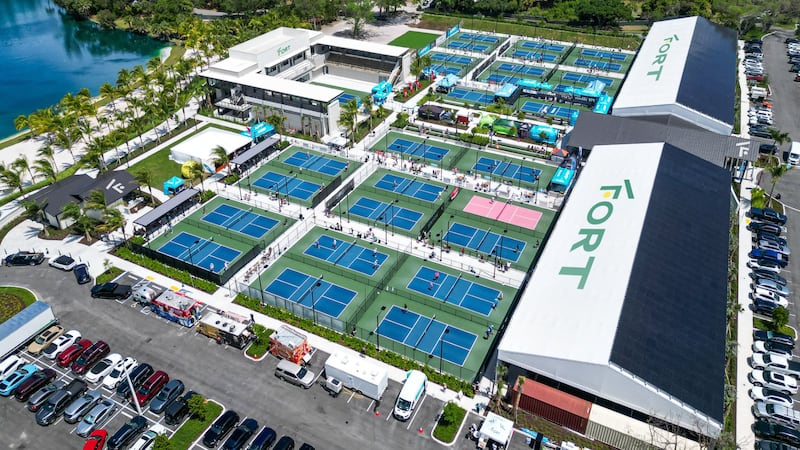
The APP Academy goes deeper still. Operating out of The Fort in South Florida, a 43-court facility with championship seating for 1,200, it offers a full boarding program modeled on the residential academies that have produced elite players in tennis and golf for generations. The stated goal: 100% of participants earn academic or athletic scholarships and continue playing at the collegiate level. The Fall 2025 boarding cohort sold out.
Competitive college pickleball itself only began in 2022, when DUPR held the first Collegiate National Championship. The National Collegiate Pickleball Association followed in 2023. The sport went from zero collegiate infrastructure to a functioning national championship in three years.
The global signal: a team from Cebu
While the U.S. has been pickleball’s center of gravity since 1965, one of the most striking developments in the current infrastructure buildout is that the rest of the world isn’t waiting for American leadership.
The Pickleball Champions League Asia, PCL Asia, has built the largest structured pickleball competition ecosystem outside the United States. In its second season, PCL Asia encompassed 256 clubs across 10 countries, with 1,536 players competing at the league level. That’s organized competition with standings, results, and stakes, not a participation number.
The Rising Stars program, culminating in a Finals this week at the Asia Elite Pickleball Academy (AEPA) on Hainan Island, China, is PCL Asia’s answer to the youth pathway question. To understand what it actually represents, follow the funnel. PCL Asia ran eight qualifying events across the region. With 32 players per sectional, 256 young players competed for a place at the Finals. The finalist field of 22 teams from 11 nations includes qualifier winners, second-place teams that showed exceptional promise, and invitational spots extended to countries that didn’t yet have the player base to run a full qualifying event.
What the qualifier process revealed, in some cases, was talent that nobody knew was there. In the Philippines, before the sectionals ran, neither the organizers nor the Philippine Pickleball Federation had a clear picture of how many competitive youth players actually existed in the country. The qualifiers changed that. Players emerged that even the federation didn’t have on its radar.
One team from those qualifiers has stayed with the organizers. They came from Cebu, from the provinces. When they showed up to compete, their coach had bought them shoes, they didn’t have any. They won their spot. Then came the next problem: none of them had passports. They had never needed one before. When the local government heard about it, they moved quickly and got the passports sorted so the kids could make the flight. They are now on their way to Hainan.
PCL Asia founder Steve Kuhn noted simply:
“For many or most of our players, this will be their first time traveling outside their country. We hope to make this a truly great experience for them.”
India tells a similar story at a different scale. A partner-run local event attracted more than 200 kids from the provinces, the same pool Rising Stars players came from. Most have never had access to coaching or an academy. The interest and drive are there. The infrastructure is only now arriving to meet them.
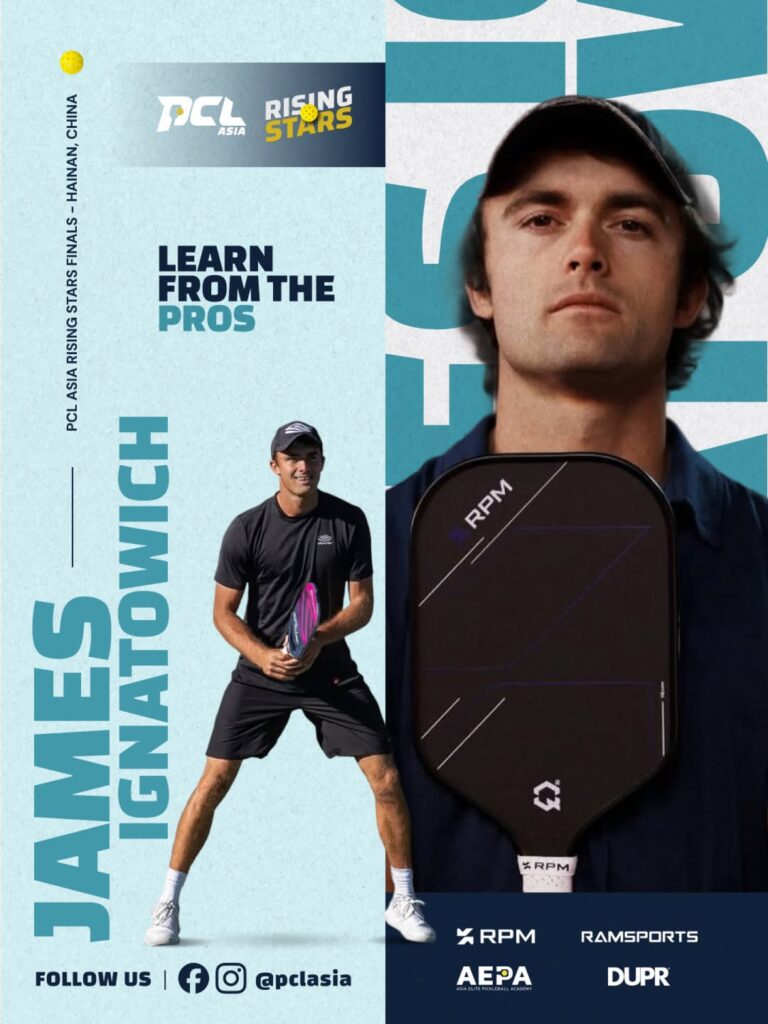
At the Finals, every team’s travel and accommodation is fully covered by PCL Asia regardless of origin, so a family’s financial situation can’t prevent a talented player from competing. Every finalist receives two full days of structured coaching from working professionals: Roos Van Reek, James Ignatowich, Nicola Schoeman, Seymour Rifkind, and Dionne Lim. For most of these teenagers, it will be the first time they have been coached by someone who plays the game for a living.
Ten players walk away with $100,000 in development scholarships, not trophies, not prize money, but months of full-time professional training at AEPA. A teenager from Cebu who saved up for shoes, won a qualifier, got her first passport, and is now about to be coached by a professional player on an island in China is not an anecdote. She is what a working pathway looks like in its earliest, most human form.
What success actually looks like
David Selvaggi frames the ten-year vision in terms any youth soccer or tennis parent will recognize immediately.
“In 10 years, success looks like an academy-based system, similar to MLS Next in youth soccer. You’ll have high-level academies across the country that train, compete, and develop players under a consistent structure. Kids won’t just be playing random tournaments, they’ll be part of a system with standards, progression, and accountability, where college varsity recruitment becomes a natural next step.”
What the fully-built version requires isn’t complicated to describe: a defined junior pipeline where players, parents, and coaches all understand the progression from beginner to elite. College pickleball that’s legitimate, meaning real programs with funding and recruiting, not just club teams. A professional game stable enough that a junior can actually see a future in it. And standardized development systems instead of everyone reinventing the wheel in their own market.
“The biggest signal the sport has ‘grown up,'” Selvaggi says, “is when a talented 10-year-old can enter pickleball and there’s no question about the path. It’s clear, structured, and respected like other established sports in this country. That’s where we’re heading, and you can already see the early stages now.”
Why this matters to you, the recreational player
A reasonable question: why should a recreational player care about any of this?
It’s fair. You picked up pickleball because it’s fun, social, and accessible in a way that tennis sometimes isn’t. You’re not trying to go pro.
But as West Shaw notes, the alternative to building real infrastructure isn’t that recreational pickleball stays exactly as it is forever, it’s racquetball. A sport that was everywhere, then wasn’t. Building a serious developmental pathway doesn’t threaten recreational pickleball; it elevates the entire ecosystem the recreational game exists within.
When a sport builds serious developmental infrastructure, the quality of coaching at every level improves. The instruction you get through credentialed coaches gets better because the standards are higher and the coaches are learning from each other, which is exactly what RacketPro.org is building.
Facilities built to serve elite junior development are the same facilities communities use for open play. The commercial investment that follows a sport with a credible developmental structure funds court construction, equipment innovation, and the cultural legitimacy that makes your game easier to play and more enjoyable.
Pickleball spent six decades growing old gracefully. The sport that millions of adults fell in love with was built by older players who gave it their time, their courts, and their passion for a generation before anyone was paying attention. That foundation was real. But it wasn’t enough on its own to make the sport last.
The kids training at The Picklr Junior Academy, competing in Junior MLP events, grinding through APP Next tournaments, developing at AEPA, or suiting up for the first organized high school programs in Maryland, they’re the ones who will determine what pickleball becomes in its next sixty years. Not whether it stays fun for the people who already love it. Whether it earns the right to be taken seriously by everyone else.
Pickleball started as a game for families. Grew old. And is now, urgently, trying to get young again.
A team from Cebu just got their passports. They’re on their way to Hainan. The path is being built.