If you’ve got small hands, pickleball isn’t harder, but it is different. The paddle is your only connection to the ball, and if your grip is too big, too long, or too unstable, your hand will work harder, fatigue faster, and be more prone to injury.
The good news? With the right adjustments, you can gain more control, quicker hands, and better shot stability—all while protecting your wrists and fingers.
Let’s break down who typically has small hands, how to measure and confirm it, the most common small-hand challenges, and exactly how to solve them.
Who Typically Has Small Hands in Pickleball?
Small hands aren’t limited to one demographic, but they’re common among:
- Women — especially in the 5’0”–5’5” height range, where hand span is proportionally shorter.
- Younger players — teens and juniors often start with smaller hand sizes and may need different setups than adult paddles.
- Older adults — natural changes in muscle and soft tissue can slightly reduce grip circumference tolerance over time.
- Players with smaller builds — even tall players can have slim hands, making grip circumference a key factor.
How to Measure if You Have Small Hands
There are two main ways to check:
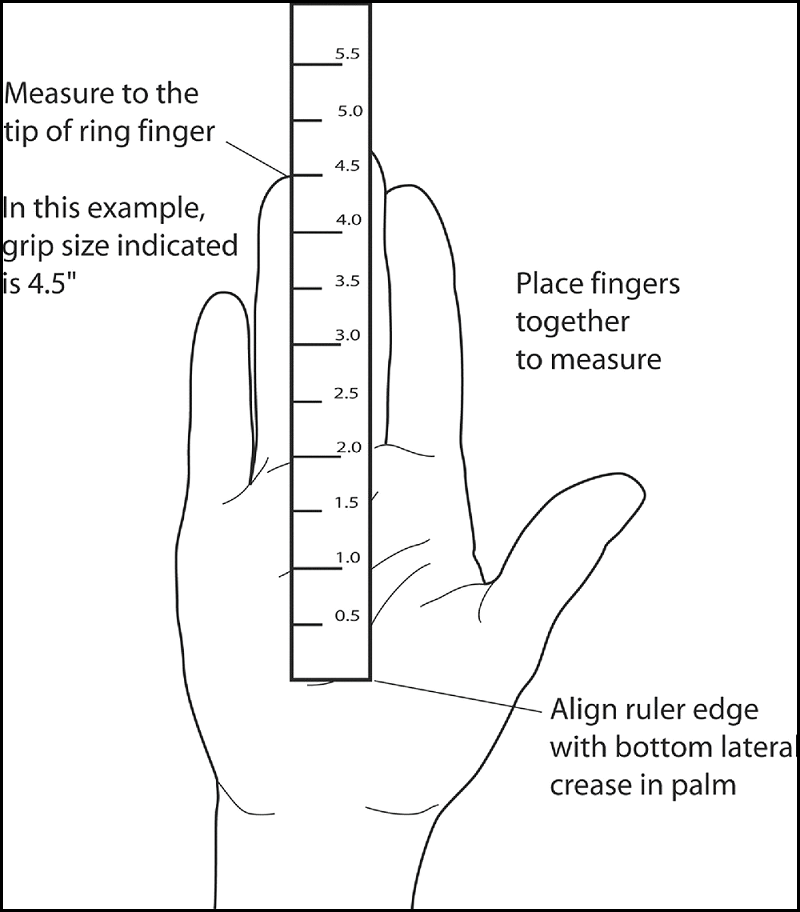
- Ruler Measurement (palm to fingertip)
- Measure from the middle crease in your palm to the tip of your ring finger.
- Under 7.0 inches generally indicates a preference for smaller grip sizes (4.0″–4.125″ circumference).
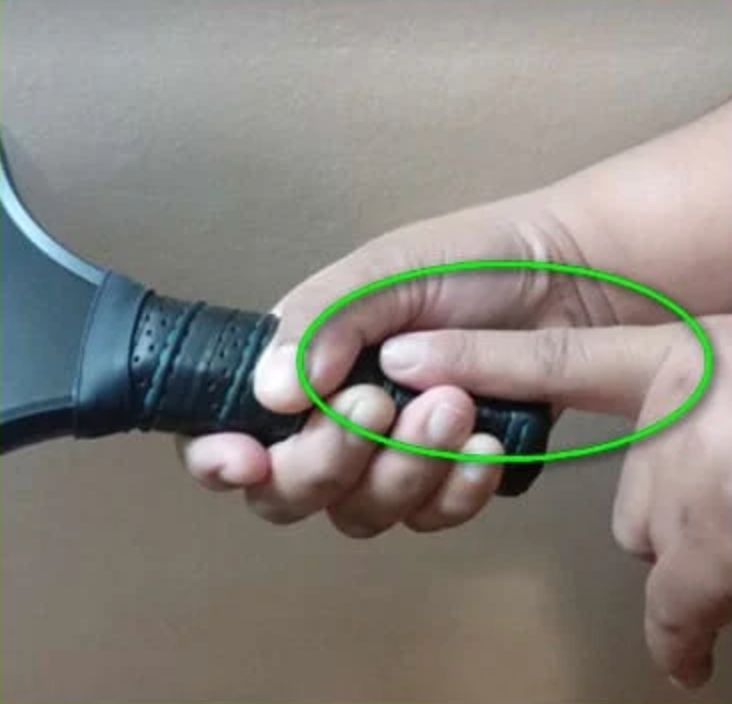
- Index Finger Test (from tennis fitting standards)
- Hold the paddle naturally.
- Slide the index finger of your other hand between your fingertips and the base of your palm.
- If it won’t fit, the grip is too big. If there’s a big gap, it’s too small.
Most Common Small-Hand Challenges & Fixes
1) Oversized Grip Circumference
Risk: Over-gripping & forearm fatigue
Handles over 4.25″ circumference force smaller hands to squeeze harder, slowing reaction time and increasing strain.
The Fix:
- Choose 4.0″–4.125″ grip circumference.
- Use thin overgrips to micro-adjust (0.5–1.0 mm per layer).
Game Impact: Relaxed grip → more touch, less fatigue.
These are our favorite overgrips:

|

|

|
|
|
|
2) Handle Length Mismatch
Risk: Limited backhand options or slower reaction time.
The Fix:
- For quick hands: 5.0–5.25″ handle.
- For two-handed backhands: ≥5.25″ handle for top-hand support.
Game Impact: Better control of pace without changing stroke mechanics.
3) Low Paddle Stability (Twistweight)
Twistweight is how much a paddle resists twisting on off-center hits. Higher = more stable and forgiving; lower = quicker but needs more grip strength.
| Twistweight Rating | Stability Level | What It Means on Court | Typical Range |
|---|---|---|---|
| Low (< 5.5) | Poor stability | Paddle twists easily on off-center hits; requires more grip squeeze to control | Entry-level/light paddles |
| Medium (5.5–6.5) | Balanced stability | Decent forgiveness; still need some grip strength on edge hits | Most mid-priced paddles |
| High (6.5+) | Strong stability | Resists twisting even on mishits; easier to block and redirect without extra squeeze | Premium/stable builds |
The Fix:
- If your hands are small or you have trouble holding the paddle steady on mishits, aim for medium-high twistweight (≈6.0+) or add lead tape at 3 & 9 o’clock to increase it.
Game Impact: More consistent blocks, less hand strain.
4) Finger & Thumb Positioning Errors
Why it’s a small-hand issue: Players with smaller hands sometimes stick the index finger up the paddle face or flare the thumb for extra reach and control. While it can help with touch shots, it leaves those digits exposed in speed-ups and makes them more vulnerable to jams or ligament sprains.
The Fix:
- In fast exchanges, keep all fingers wrapped around the handle.
- Wrap the thumb—don’t flare it—to avoid ligament strain.
Game Impact: More stability in hand battles and fewer painful jams, without sacrificing control once you adjust.
5) Over-Reliance on Wrist Flicks
Why it’s a small-hand issue: Smaller hands have less natural leverage on the paddle, so players often generate speed with quick wrist snaps instead of using the bigger muscles. This overloads the small stabilizing structures on the pinky side of the wrist (TFCC/ECU) and can lead to lingering pain.
The Fix:
- Use forearm rotation and shoulder drive to share the load.
- On stretched backhands, add your non-dominant hand for extra stability.
Game Impact: More power, better disguise, and less strain—especially over long matches.
How to Choose a Paddle for Small Hands
A paddle that’s even slightly mismatched to your hand size can force you to grip harder, slow down your reaction time, and fatigue your forearm before the match is over. F
or smaller hands, the goal is a paddle that fits your grip without extra squeeze, stays stable on off-center hits, and matches your playing style—whether that’s quick-handed firefights or two-handed backhand drives.
Here’s what to look for and why each spec matters:
| Spec | Best Range | Why It Helps Small Hands |
|---|---|---|
| Grip Size | 4.0″–4.125″ | Fits smaller palms; less grip squeeze needed |
| Handle (Quick Play) | 5.0–5.25″ | Faster reactions at the kitchen |
| Handle (Backhands) | ≥5.25″ | Space for two-handed stability |
| Weight | 7.6–8.2 oz | Stable but still maneuverable |
| Twistweight | Medium–High | Stays steady on mishits |
| Grip Material | Thin, tacky wrap | Secure hold without extra bulk |
| Head Shape | Wide body | Bigger sweet spot for forgiveness |
Pro Tip: If you love your current paddle but it’s slightly too big around, you can have a paddle tech remove the stock grip and replace it with a thinner one.
Conversely, if it’s slightly too small, add one or two thin overgrips to fine-tune the fit without making it clumsy in your hand.
Quick Small-Hand Adjustment Checklist
✔ Size the grip right – Start small (4.0″–4.125″), add thin overgrips if needed.
✔ Pick the right handle – Shorter for quick hands, longer for twoeys.
✔ Boost stability – Choose medium–high twistweight to cut down grip squeeze.
✔ Protect your digits – Wrap fingers and thumb during fast exchanges.
✔ Share the load – Use forearm and shoulder, not just the wrist, for power.
Bottom Line (From One Player to Another)
Small hands aren’t a handicap—they’re just part of your blueprint. The game isn’t about forcing your hands to fit the paddle, it’s about finding a paddle that fits you. When you match the right grip size, handle length, and stability to your build—and back it up with smart technique—you stop fighting the paddle and start letting your hands work naturally.
You’ll feel the difference in your reaction time, your shot consistency, and even in how fresh your hand and wrist feel after a long match.
The players who really stand out aren’t the ones with the biggest hands or the flashiest shots—they’re the ones who’ve dialed in their setup so every swing feels effortless.
Get your fit right, and you’ll join that group faster than you think.