
Let me start by saying this: I love pickleball.
But I also love peace.
And the two aren’t always compatible — especially when you play with your significant other.
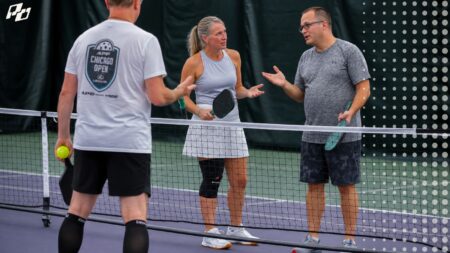
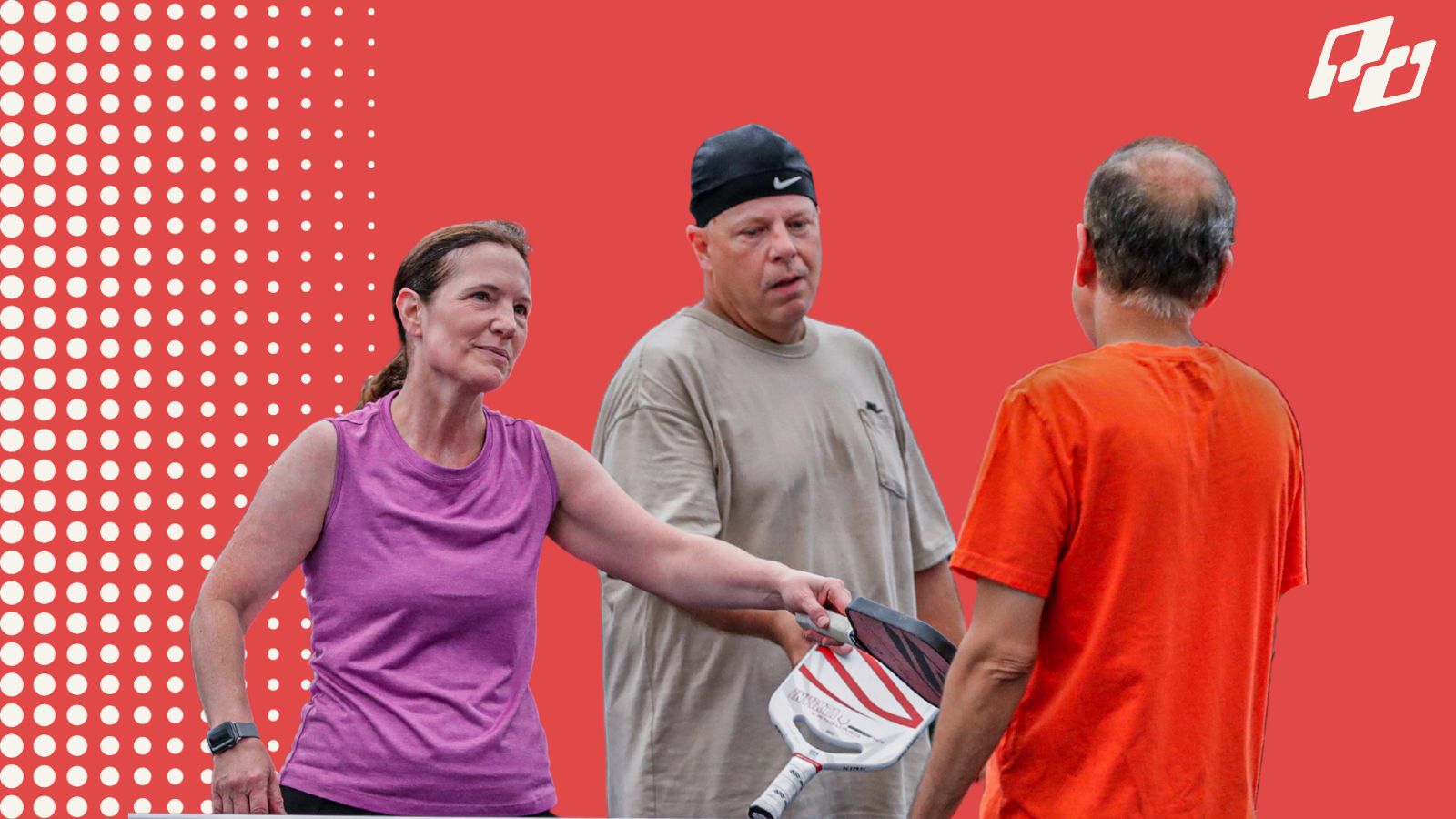
There’s a unique moment on every mixed-doubles court when love meets logistics. He’s saying, “Move up!” and you’re thinking, “Move out.”
Every week, I see men online talking about how their wives “won’t take coaching,” as if they’re filing complaints with the USAP Marriage Division. And honestly? It’s a little funny. Also a little exhausting.
Because, gentlemen — and I say this lovingly — it’s not that we don’t want advice. It’s that we don’t want to be coached mid-rally by someone who just called us ‘babe.’
The Pickleball Paradox: Love and Control Don’t Mix
Here’s the thing: pickleball is the perfect relationship mirror.
If you’re a control freak, it shows.
If you’re impatient, it shows.
If you secretly think you’re the better player — trust me, that shows too.
Psychologically, the game triggers a sneaky power dynamic called performance hierarchy. One person (usually the more experienced player) assumes the “teacher” role, while the other becomes the “student.”
That might work in a lesson, but it’s death by dink in a relationship.
Because when you coach your partner, you unintentionally shift from equal teammate to authority figure.
And in love, no one wants to be graded — especially not by the person who forgot to take out the trash yesterday.
Why We Hear Advice as Criticism (Even When It’s Not)
According to psychologist Dr. Terri Orbuch, feedback from a romantic partner lands harder because it’s emotionally loaded.
When a stranger says, “You’re late on your swing,” it’s data. When your partner says it, it’s judgment — because it taps into how we want to be seen by the person who knows us best.
That’s why you can take coaching from a pro without flinching, but one comment from your spouse about “keeping your paddle up” feels like a federal insult.
In couples therapy terms, this is called ego threat. Your brain literally interprets it as danger — which is why your body tenses, your heart rate spikes, and suddenly you’re arguing about who should have taken that last lob instead of… just taking the lob.
Men, We Love You — But Stop Coaching Us Like We’re on a Scholarship
Let me speak for most women here:
We don’t need your play-by-play analysis after every rally.
We don’t want a TED Talk on shot selection between serves.
And please, for the love of all things polymer, don’t say “calm down.”
Because, fun fact — no one in human history has ever calmed down after being told to calm down.
Now, before the guys get defensive, let me clarify — we know your heart’s in the right place. You think you’re helping. You want to share what you’ve learned. You want to win together.
But here’s what women hear when you coach: “You’re not doing it right, and I know better.”
And what you meant was probably: “I want us to do well because I care.”
Translation error, plain and simple.
Mixed Doubles, Mixed Motives
Let’s be real: men and women often step onto the court with completely different goals.
➡️ He’s there for competition
➡️ She’s there for connection
➡️ He’s thinking strategy
➡️ She’s thinking, “Let’s get some exercise and have fun.”
Neither is wrong — but the friction happens when one tries to convert the other.
Men: if your partner is there for enjoyment, not domination, you can’t drag her into your gladiator mindset.
Women: if your partner lives for competition, you can’t expect him to “just chill” when he’s wired to optimize everything from kitchen play to breakfast burritos.
The magic happens when you honor both motives. You bring fun; he brings focus. That’s how balance — and actual teamwork — shows up.
The Court Becomes a Therapist’s Office
It’s fascinating how quickly a pickleball game exposes emotional habits.
- Are you supportive or sarcastic?
- Do you take responsibility or deflect blame?
- Can you apologize after snapping mid-rally?
Relationship researchers call this emotional regulation under shared stress, and pickleball is a masterclass in it.
You’re managing coordination, communication, and competition — all at once, in front of other humans. That’s a lot of pressure on both the ego and the marriage license.
Dr. John Gottman (the guy who can predict divorce with 90% accuracy) says couples who survive conflict do one key thing: they repair quickly.
So if you’ve just muttered something regrettable like, “You really shouldn’t have missed that,” the fastest save is humor.
Try:
“Well, I guess we found the one thing I’m worse at than folding laundry.”
Instant defuse. Science agrees — laughter literally resets cortisol and oxytocin levels, which makes you feel connected again.
The 5 Rules for Pickleball Peace (and Relationship Survival)
1. Play Apart Sometimes: You don’t need to be doubles partners to be life partners. Take separate games, build independence, and bring fresh energy back.
2. No Mid-Point Coaching: Mid-point advice is the emotional equivalent of a pop-up. You’re not helping — you’re just handing your opponent an easy put-away.
3. Compliment, Don’t Correct: Use the “5:1 ratio” — five positives for every piece of feedback. And no, “nice serve” doesn’t cancel out “what were you thinking?”
4. Laugh It Off: When in doubt, make it funny. “We’re undefeated… at arguing” works wonders mid-meltdown.
5. Have a Post-Game Ritual: Whether it’s a drink, dinner, or silent high-five, reconnect as a couple after the match. Otherwise, you’ll carry match tension into life tension.
The Love Side of It All
For all its drama, pickleball is still one of the best things you can do together. It builds shared experiences, inside jokes, teamwork, and endorphins — all the same things that strengthen relationships.
And when it works, it really works.
The couple that can read each other’s shots can often read each other’s moods. The partner who covers your backhand also covers you in life.
So maybe pickleball isn’t breaking relationships — it’s revealing them.
The game shows you how you communicate under pressure, how you support each other in frustration, and how you recover when you mess up.
And that’s not a bad thing. That’s love — with more sweat, fewer therapists, and way better outfits.
My Final Thoughts (and One Tiny Plea)
Men — the next time you feel the urge to “coach” your partner, take a deep breath and say something radical like:
“That was fun. Let’s grab a drink.”
Women — the next time your partner tries to “fix” your game, remind him gently:
“I’m already taken — by someone who needs to stop giving unsolicited advice.”
Then smile. Play again. Laugh. And keep loving both the game and the chaos.
Because in the end, pickleball isn’t just a sport. It’s a mirror — and sometimes, a comedy show — for everything that makes relationships beautifully, hilariously human.