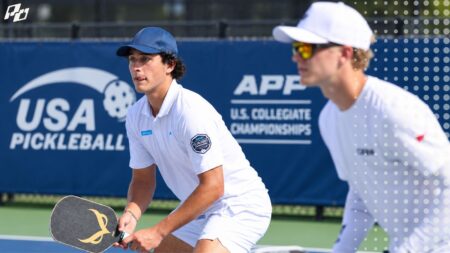
If you’ve played more than three rec sessions in your life, you’ve met the two tribes of pickleball:
The bangers, who swing big, swing often, and treat every ball like an invitation to unload.
The dink purists, who want the game to be soft, patient, and orderly — and take it personally when someone dares speed up a ball above their shoelaces.
Here’s the funny part: both groups believe they’re playing “the right way.” And both groups lose for the same reason:
They only play one style — and they keep using it even when the moment demands something else.
At intermediate rec, you don’t win by choosing a side. You win by choosing the right moment.
This is the strategy conversation most players never have — and the one that actually changes your game.
Why Banging Works… Until It Doesn’t
Banging absolutely works — until your opponents can defend it.
Simple.
At the lower and mid-intermediate levels, most players:
- Give high contact points
- Return serves too short
- Stand tall at the kitchen
- Can’t block pace cleanly
- Panic when a drive comes at their body
- Swing at the ball instead of absorbing it
If that describes your normal rec group, then yes — power dominates. Drives create chaos, force pop-ups, and put opponents in uncomfortable defensive positions.
But once your opponents can:
- Block
- Keep the ball low
- Control their middle
- Hold their ground at the kitchen
…banging shifts from “point-winning” to “self-punishing.”
It’s not a skill-level problem — it’s a matchup problem.
Banging stops working the moment the other team’s positioning, footwork, and paddle discipline outgrow your predictability.
Why Pure Soft Play Works… Until It Doesn’t
Soft play — drops, dinks, resets — is essential.
But soft-only players become just as predictable as bangers:
- They extend rallies without ever creating pressure
- They give opponents all the time in the world to choose their speed-up
- They out-dink opponents… right until they get bullied out of a good position
- They confuse “patience” with “passivity”
At intermediate rec, a team that only plays soft eventually gets pushed around by opponents who know how to:
- Speed up on purpose
- Attack slightly high dinks
- Drive into passive defenders
- Force the soft team off balance and off court
Pure softness stops working for the exact same reason banging does:
Your opponents know what’s coming.
The Strategy That Actually Works: Adapt Faster Than They Do
The players who stay stuck at 3.5–4.0 don’t lack technique — they lack recognition. They don’t adjust when the match gives them information.
For example:
If you’re winning hand battles, why suddenly slow it down?
You’ve earned the right to apply pressure.
If your drives keep getting countered at your feet, why keep driving?
Change the tempo.
If your opponents can’t handle slow, angled dinks, why rush to speed up?
You’re abandoning a winning pattern.
If your dinks aren’t stretching them, why repeat a neutral rally pattern that gives them rest?
You’re helping them reset.
The strategic mindset is simple:
Don’t be loyal to a style.
Be loyal to what’s working.
This is the first real leap from “intermediate rec player” to “I’m clearly better than my rating.”
Three Questions That Should Guide Every Rally
Here’s the mental framework that actually helps you adapt in real time:
1. Who is uncomfortable right now?
If it’s them → keep doing what you’re doing.
If it’s you → change the pattern immediately.
Most intermediate players don’t lose points — they stay in losing patterns.
2. What shot is quietly winning this rally?
Sometimes it’s obvious: your drives are causing mishits. Sometimes it’s subtle: your crosscourt dink is pulling their partner off balance.
Most intermediates don’t notice these small edges. Better players do — and they squeeze those patterns until they stop working.
3. What choice gives me the easiest next ball?
This is pickleball strategy in one sentence.
A shot doesn’t need to end the rally — it just needs to make the next ball easier:
- A drop wins position
- A dink wins time
- A drive wins a weak reply
- A reset wins neutrality
Points are rarely won in one shot. They’re won by improving the rally until finishing becomes easy.
Where Intermediates Go Wrong (On Both Sides)
This may sting a little, but it’s true:
Bangers think their problem is “not hitting hard enough.”
Dinkers think their problem is “not dinking well enough.”
Neither problem is really about execution. It’s about context.
Most intermediates:
- Don’t recognize when their attacks are being absorbed
- Don’t recognize when their dinks are doing nothing
- Don’t consider matchups (who hates pace? who hates pressure?)
- Don’t adjust to the score, momentum, or opponent tendencies
- Stick to “their game” instead of the game that’s unfolding
Your opponent shouldn’t just influence your strategy — your opponent is your strategy.
So What’s the Actual Strategy for 3.5–4.0 Rec Players?
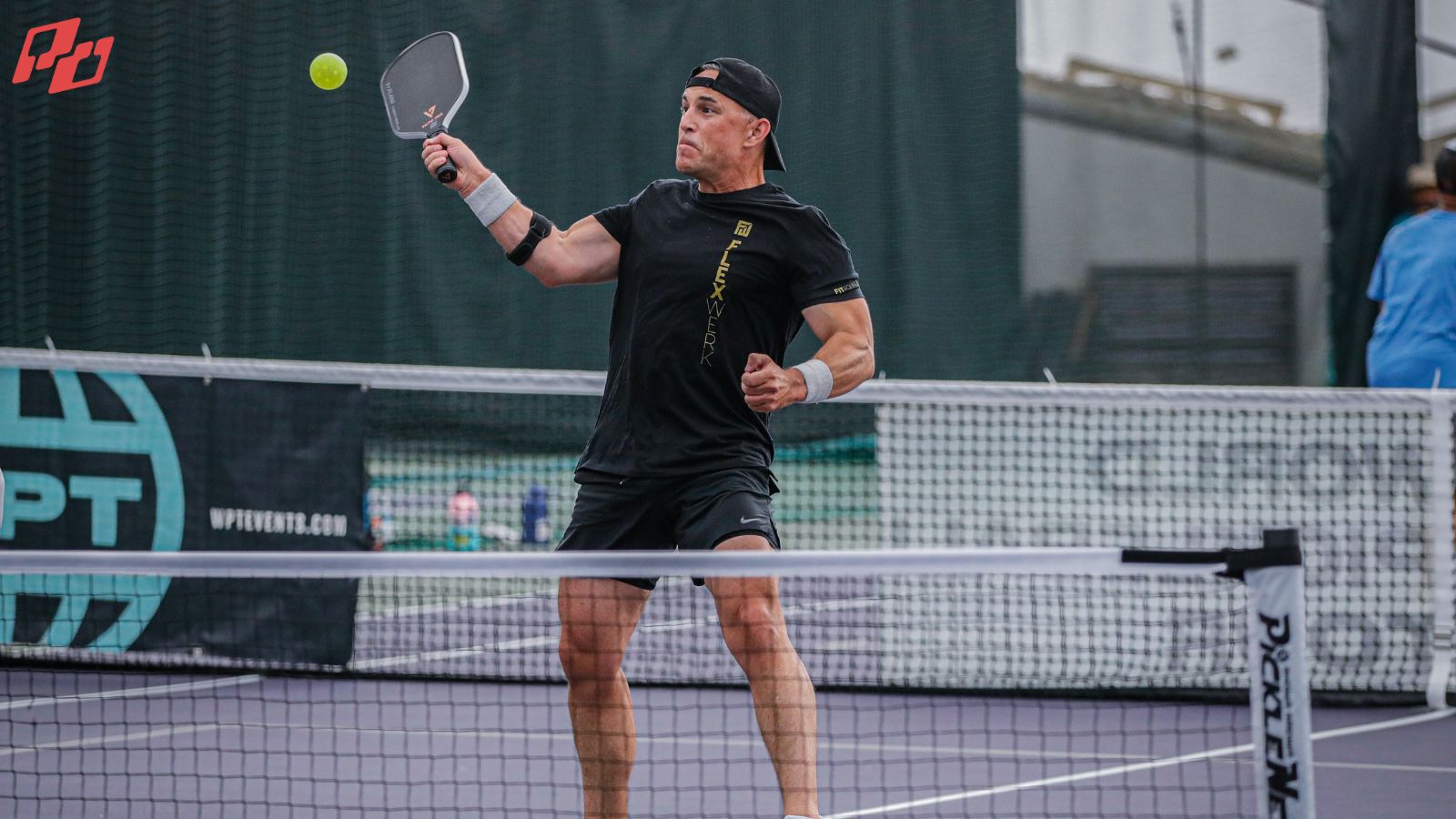
Here’s the approach that wins most consistently — without turning you into a technician or a drill robot:
1. Start neutral
Let the match tell you what it wants.
Rushing to hit hard or rushing to play soft is how players lose the first five points.
2. Identify the weaker defender — fast or slow
There’s always one.
Some players are terrible against pace. Some players fall apart when the game slows down.
Whichever one cracks first determines your match tempo.
3. Pressure the transition zone
Most rec players hate:
- Moving forward
- Moving backward
- Being stretched wide
- Having to volley below their knees
The team that controls this zone wins more than the team that “dinks better.”
4. Don’t give the same look twice
Predictability is the real opponent. Vary:
- Pace
- Spin
- Height
- Depth
- Direction
Make opponents constantly recalibrate.
5. Make your style a response, not a habit
The best 4.0s and rising 4.5s do not care whether they win with:
- Drives
- Drops
- Dinks
- Flicks
- Lobs
- Chaos
- Patience
- Countering
- Or slowing everything down
They only care what the match is rewarding right now.
That adaptability is the difference between someone who stays the same rating for three years… and someone who breaks through.
The Bottom Line
Pickleball isn’t won by bangers. It isn’t won by dink purists.
It’s won by players who can do both — and choose wisely.
If you want to rise at intermediate rec:
Stop defending a style.
Start defending what works.
And treat every rally like a conversation:
What is this ball telling me to do right now?
Do that, and you’ll win more, think clearer, and finally look like one of the “smart players” everyone talks about.
Because you will be.