Extreme topspin is one of the few shots that still consistently rattles intermediate players — not because it’s unreturnable, but because it forces decisions faster than most rec players are comfortable making.
The ball looks floaty… then dips late.
It bounces… then kicks higher than expected.
And suddenly you’re swinging while off-balance, jammed, or guessing.
Here’s what experienced coaches agree on:
Topspin doesn’t win points by power. It wins them by disrupting timing and decision-making.
Once you understand what topspin is trying to do — and respond accordingly — it becomes far more manageable.
What Heavy Topspin Is Actually Doing to You
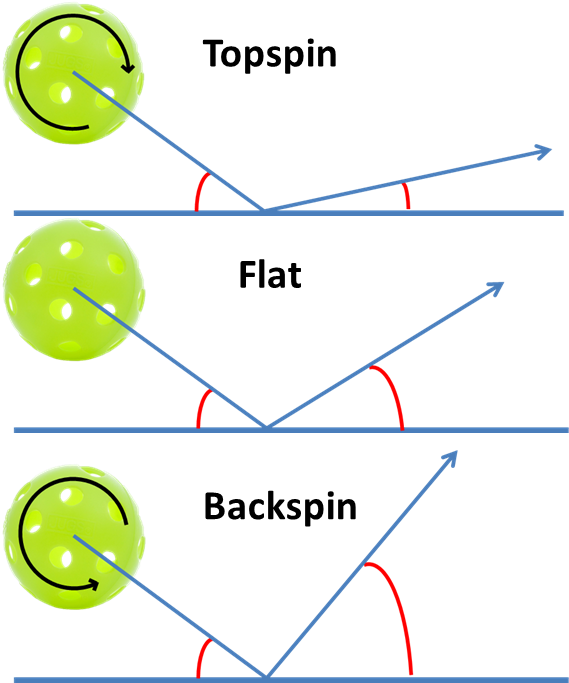
From a physics and coaching standpoint, heavy topspin creates two compounding problems:
- Late downward dip before the bounce
- Accelerated upward rebound after the bounce
Coaches like Mark Renneson and Jordan Briones consistently point out that most errors occur because players meet topspin at its most unstable moment — late and rising.
Topspin punishes:
- Upright posture
- Long swings
- Late contact
- Emotional “save” attempts
The fix is not more aggression. It’s earlier recognition and cleaner positioning.
The Most Important Skill: Reading Topspin Early
Good players don’t wait to see what the ball does — they read spin before it gets there.
Topspin is telegraphed by:
- A low-to-high paddle path
- A brushing contact sound
- A ball flight that climbs, then dips sharply
Elite players often mentally label the ball early: heavy topspin. That early recognition buys time — and time prevents panic.
As many touring pros have said in clinics:
“If you’re surprised by spin, you’re already late.”
One Shot, Multiple Situations (Where Rec Players Go Wrong)
Most intermediate players struggle because they treat every topspin ball the same way. Better players don’t.
They choose responses based on contact height, balance, and court position.
Situation-Based Responses
| Situation | Best response | Why |
|---|---|---|
| Deep topspin drive kicking up | Compact block, deep target | Neutralizes spin without adding pace |
| Topspin dipping at feet in transition | Soft reset with arc | Stops escalation while off-balance |
| Kitchen topspin roll volley | Counter-block, not swing | Stability beats spin |
| Body-targeted topspin | Create space + shorten stroke | Jammed contact causes free errors |
Situation 1: Deep Topspin Drives (The “Kick-Up” Ball)
What rec players do wrong: They wait, then take a full swing as the ball climbs — launching it long or popping it up.
What coaches teach instead:
- Paddle out in front
- Compact swing
- Aim deep middle or crosscourt
Simone Jardim frequently emphasizes that depth and control are the priority here — not pace. Let the opponent’s spin supply the energy:
Situation 2: Topspin in Transition (The Biggest Leak at 3.5–4.0)
This is where rallies fall apart. You’re moving forward. The ball dips, bounces, and jumps. You feel rushed and try to “do something” with it. Experienced coaches teach the opposite.
Correct response: reset — intentionally.
Key cues:
- Get low before the bounce
- Slightly open the paddle face
- Lift with your legs, not your wrist
As Sarah Ansboury consistently reinforces:
When balance is compromised, neutralizing the rally is winning the exchange.
Situation 3: Kitchen Topspin Rolls (Volleys That Want You to Pop It Up)
Topspin roll volleys punish players who try to counter-swing without a stable base.
Best response: counter-block first.
- Stable wrist
- Early paddle set
- Redirect pace toward feet or middle seam
Unless you’re clearly above net height and balanced, trying to “match spin” is low percentage.
Situation 4: Body Topspin (Where Panic Shows Up)
Heavy topspin aimed at your body is designed to do one thing: crowd your swing before you’re ready.
What goes wrong for rec players: They stay square, let the ball jam them, and swing — usually resulting in a pop-up or mishit.
The fix starts before the swing:
- Open your stance slightly to create space
- Clear your hitting elbow away from your torso
- Shorten the stroke dramatically (think block, not swing)
If you can’t create space in time, default to a soft reset. Trying to fight through body topspin with a hero swing is one of the most reliable ways rec players give away points.
Coach cue you’ll hear often:
“If you’re jammed, you’re already late — simplify.”
When (and When Not) to Use Spin to Counter Topspin
Yes — there is a time to use spin against topspin.
The correct situation: You’re at the kitchen, balanced, paddle set, and contacting the ball above net height before it has bounced.
This is the classic counter-roll volley.
Why it works:
- You meet the ball before the topspin “kick” phase
- The spins partially align instead of fighting
- You control trajectory without lifting the ball
Coaches often cue it as:
“It’s a roll, not a swing.”
The motion is compact and lateral — brushing across, not up.
When Spin Makes Things Worse (Most of the Time)
Counter-spin is not appropriate when:
- The ball has already bounced and is climbing
- You’re in transition or stretched
- You’re jammed at the body
- You’re reacting late
In these situations, adding spin increases vertical error and pop-ups.
As one touring pro put it during a clinic:
“If the ball is already climbing fast, adding spin just launches it.”
For most rec players, spin is a reward for good position — not a fix for bad position.
What Coaches Consistently Warn Against
Across coaching circles, the same mistakes come up repeatedly:
- Swinging harder because the ball spins harder
- Taking topspin late without intent to reset
- Scooping with a loose, wristy face
- Trying to out-topspin from a defensive position
Topspin feeds on impatience.
Two Responses That Hold Up on Bad Days
When things feel rushed, experienced coaches recommend defaulting to options that survive pressure:
- Deep, neutral block to the middle — reduces angles and forces another shot
- Soft reset into the kitchen — spin loses its bite when it lands low and neutral
These aren’t flashy — they’re reliable.
How Coaches Recommend Practicing This (Without Fancy Drills)
You don’t need a ball machine or a spin specialist.
Instead:
- Play someone who hits heavy topspin
- Commit to two neutral contacts before attacking
- Focus on early recognition and balance
You’re training your nervous system to stop treating topspin like an emergency.