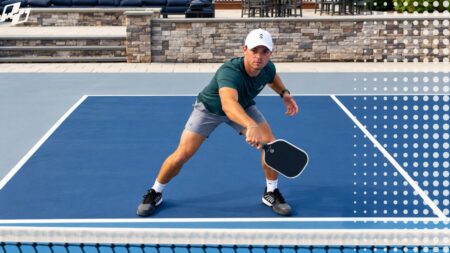
The technical ready-position fix that saves points fast (especially for beginners and early intermediates)
If you feel personally attacked by this sentence—“I hit way too many out balls in the transition zone”—welcome to the club. The transition zone is where good intentions go to die… mostly because your brain is still using kitchen-line logic while your body is in mid-court geometry.
The biggest trap? You keep your paddle up at chest height like you’re ready for a firefight… and then you reflex-volley a ball that was always sailing long.
Let’s fix that.
Why the Transition Zone Creates So Many “Free” Errors
At the kitchen line, a ball at chest height can still dip in because there’s very little distance for it to travel. In the transition zone, that same chest-high ball has more court left, so many of those drives are still rising and naturally carry long.
That’s why chest-high balls in the transition zone are often out—and why you should expect balls aimed lower, toward your feet.
Translation: mid-court is an out-ball magnet if your default is “touch everything.”
The Core Fix: Change Your Ready Position Based on Where You Are
Here’s the simple concept:
- Kitchen line: paddle up (chest level)
- Transition zone: paddle down (closer to knees or shins), because that’s where the real danger is—and chest-high balls are frequently out. This isn’t just a tip. It’s a mechanical filter.
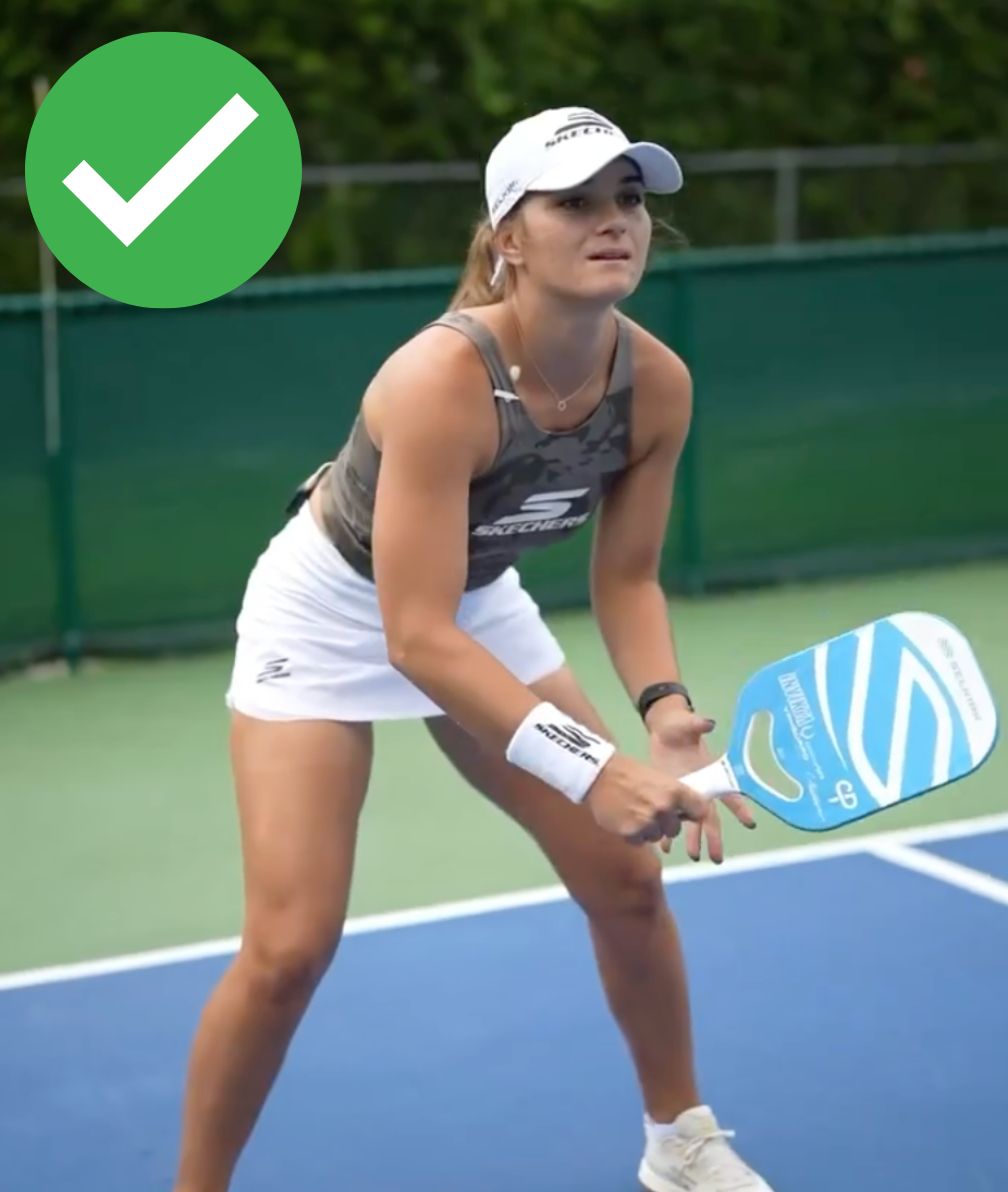

When your paddle starts lower, you:
- stop auto-swinging at chest-high balls
- stay prepared for the most common attack target (your feet)
- block and reset more cleanly without popping the ball up
Coach Tanner Tomassi shows the correct ready positions for every spot on the court:
The “Shoulder Lane” Rule That Stops Most Out-Ball Mistakes
Use this as a default in transition, especially against flatter hitters:
✅ Let it go when:
- the ball is at or above chest height and still rising
- it’s traveling through your outside shoulder lane
- it’s a flat drive with little visible topspin
⚠️ Play it when:
- it’s below net height and climbing
- it has visible topspin and a late downward arc
- it’s dipping toward your toes
This is exactly why your paddle should live lower in transition—because your real play zone is usually knees to waist, not chest to head.
The Most Important Technical Detail Most Players Miss: Your Feet Must Stop
Even with perfect paddle height, you’ll still stab at out balls if you’re drifting forward. The fix is simple and very pro-like:
Split-step (or stop-step) as your opponent makes contact.
When you’re still moving forward as they hit, you feel rushed. Your paddle floats up. You swipe at anything reachable.
A useful cue: “Split. Sit. See.”
- Split as they hit
- Sit into your legs
- See the flight before deciding
Why This Works (The Real Mechanics)
When your paddle starts high in transition:
- you preload a volley response
- your elbows flare
- your first movement is often forward
- contact happens too high—right in the out-ball zone
When your paddle starts lower:
- your forearms stay calmer
- your first response is down and stable
- you naturally let higher balls pass
You’re changing your default response from attack/volley to defend/reset + judge.
“But What If I Let One Go and It Lands In?”
Good. That’s part of learning.
If you never let a ball go that lands in, you’re not taking enough “lets.” Letting a few good balls go is the cost of learning restraint.
A helpful mindset:
- Hitting an out ball means you had to win the point twice
- Letting it go is a free point with no risk
You’re training discipline, not guessing perfection.
The Decision Tree (Beginner-Friendly, but Actually Technical)
Next time you’re in transition and a ball comes fast:
Step 1: Where is it relative to your body?
- Outside your shoulder drifting wide → let it go
- Inside your frame toward hips or feet → prepare to block or reset
Step 2: What height is it when it reaches you?
- Chest or higher → default no
- Waist to knee → default play
Step 3: What spin do you see?
- Flat drive → more likely long
- Heavy topspin → more likely to dip late
For simple partner language:
- “Watch” = could dip
- “Bounce” = let it go
- “No” = clearly out, don’t touch
Common Mistakes That Keep You Hitting Out Balls
1️⃣ Paddle stays high because you feel exposed
Totally normal—but backwards. A high paddle makes you vulnerable to low attacks and reflex swings.
2️⃣ Trying to volley in transition
Unless the ball is clearly attackable and inside your frame, transition is about resets, not volleys.
3️⃣ Reaching to “save” the ball
If you’re reaching, the ball is often already outside your body line—exactly where many out balls travel.
Two “Do This Next Game” Drills (Simple, No Setup)
Drill 1: Transition “Let” Reps
Have a partner feed medium drives while you stand in transition.
Your job:
- paddle starts low
- call “bounce” early on chest-high balls
- physically step away and let it pass
This trains restraint under motion.
Drill 2: Feet-Set Reset Drill
Partner drives at your feet as you move forward.
Rules:
- split-step as they hit
- paddle low
- block or reset crosscourt or middle
This builds the real transition combo: stop + absorb.
Quick Reality Check: When Not to Let It Go
Some balls that look out do dip in:
- heavy topspin rollers
- balls struck closer to the net
- windy outdoor conditions
If you see obvious topspin and late drop, upgrade “bounce” to “watch.”
What I Wish Someone Had Told Me Earlier
If you want to stop donating points in the transition zone, don’t start with a new shot.
Start with this:
- paddle lower (near knees)
- split-step as they contact
- let chest-high rising balls go
- protect the feet zone first
It’s a small adjustment—but it changes your default decisions. And once you stop “saving” out balls, something funny happens: your opponents start missing more… because you stop helping them.