
Height seems like an advantage in pickleball.
Taller players reach farther.
They can attack higher balls.
They cover more court without moving.
So if you’re a shorter player—whether that’s a smaller athlete, many women in mixed play, or simply someone without a big wingspan—it’s easy to assume you’re starting at a disadvantage.
But here’s something many intermediate players eventually realize: pickleball doesn’t reward height nearly as much as sports like tennis or volleyball do.
In fact, some of the smartest doubles players who are around 5’3″–5’7″ consistently frustrate taller opponents. Not because they hit harder—but because they use the court differently.
And once you understand a few tactical patterns, shorter players can actually gain some very real advantages.
Before we get into the strategies, though, it helps to define what we actually mean by “shorter” in pickleball.
What Counts as a Shorter Player in Pickleball?
In pickleball, “short” is relative.
The court is small, most rallies happen close to the net, and reach matters less than it does in other sports. But players still tend to notice a difference when there’s a noticeable height gap between opponents.
In recreational play, players roughly fall into these ranges:
- 5’0″–5’5″ — shorter reach at the kitchen and overhead coverage
- 5’6″–5’9″ — roughly average height for many rec players
- 5’10″+ — longer wingspan and easier overhead angles
Where height differences show up most is in two areas:
- overhead coverage
- lateral reach at the kitchen line
But interestingly, those same situations often force shorter players to develop better footwork, anticipation, and soft-game control—skills that end up mattering more in doubles.
And that’s why the next point is so important.
Why Doubles Actually Favors Shorter Players
This surprises many players the first time they hear it.
In singles, height and reach definitely help because you must cover the entire court yourself.
But in doubles, half the court is covered by your partner. That dramatically reduces the value of wingspan and increases the importance of:
- positioning
- shot placement
- decision-making
- communication
Most points in recreational doubles aren’t won with overhead smashes or huge drives.
They’re won through patterns: controlled dinks, smart resets, and well-timed attacks.
That’s one reason many elite women players—who are often shorter than their male counterparts—still dominate rallies through anticipation and shot selection.
In doubles pickleball, reach matters. But reading the rally matters more.
Tip 1: Live in the “Unattackable Zone”
One thing shorter players often develop—sometimes without realizing it—is better control of low contact points.
Tall players naturally love balls they can attack above the net. That’s where their height allows them to hit down aggressively. But if the rally stays low, that advantage disappears.
In fact, it flips.
Pickleball coaches often talk about keeping the ball in what’s sometimes called the unattackable zone—roughly ankle to knee height.
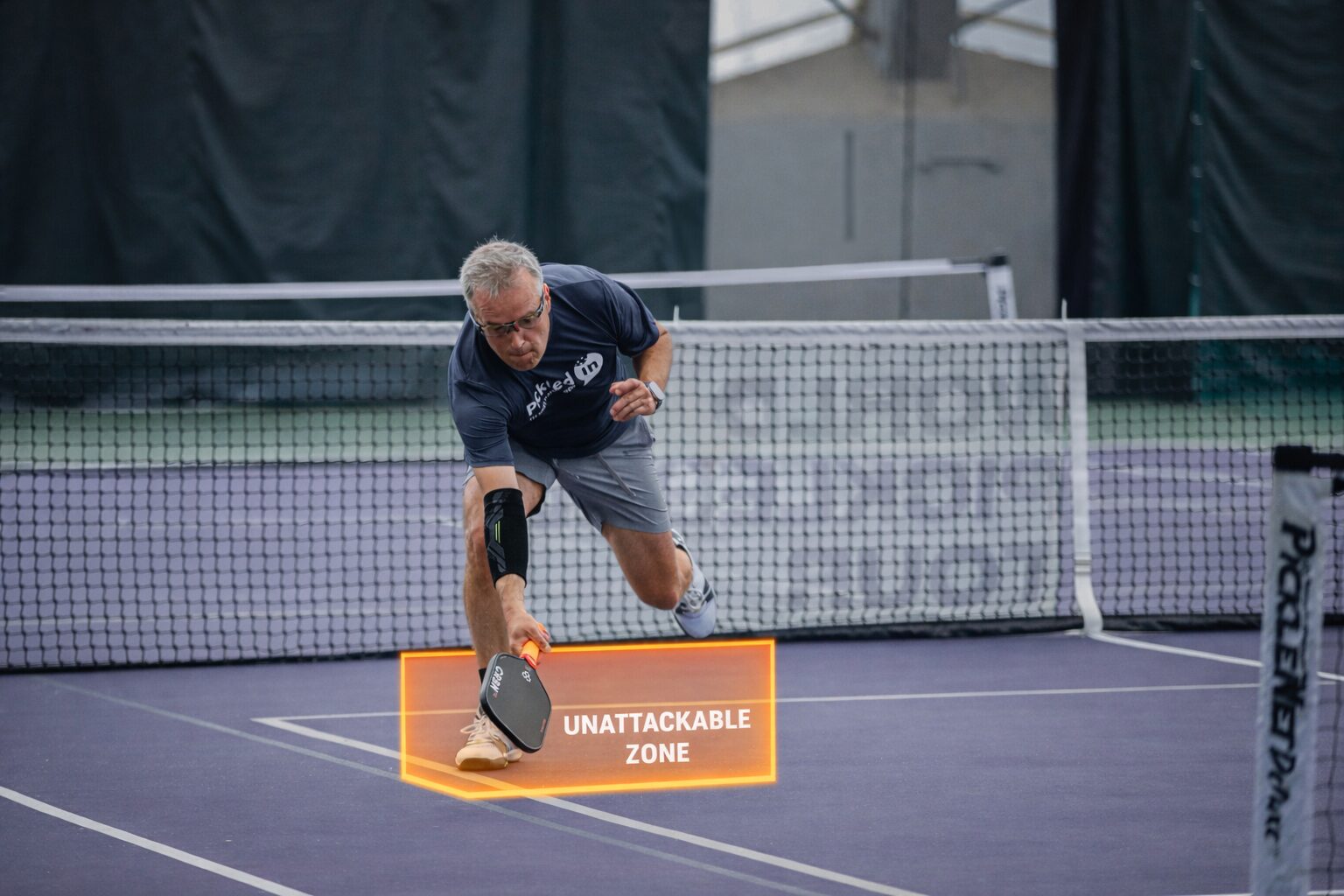
When the ball lives there:
- nobody can hit down on it
- speed-ups become risky
- rallies slow into dink exchanges
And that’s where shorter players frequently shine.
Because shorter players naturally maintain a lower stance, they’re often better balanced close to the court surface. Their paddle path stays compact, and they’re comfortable absorbing pace instead of reaching for it.
Meanwhile, taller players must bend more aggressively to reach those balls, which slows their reactions slightly.
So one of the smartest adjustments shorter players can make is this: keep the rally low on purpose.
Instead of trying to match power, focus on:
- dipping drives
- low dinks that die in the kitchen (the so called dead dinks)
- resets that land at opponents’ feet
If the ball stays below net height, the reach advantage disappears. Check out the short video below where pickleball coach Danea breaks down why shallow dead dinks are so effective—and exactly how to execute them:
Tip 2: Attack From Below the Net (The Topspin Roll)
Most rec players believe you can only attack balls above the net. That’s not entirely true.
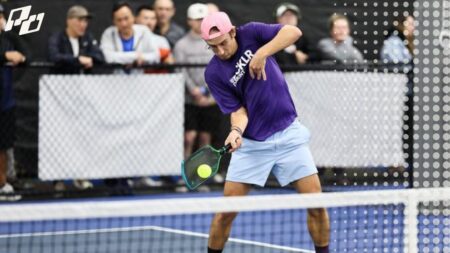
One of the most effective offensive tools shorter players can develop is a topspin roll from a low contact point.
Instead of driving the ball flat, you roll the paddle upward with controlled topspin from slightly below net level. The spin causes the ball to rise quickly over the net—and then dip sharply. Coach Carmelo Carbone shows you exactly how to do it:
To your opponent, the ball initially looks attackable. But by the time it reaches them, it’s dropping toward their feet.
This creates hesitation.
Tall players in particular often expect balls to stay higher. When the ball dips unexpectedly, they’re forced to lift it back up—often giving you the next attack. Many advanced players use this exact pattern during transition or neutral exchanges.
The key idea is simple: low ball → roll it with topspin, not power.
You’re not trying to blast the ball. You’re trying to create a dipping, uncomfortable contact point.
When to Stay Low vs When to Attack
If the goal in tip 1 is to keep the ball low, why would you attack a ball from below the net as suggested in tip 2?
The difference comes down to intent and ball quality.
Most of the time, your goal is to keep the ball low and neutralize the rally. But when you get a slightly more stable or predictable low ball—one you can control—you can turn that same contact point into offense using spin.
Think of it like this:
Low ball + off-balance = reset
Low ball + balanced = attack with topspin
You’re not changing the height of the rally—you’re changing what you do with the same contact point.
This is where many 3.5–4.0 players start separating themselves from beginners.
Tip 3: The “Early Ball” Advantage
Another advantage shorter players often develop is the habit of taking balls earlier.
Because they have less reach, they naturally move their feet faster and contact the ball sooner. And in pickleball, taking the ball early is one of the most powerful skills you can develop.
When you contact the ball earlier:
- opponents have less time to recover
- angles become sharper
- the court feels smaller for your opponent
This is especially powerful during dink exchanges. Many advanced players step forward and take the ball just after the bounce instead of letting it rise.
That steals valuable reaction time from the opposing team.
Shorter players tend to learn this instinctively because waiting for the ball to rise often puts it outside their comfortable strike zone.
So instead of trying to reach farther, lean into that instinct.
→ Intercept balls earlier.
It speeds up the rally—but on your terms.
The Hidden Advantage: Lower Contact Points
This is one of the most technical advantages shorter players develop. Every player has a natural strike zone where they feel most comfortable contacting the ball.
For taller players, that’s often around chest height, where they can hit downward.
For shorter players, the most comfortable contact zone tends to be around waist or hip height.
And that happens to be exactly the height where many of pickleball’s most important shots occur. Shots like:
- dipping drives
- resets
- low dinks
- counter blocks
Because shorter players spend more time operating in this zone, they often develop better control over these shots.
Ironically, the same height difference that seems like a disadvantage can become a technical strength.
Shorter players become very good at keeping the ball low—and that’s exactly what neutralizes aggressive opponents.
The Mindset Shift That Changes Everything
The biggest mistake shorter players make is trying to play taller. The players who actually improve make a different shift. They stop chasing reach and start controlling the terms of the rally.
- They keep balls low on purpose.
- They take time away instead of giving it.
- They use angles to move opponents instead of trying to hit through them.
- And they understand that patience isn’t passive—it’s strategic pressure.
Here’s the part most players don’t realize: you don’t need to win points faster—you need to make your opponents uncomfortable sooner.
That might mean:
- dinking one extra ball to force a mistake
- rolling a low ball instead of forcing a drive
- stepping in early instead of backing up
- targeting feet instead of open space
Once those habits click, something interesting happens. The players who once felt bigger, stronger, and harder to beat start feeling rushed, off-balance, and reactive.
Because you’re no longer playing their game. You’re making them play yours.
And in pickleball doubles, that’s usually the difference between competing… and controlling the match.