Creatine may help older pickleball players maintain strength, lean muscle, and repeated high-intensity performance, especially when combined with resistance training. Protein matters if intake is low, while electrolytes are most useful during long, hot sessions. Vitamin D, omega-3s, caffeine, and other supplements depend more on individual needs.
Creatine used to have a very specific image. Bodybuilders. Weight rooms. Twenty-somethings trying to get bigger. That picture is badly outdated.
Some of the most interesting creatine research now involves adults in their 50s, 60s, and 70s—exactly the age range filling pickleball courts every morning.
And the reason is not complicated.
As we age, maintaining muscle mass, strength, power, and recovery capacity becomes harder. Pickleball still asks for all four every time you accelerate toward a short ball, recover from a wide dink, stop hard, or explode into an overhead.
Creatine may help with some of that.
But it is only one piece of the puzzle.
Here is what the science actually supports—and where the supplement hype gets ahead of the evidence.
Creatine Is the One I’d Take Most Seriously
Creatine helps your muscles rapidly regenerate ATP, the immediate energy source used during short, high-intensity efforts. That makes it relevant to pickleball because the sport is not continuous endurance exercise.
It is repeated bursts of:
- acceleration
- lunging
- hard drives
- quick counters
- stopping and restarting
The NIH Office of Dietary Supplements notes that creatine is particularly useful for repeated short bursts of intense activity and can improve strength and power.
There are not yet good randomized trials showing that creatine makes you a better pickleball player specifically.
But there is strong evidence that it can improve some of the physical qualities pickleball depends on.
The Older-Adult Data Is Better Than Many Players Realize
A 2025 meta-analysis of randomized trials in older adults found that adding creatine to resistance training improved lower-body strength and lean tissue mass compared with resistance training alone.
An earlier meta-analysis involving 721 older adults found that creatine plus resistance training produced about 1.37 kg more lean tissue mass, along with greater chest-press and leg-press strength gains than training alone.
A newer review of postmenopausal women also found small but meaningful improvements in lean mass and leg-press strength, particularly when creatine of at least 5 g/day was combined with resistance training.
That last part matters. Creatine works best as an addition to training, not a substitute for it.
Think of it this way
Strength training provides the signal.
Creatine may help you get more from that signal.
How Much Creatine?
For most healthy adults, the simplest option is:
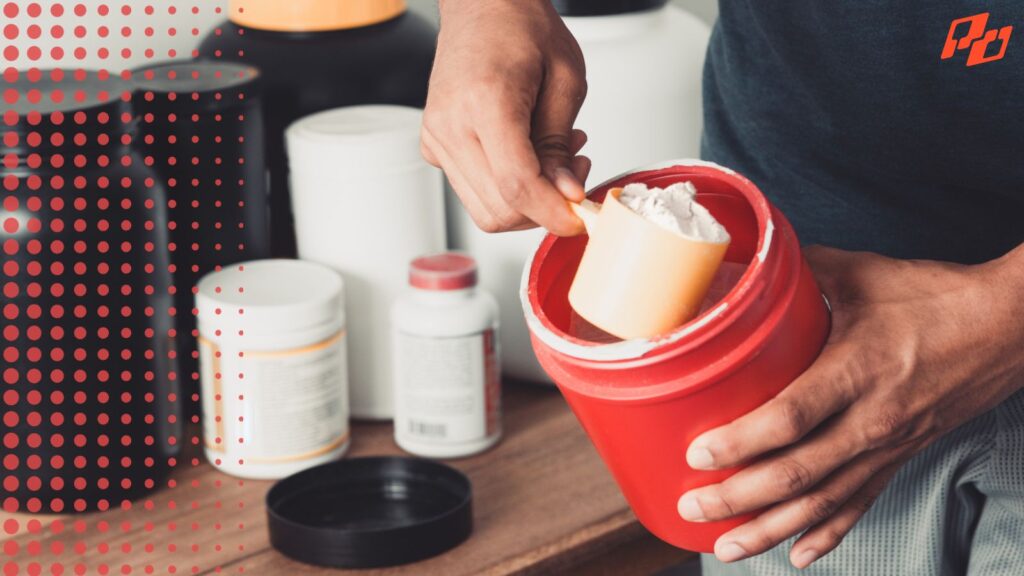
Creatine monohydrate: 3–5 grams per day
You do not need a loading phase.
A loading phase of roughly 20 g/day divided into several doses can saturate muscle stores faster, but taking 3–5 g daily gets you to the same place more gradually. NIH guidance recognizes both approaches.
For most recreational players, I would choose the boring option: 5 g once a day, every day.
Timing is not particularly important. Take it with breakfast, lunch, your post-workout meal—whatever you will remember consistently.
Does It Need to Be Taken Before Pickleball?
No. Creatine does not work like caffeine. You do not take it 30 minutes before open play and suddenly gain power. Its benefit comes from gradually increasing muscle creatine stores over days and weeks.
That means consistency matters more than timing. Take it on rest days too.
What Should You Expect?
Possibly:
✔️ better strength gains from resistance training
✔️ slightly more lean mass
✔️ improved ability to repeat short high-intensity efforts
✔️ potentially better power output
What you should not expect:
✖️ instant faster hands
✖️ automatic injury prevention
✖️ better dinking touch
✖️ magical recovery after a four-hour session
Creatine improves physical capacity. It does not fix technique.
What About Weight Gain?
This surprises some players. Creatine often produces a small increase in body weight because muscle cells retain more water.
NIH notes that creatine supplementation can increase body mass by roughly 1–2 kg over a month in some people during training.
That is not the same as gaining fat. For most players, it is not a problem. But if you are extremely sensitive to feeling heavier on court, be aware of it.
Is Creatine Safe for Older Adults?
For healthy adults, creatine monohydrate has a strong safety record.
Mayo Clinic’s 2026 review notes that recommended creatine use has not been shown to damage kidney function in healthy people, including with longer-term use.
That does not mean everyone should start taking it without thought. Talk with your clinician first if you have:
- kidney disease
- significant liver disease
- complex medical conditions
- medications that affect kidney function
- fluid-balance issues
Older players also tend to take more medications, which makes supplement-medication conversations more important than they are for a healthy 25-year-old.
Protein May Matter More Than Any Supplement Powder
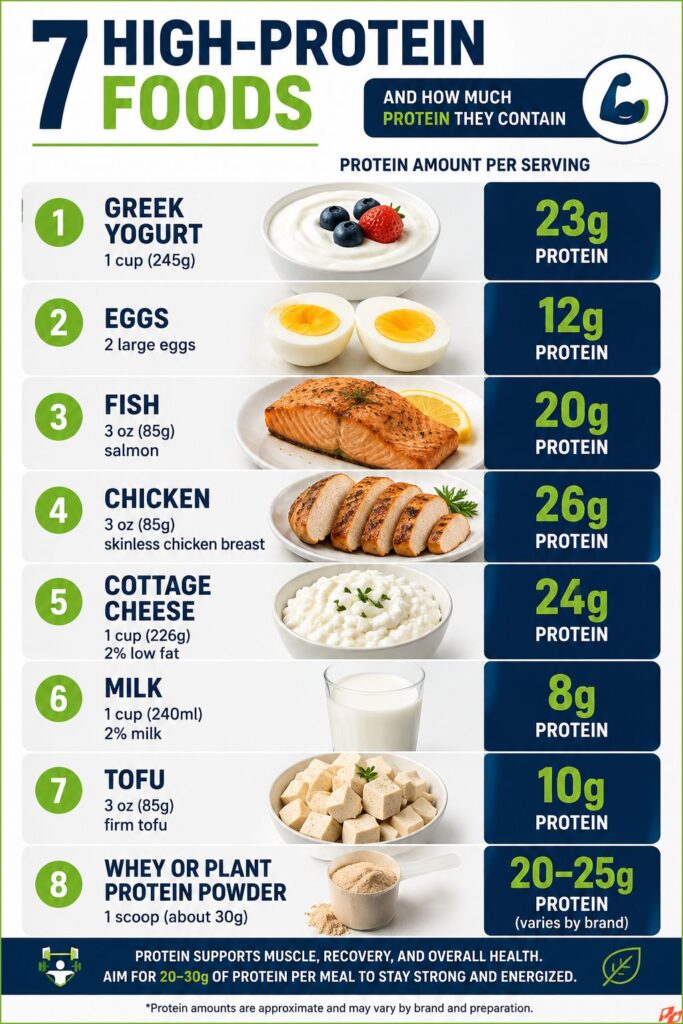
If your protein intake is low, fixing that probably deserves priority.
Healthy older adults are generally advised to consume around 1.0–1.2 g of protein per kilogram of body weight per day, with higher intake often recommended for active older adults.
For a 165-pound player—that is about 75 kg—that works out to roughly: 75–90 g per day, with active players often benefiting from the upper end or slightly above.
You do not need protein powder if food gets you there. But a shake becomes useful when convenience is the problem.
Useful options
- Greek yogurt
- eggs
- fish
- chicken
- cottage cheese
- milk
- tofu
- whey or plant protein powder
Protein powder is not really a performance hack. It is simply an easy way to fill a dietary gap. And recent research suggests adding extra protein is most helpful when baseline intake is actually low.
The Supplements I’d Rank for Pickleball Players
| Addition | Evidence | When It Makes Sense |
|---|---|---|
| Creatine monohydrate | Strong | Midlife/older players doing resistance training |
| Protein supplement | Strong if intake is low | When food intake does not meet protein needs |
| Electrolytes | Situationally useful | Long, hot, humid, high-sweat sessions |
| Vitamin D | Useful if deficient | Low blood levels, low sun exposure, clinician recommendation |
| Omega-3 | Mixed/modest | More useful for general health than pickleball performance |
| Caffeine | Good acute performance evidence | Strategic use before demanding play if tolerated |
| BCAA | Weak | Usually unnecessary if protein intake is adequate |
| Beta-alanine | Limited relevance | Probably not a priority for most rec players |
| Collagen | Emerging, not definitive | Possibly useful in specific tendon/joint contexts, not a core supplement |
That is roughly how I would prioritize your money.
Electrolytes: Useful, but Not Because Everyone “Needs” Them
A 60-minute indoor doubles session does not automatically require an electrolyte packet. Water may be enough.
Electrolytes become more useful when:
- you play for 90 minutes or longer
- it is hot and humid
- you sweat heavily
- you see salt residue on clothing
- you play multiple sessions in one day
The National Athletic Trainers’ Association recommends individualizing fluid and electrolyte replacement based on sweat rate, environment, duration, and the person rather than following one universal drinking schedule.
This is particularly relevant for older players because thirst sensation can become less reliable with age.
But more electrolytes are not automatically better.
If you have blood-pressure, kidney, or sodium-related medical issues, generic sports-drink advice may not apply to you.
Vitamin D: Check Before You Guess
Vitamin D matters for bone and muscle health. But that does not mean taking more improves pickleball performance if your levels are already adequate.
The best reason to supplement is usually:
you are deficient or your clinician believes your intake is inadequate.
This is particularly relevant to older adults with limited sun exposure, osteoporosis risk, or other reasons for low vitamin D.
Do not treat it like pre-workout. Treat it like a nutritional deficiency question.
Omega-3s: Interesting, but Don’t Expect a Bigger Forehand
Omega-3 supplements have received attention for muscle health in older adults. The evidence is mixed.
One meta-analysis found a very small improvement in strength but no meaningful effect on muscle mass or physical function overall.
Another review focused on older adults found no significant improvement in strength or functional ability and called for more research.
That does not make omega-3s useless.
They may still make sense for broader dietary and cardiovascular reasons, particularly for people who rarely eat fatty fish.
But I would not buy them expecting noticeable pickleball performance gains.
Caffeine Is the Supplement You Actually Feel
Creatine works slowly. Caffeine works today.
NIH guidance notes that caffeine can improve performance in intermittent sports and reduce perceived fatigue, with typical performance doses around 2–6 mg/kg taken 15–60 minutes before activity.
But I would be much more conservative with older recreational players. You may not need anything close to the upper end. A normal coffee—often around 80–120 mg—may be plenty.
More can create:
- jitteriness
- elevated heart rate
- poor sleep
- anxiety
- stomach issues
And ruining tonight’s sleep to gain a tiny edge in Tuesday open play is a terrible recovery strategy.
Cue
Use the smallest dose that actually helps.
What About BCAAs?
For most players: save your money.
NIH concludes that evidence for BCAA supplementation is limited and that people already eating adequate high-quality protein generally receive plenty of BCAAs through food.
If you already drink whey protein, you are already getting a large dose of leucine and other branched-chain amino acids.
Adding another colorful tub usually does not solve anything.
Beta-Alanine?
Also low on my list.
Beta-alanine may help certain high-intensity efforts lasting long enough for muscular acidity to become limiting, but evidence for general recreational-sport benefit is much less compelling.
For a recreational pickleball player over 50, I would put: strength training, creatine, adequate protein, hydration, and sleep far ahead of beta-alanine.
Collagen Is More Complicated Than Instagram Makes It Look
Collagen is often marketed directly at players with
- elbow pain
- Achilles trouble
- knee discomfort
- joint wear
There is some emerging research around collagen or gelatin plus loading exercise for connective tissue, but this is not remotely as established as creatine for muscle or protein for nutrition.
Do not interpret:
“collagen contains connective-tissue amino acids”
as:
“collagen fixes my pickleball elbow.”
If you have a tendon problem, progressive loading and proper rehabilitation are far more important than a supplement.
Collagen may eventually prove useful as an adjunct. It is not the treatment.
Why Creatine Makes More Sense After 50
Creatine is not especially interesting because it might add two miles per hour to a drive. It is interesting because aging tends to reduce:
- muscle mass
- strength
- power
- functional reserve
A 2026 review focused specifically on Masters athletes and adults over 55 identified creatine and protein among the supplements with the strongest relevance to performance and musculoskeletal health in this population.
And a recent meta-analysis of adults 55+ found that adding creatine to exercise training improved strength outcomes compared with training alone.
For pickleball, that translates into something much more important than “supplement performance.”
It may help support the physical qualities that let you keep playing well as you age.
The Important Catch: You Still Have to Lift
If there is one mistake I would avoid, it is buying creatine while doing nothing to challenge your muscles.
The most consistent older-adult benefits appear when creatine is combined with resistance training.
That means:
- squats
- step-ups
- split squats
- calf raises
- rows
- presses
- progressive resistance
Pickleball alone is not equivalent to progressive strength training. Creatine plus no resistance training is much less compelling than:
strength training + adequate protein + creatine
That is the stack I would care about.
What I’d Recommend by Age
⮕ 40s and early 50s
Creatine is optional but useful if you strength-train or want to preserve power.
Protein intake and total training quality still matter more.
⮕ Mid-50s through 60s
Creatine becomes more interesting because preserving strength and power becomes increasingly important.
This is probably the sweet spot for: 2x/week strength training + adequate protein + 3–5 g/day creatine.
⮕ 70+
The same basic approach can still work. But medical context matters more.
Medication use, kidney function, nutrition, hydration, and existing health conditions deserve consideration before adding supplements.
The older you are, the less useful generic “take this” advice becomes.
The Stack I’d Actually Keep Simple
For a healthy 60-year-old recreational player who strength-trains and plays three times per week, I would not build a cabinet full of supplements.
I would start here:
Daily
- adequate dietary protein
- 3–5 g creatine monohydrate if appropriate
- vitamin D only if needed
Around longer/hot sessions
- fluids
- electrolytes when sweat loss justifies them
Optional
- moderate caffeine before important sessions
- omega-3 if dietary intake is low or for broader health reasons
Everything else is secondary.
Don’t Let Supplements Replace the Big Things
No powder compensates for:
- sleeping five hours
- playing six days straight
- never strength training
- eating too little protein
- ignoring persistent pain
- arriving dehydrated
That is where supplement culture gets backwards. The boring fundamentals produce most of the result.
Creatine stands out because it has enough evidence to genuinely complement those fundamentals.
For middle-aged and older pickleball players, that makes it worth considering.
Not because it is a shortcut. Because paired with resistance training, it may help you hold onto something that becomes increasingly valuable with age: the strength and power to keep getting to the next ball.