
An early body speed-up can change a pickleball match by testing your opponent, creating hesitation, and sometimes pushing them off the kitchen line. Aim for a controlled shoulder or hip target—not maximum power—then use their reaction to decide whether to attack again, go wide, or return to the soft game.
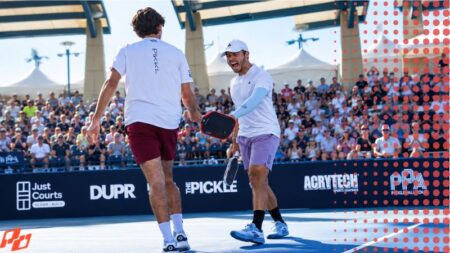
PPA pro Pablo Tellez recently shared one of those tips that sounds half-joking until you think through what it actually does.
His advice? Attack the body early. Very early. At 0-0. Maybe 2-1.
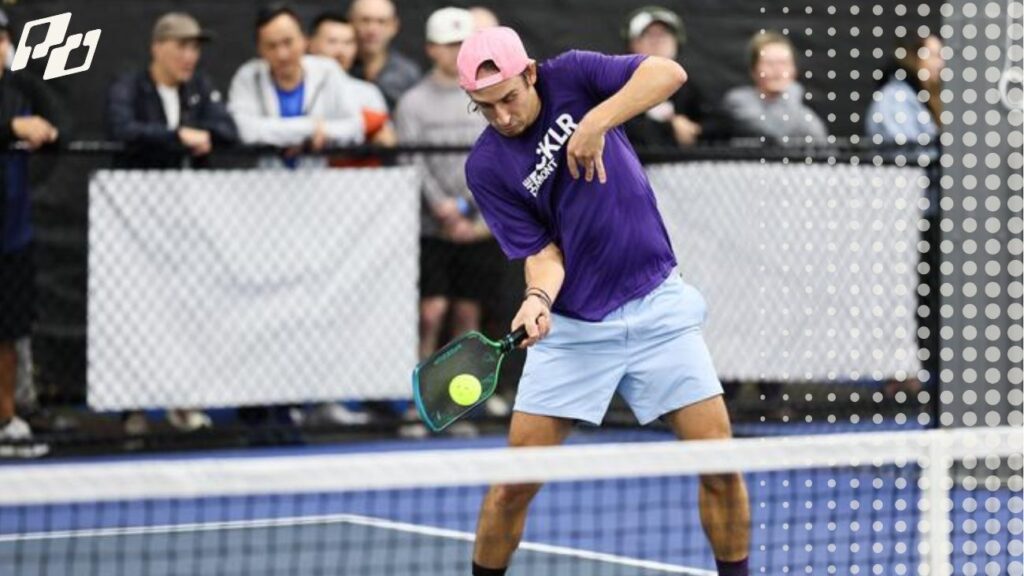
Four players are at the kitchen, you get an attackable ball, and instead of trying to paint a sideline, you go straight into the body. Why?
Because if the opponent starts hanging a little farther off the kitchen afterward, the court just got bigger for the rest of the game.
This is not really a “body bag” strategy. It is a space-creation strategy. And for intermediate to advanced players, that distinction is everything.
What Pablo is really trying to change
A player who feels comfortable at the kitchen stands close to the line, stays balanced, and expects soft exchanges. A player who has just eaten a hard speed-up to the torso often changes something.
Maybe they:
- lean backward
- keep the paddle higher
- stand six inches farther off the line
- protect the chest
- hesitate before crowding the kitchen
- or start thinking about the next speed-up instead of the current dink
Even a small change matters. At the kitchen, six inches is not nothing.
If they drift backward, your dinks can land shorter.
Your angles get wider.
Their volleys arrive lower.
And they may have to reach farther forward to take the same ball.
One commenter under Tellez’s tip summed it up perfectly: “It’s all a mental game after that.”
That is essentially the strategy.
Is the body actually a good target?
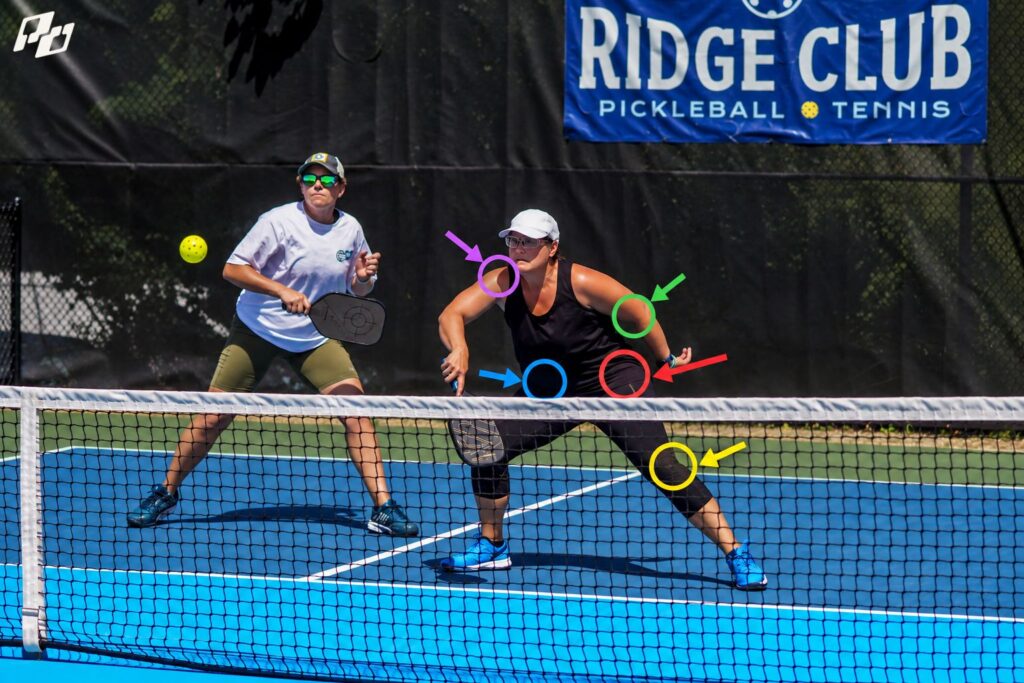
Yes—but not every part of the body.
USA Pickleball specifically teaches targeted speed-ups rather than simply hitting hard at somebody. One recommended location is the wide backhand, because it forces a reach and makes it difficult to generate a strong counter. It also warns that some body locations—particularly a comfortable backhand punch position—can actually make your opponent’s counter easier.
That means “hit the body” needs more precision. For a right-handed player, useful targets often include:
the right shoulder / chicken-wing area
This can create indecision between forehand and backhand.
the paddle-side hip
The ball arrives too close for a comfortable full swing.
the armpit / upper torso area
Again, the goal is jamming the decision, not hurting the player.
Do not just aim at the center of the chest every time. Against a player with an excellent backhand punch volley, that may be exactly where they want the ball.
The first shot is reconnaissance
This is where the tactic gets smarter.
Don’t think: “I need to body-bag this person.”
Think: “I need to learn what this person does when I attack their space.”
Hit one controlled body speed-up early. Then watch.
Do they jump backward?
Do they freeze?
Do they counter hard?
Do they simply block it into the kitchen?
Do they let it fly because they think it is going out?
That reaction tells you a lot.
Different opponents have different strengths, so it’s worth testing a few speed-up locations. One player may crush a chest-high backhand; another may hate exactly that ball.
So the early body shot is partly an experiment. And Pablo’s larger insight is that you get more value from that experiment if you run it before the opponent has settled into the match.
But don’t swing at 100%
This is probably the biggest mistake rec players will make with this tip. They hear “go at the body” and translate it into: hit as hard as physically possible.
That is not the high-percentage version.
I recommend roughly 60–70% power, prioritizing placement and control rather than maximum velocity.
At kitchen distance, you don’t need 100%. The ball already has very little travel time. And the harder you swing, the more likely you are to:
- miss high
- miss long
- lose disguise
- or hit somewhere you didn’t intend
The better cue is: fast enough to jam, controlled enough to place.
When should you actually try it?
Not because the score says 0-0. The score is only Pablo’s reminder to do it early. The ball still has to be attackable.
The best opportunities are when:
✔ The dink sits slightly high
✔ You can contact the ball in front
✔ You’re balanced
✔ The opponent’s paddle is low or neutral
✔ The opponent is leaning forward and crowding the line
Speed-up instruction consistently emphasizes compact mechanics, contact in front, and attacking from a ball that gives you enough height and control.
If the ball is below the net and you’re reaching? Don’t force Pablo’s tip. You haven’t earned the attack.
Why this can work especially well against kitchen crowders
Some players live with their toes almost touching the kitchen line. That gives them advantages:
They take dinks early
Cut off angles
And reduce your reaction time.
But it also reduces the amount of space between their body and the incoming ball. That makes them easier to jam.
A well-placed speed-up can make that player think twice about crowding the line. And if they back off afterward?
Great.
You have just changed the geometry of the game without hitting a winner. That’s the non-obvious payoff.
What if they don’t back up?
Then you’ve learned something equally useful. Maybe the opponent:
- has excellent hands
- likes countering body attacks
- is very comfortable at the line
- or recognizes out balls well
Experienced players discussing body attacks often point out that stronger opponents may simply stay compact, keep their paddle in front, get low, and counter the ball cleanly.
If that happens, stop feeding them their favorite shot.
Try:
- wide backhand
- paddle-side hip
- middle
- or go back to dinking until you get a better ball
The tactic is only smart if you adjust to the answer.
For older rec players, use the strategic version—not the macho version
This is especially important.
If you’re playing competitive rec or tournament pickleball with older players, a controlled body speed-up can be perfectly legitimate.
But blasting indiscriminately at somebody who clearly cannot defend themselves is not good strategy. It’s just poor judgment.
Experienced players generally distinguish between legitimate body targeting in competitive play and unnecessary headhunting or reckless play in casual rec games.
So if you’re 60+ and want to use Pablo’s tactic, think: jam, don’t injure.
Aim shoulder/hip.
Keep it controlled.
Avoid the face.
Use it in a competitive context where both players are ready for pace. That is the useful version.
What if you’re the one getting body-bagged?
This matters because once you start using this tactic, people will use it on you too. The best defense is not faster panic. It’s readiness.
Experienced players repeatedly recommend:
- get low
- keep the paddle in front
- stop moving before contact
- and use compact blocks rather than large swings
One especially useful rec-player rule: if your side leaves a high ball, assume pace is coming.
Don’t admire the dink.
Prepare.
And if someone keeps attacking too high?
Let one go.
Many intermediate players hit body speed-ups hard enough that the ball would have sailed long if the defender simply moved. Experienced players mention this constantly.
The two-ball version of Pablo’s strategy
Here’s how I’d actually teach this to a 3.5 or 4.0 player.
Ball one: establish the threat
Early in the match, when you get a legitimate attackable dink: controlled speed-up to the shoulder or hip.
Watch the reaction.
Ball two: exploit the reaction
If they back off: drop the next dink shorter.
If they protect the body: go wide.
If they counter well: stop attacking that location.
If they panic: keep the pressure.
That’s the full strategy.
The first attack is not the point. The second shot is.
The biggest mistake is thinking the body shot has to win
It doesn’t. This is where Pablo’s advice becomes genuinely useful.
If the first speed-up produces a weak volley?
Good.
If it makes the opponent step back?
Even better.
If it makes them hesitate later?
You may have gained something that lasts several rallies.
That is why this tactic is more interesting than simply trying to hit someone.
You are not attacking the body because the body is the target. You are attacking it because space is the target.
And if one early, controlled speed-up buys you six inches of extra court for the next twenty points?
That may be one of the cheapest advantages you can create all match.