
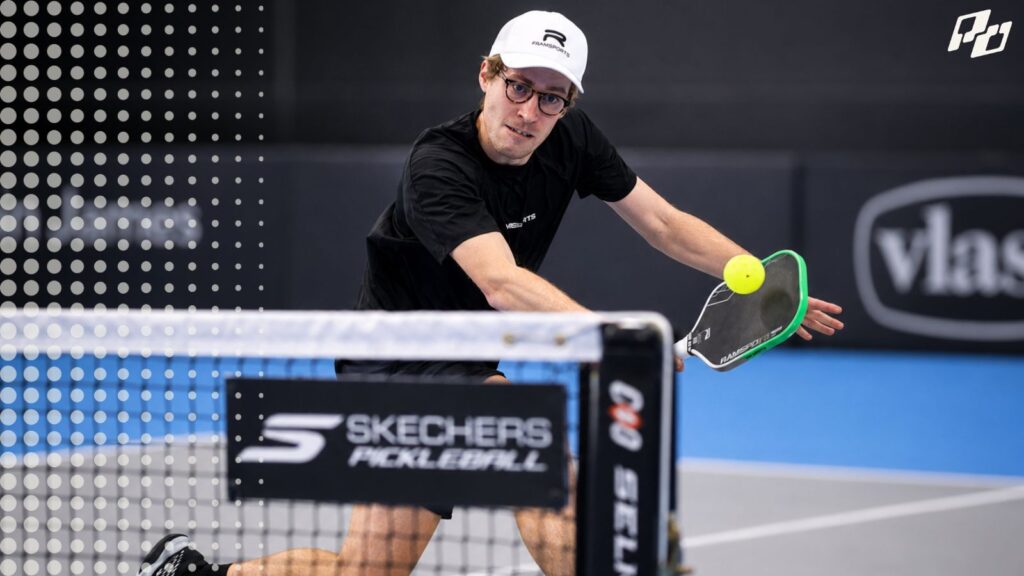
The backhand slice dink is one of those shots that looks simple until you actually try to control it.
You want the ball to stay low. You want a little bite. You want it to land softly in the kitchen and make your opponent lift the next ball.
Instead, it dives into the net.
Or it floats too high.
Or it comes off the paddle with that sad little “oops” trajectory that immediately tells your opponent, “Please attack me.”
For early intermediate players, the problem is often not that they need more spin. It is that their paddle structure breaks down before contact.
The biggest clue? The paddle tip drops.
And once you understand why that small detail matters, the fix becomes much simpler than most players think.
Why the Backhand Slice Dink Is Worth Learning
A good backhand slice dink gives your soft game texture.
It is not just a safe dink. It is a dink that can stay lower, slow the rally down, change the bounce, and make your opponent contact the ball from below net height.
That matters because the whole purpose of a dink is to deny an easy attack. For rec players, the slice dink is especially useful when you want to:
- slow down a faster crosscourt dink
- make the opponent lift from the kitchen
- change rhythm without speeding up
- protect yourself when stretched on the backhand side
- or make your backhand dink less predictable
But here is the catch: the slice dink only works if the paddle is organized. If the paddle tip falls, the shot gets too steep, too wristy, and too hard to control.
Why “Tennis Slice” Mechanics Can Betray You
This is where a lot of former tennis players get tricked.
In tennis, a slice backhand often has a bigger high-to-low path. The racquet strings can grab the ball, the court is bigger, and you have more room for the ball to travel.
At the pickleball kitchen, you do not have that luxury.
The net is close. The target is tiny. The ball is plastic. The paddle face is solid. And your opponent is standing right there waiting for anything that floats.
So if you swing down too sharply, the ball often has nowhere to go except the net. If you compensate by opening the face too much, the ball pops up.
That is why the better pickleball version is not a chop. It is a compact, side-back brush.
Think of it this way:
Tennis slice often feels like cutting down through the ball.
Pickleball slice dink should feel like brushing around the side-back of the ball and sending it forward.
That forward piece is important. Spin without forward direction becomes a dump shot. Forward direction without paddle control becomes a floater.
You need both.
The Key: Keep the Paddle Tip Up
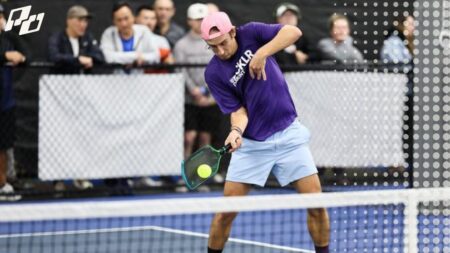
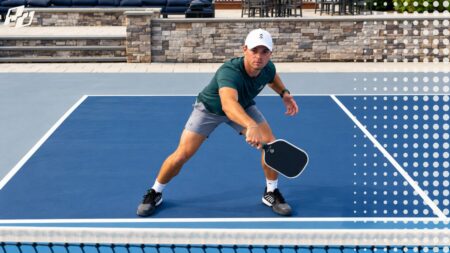
“Paddle tip up” does not mean your paddle has to point straight to the sky. It means the top edge of the paddle stays supported — roughly level with or slightly above your hand — so the wrist does not collapse and the face does not change at the last second. This is how it’s done correctly:
When the tip stays up, several good things happen:
✅ your wrist stays quieter
✅ your paddle face stays more predictable
✅ your contact stays in front
✅ your swing path stays compact
✅ and the ball has a cleaner forward window over the net
When the tip drops, the opposite happens:
❌ the wrist gets floppy
❌ the face opens or closes late
❌ the paddle path gets too vertical
❌ contact becomes thin
❌ and the ball either dives into the net or floats up
That is why this detail is so powerful. It is not just cosmetic. It changes the geometry of the shot.
A simple cue: Tip up, face calm.
Come From the Side of the Ball
The second piece is where you contact the ball.
A lot of early intermediate players try to slice the bottom of the ball. That usually creates too much lift or too much downward chop. Instead, think about brushing the side-back quadrant of the ball.
You are still creating underspin or side-under spin, but you are not hacking downward.
The motion should feel like a small, controlled brush across the ball with a gentle forward send. Backspin is created by a high-to-low brushing action, but at kitchen distance, that motion has to be softened and blended with forward control so the ball clears the net and lands safely.
General ball-spin research also shows that spin and bounce behavior depend heavily on contact friction and incoming paddle/ball interaction, which is why small paddle-angle changes can create big differences in how the ball leaves the paddle.
Useful cue: Side-back brush, not bottom chop.
How to Hit the Backhand Slice Dink
1. Set the Paddle Early
Do not wait until the ball is already beside your hip. Prepare the paddle in front of your body with the tip supported and the face slightly open.
You should feel like the paddle is already organized before the ball arrives.
Cue: Set early, slice late.
2. Stay Low With Your Legs
If you stand tall, your hand has to manufacture the whole shot. That is when the wrist starts doing too much.
Get low enough that your paddle can travel through the ball without scooping.
Cue: Low body, quiet hand.
3. Contact in Front
Late contact is the enemy of this shot. If the ball gets beside you, the only way to slice it is usually with a wristy chop.
Contact slightly in front of your lead knee or front hip so you can guide the ball forward.
Cue: Meet it before it crowds you.
4. Keep the Paddle Tip Up Through Contact
This is the anchor. The tip should not collapse downward as you strike the ball. Keep the paddle supported so the face stays stable.
Cue: Tip up through contact.
5. Brush the Side-Back of the Ball
Do not cut straight down. Brush across the side-back quadrant with a small, controlled motion.
You want a little bite, not a dramatic carve.
Cue: Brush, don’t hack.
6. Finish Small and Forward
A big finish usually means you did too much. Keep the finish short, calm, and slightly toward your target.
Cue: Small finish, soft landing.
What the Ball Should Look Like
A good backhand slice dink should not look flashy. It should look annoying.
It should clear the net with a little margin, land in the kitchen, stay low, and make the opponent contact upward.
The bounce may stay shorter, skid slightly, or arrive with enough underspin that the opponent has to be careful not to lift it. But the goal is not maximum spin. The goal is maximum control.
A great slice dink does one of three things:
- forces a soft reply
- creates a small pop-up
- or resets the rally back to neutral when you were under pressure
That is plenty.
When to Use It
Use the backhand slice dink when you are balanced and the ball is high enough to control.
Best situations:
⮕ crosscourt backhand dink rallies
⮕ balls with a little incoming pace
⮕ moments when you want to slow the rally
⮕ stretched but stable backhand contacts
⮕ opponents who keep attacking flat dinks
⮕ or situations where you want to keep the ball low without adding speed
This is a control shot. It is not a bailout.
When Not to Use It
Do not force the slice dink when the ball is too low, too late, or too far from your body.
Avoid it when:
✖️ you are falling backward
✖️ the ball is already behind your hip
✖️ your paddle tip keeps collapsing
✖️ you need a simple reset
✖️ or the opponent is waiting to attack anything that floats
A good rule: Slice from control. Simplify from trouble.
Common Mistakes
Dropping the paddle tip
Problem: The wrist collapses and the ball dives into the net.
Fix: Keep the top edge of the paddle supported through contact.
Cue: Tip up, face calm.
Chopping straight down
Problem: The ball has spin but no forward path.
Fix: Brush the side-back of the ball and send it forward.
Cue: Across and through.
Opening the face too much
Problem: The ball floats and becomes attackable.
Fix: Use only a slight open face. Let the brush create the softness.
Cue: Slightly open, not skyward.
Taking it too late
Problem: You get jammed and are forced to scoop or chop.
Fix: Contact in front.
Cue: Meet it before it crowds you.
Trying to make it “nasty”
Problem: You over-spin the ball and lose consistency.
Fix: Make it low and playable first. Add more bite later.
Cue: Low before nasty.
A Simple Drill That Fixes It Fast
Stand crosscourt at the kitchen with a partner. Hit five normal backhand dinks first. Then hit one slice dink with the exact same calm setup.
Your only goals:
- paddle tip stays up
- contact is in front
- brush is small
- ball clears the net
- ball lands low in the kitchen
Once that feels stable, add pressure: your partner attacks any ball that floats above net height.
That immediately tells you whether your slice dink is useful or just decorative.
Make the Slice Cleaner, Not Bigger
The backhand slice dink is not about copying a tennis slice. It is about controlling the paddle face in a much smaller space.
That is why the paddle tip matters so much.
If the tip drops, the shot usually turns into a chop. If the tip stays supported, the face stays calm, the contact gets cleaner, and the ball has a much better chance of clearing the net softly instead of dying into it.
For early intermediate players, this is one of those small fixes that can make the kitchen feel less stressful almost immediately.
You do not need a bigger slice. You need a cleaner one.