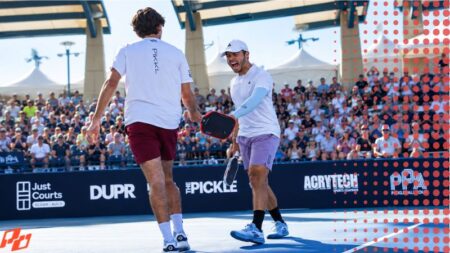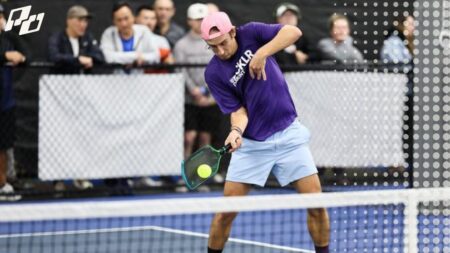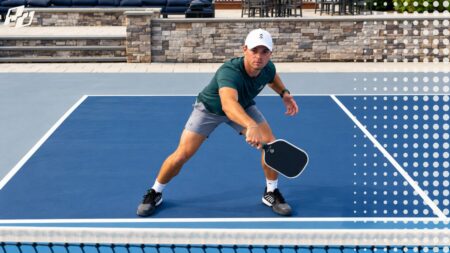

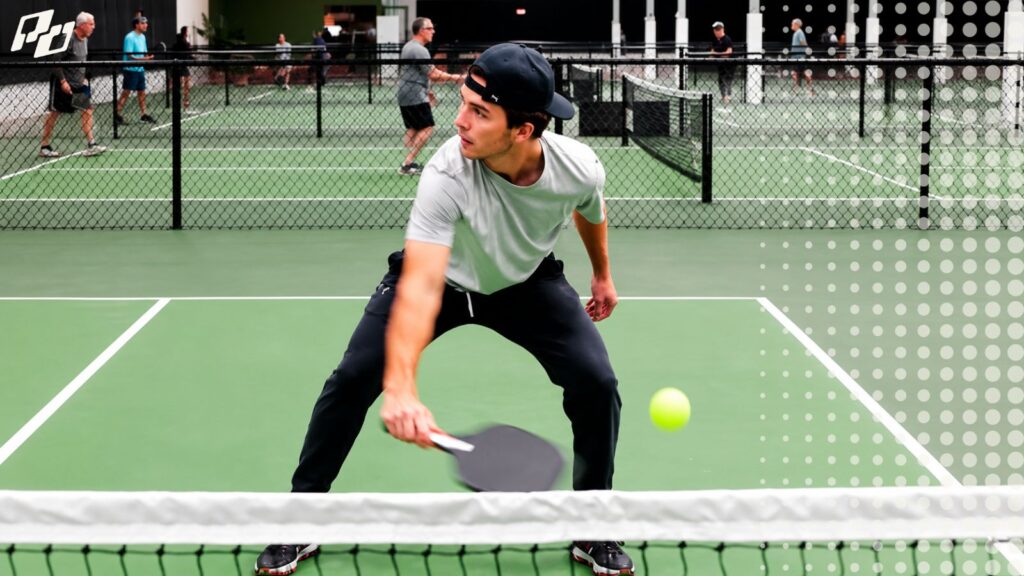
A dink fake-out works by making your setup look like a normal soft dink, then changing the finish with a subtle open paddle face and slice across the ball. Use it during crosscourt dink rallies when opponents start leaning early, so the ball spins away and forces a late reach.
Every rec player knows the feeling: you are locked in a crosscourt dink rally, everyone is calm, the ball is moving softly, and your opponent starts leaning into the pattern.
They think they know what is coming.
Soft dink.
Soft dink.
Soft dink.
And then you show them the same setup… but send the ball somewhere completely different.
That is the beauty of the dink fake-out. It is not a power shot. It is not a highlight-reel ATP. It is a small, sneaky, slightly evil little shot that works because your opponent reads “soft dink” right before the ball spins away from them.
For rec players, that makes it fun, useful, and surprisingly practical — if you use it at the right time.
What Is the Dink Fake-Out?
The dink fake-out is a deceptive kitchen shot where you make your opponent believe you are hitting a normal soft dink, then use a subtle paddle-face change and slicing contact to send the ball spinning away.
The key is that it starts like a regular dink.
Same calm body.
Same soft setup.
Same low posture.
Same eyes toward the kitchen.
Then, at contact, you slightly open the paddle face and slice across the ball so it drifts or spins away from the player in front of you:
Think of it as a dink with a trap door.
Your opponent expects the ball to land in the usual crosscourt window. Instead, it pulls away, fades wider, or forces them to reach late.
Why This Shot Is So Fun
Because it messes with timing.
Most rec players do not move only after the ball is hit. They move based on what they think you are about to do. If your body screams “normal dink,” they start leaning toward the normal dink.
That is when the fake works. You are not trying to hit the ball harder. You are trying to make them take the wrong first step.
And in pickleball, the wrong first step is gold. One little hesitation can create:
✓ a late reach
✓ a popped-up dink
✓ a weak reset
✓ an open middle
✓ a rushed speedup
✓ or just that beautiful frozen look across the net
That last one is worth practicing for by itself.
Who Should Try It?
This is best for early intermediate to intermediate players — roughly 3.25 and up.
You do not need to be advanced, but you do need basic dink control first. If your normal dink is still floating high or missing often, this shot will probably turn into a mistake machine.
Try it if you can already:
✓ dink crosscourt consistently
✓ keep the ball low
✓ control your paddle face
✓ stay balanced at the kitchen
✓ disguise your setup without rushing
Beginners can practice the feel, but they should not build their kitchen game around it yet. First, learn the normal dink. Then make the normal dink sneaky.
When to Use It
The best time to use the dink fake-out is when your opponent is getting comfortable in a pattern.
Use it when:
✓ you are in a crosscourt dink rally
✓ your opponent is leaning early
✓ the ball is soft enough for you to control
✓ you are balanced and low
✓ the opponent in front of you is expecting another routine dink
✓ you have hit several normal dinks first
That last part matters. The fake only works if you have sold the normal shot.
If every ball you hit is weird, nothing is deceptive. But if you hit three or four calm crosscourt dinks, then sneak in the fake, your opponent is much more likely to bite.
When Not to Use It
Do not try this when you are stretched, late, falling backward, or dealing with a low ball that is already difficult.
This is not a bailout shot. It is a control shot.
Avoid it when:
✕ the ball is too low
✕ you are off balance
✕ your opponent is already waiting wide
✕ you need a safe reset
✕ the score is tight and you have not practiced it
✕ you are using it just because you are bored
A fake shot should punish your opponent’s anticipation. It should not punish your own consistency.
How to Hit the Dink Fake-Out
1. Sell the Normal Dink
This is the whole trick.
Your setup should look exactly like your regular soft dink. Same paddle preparation. Same calm posture. Same small backswing. Same relaxed tempo.
If you suddenly take a bigger backswing or change your body shape, you give it away.
Cue: Same setup, different finish.
2. Stay Low and Quiet
Your legs and torso should stay calm. If your body pops up, your opponent sees the change and the ball usually floats.
Stay low enough that you can work under and slightly around the ball.
Cue: Quiet body, sneaky paddle.
3. Look Like You Are Going Kitchen
Your eyes and body language matter. If you stare at the sideline or open court too early, the fake becomes obvious.
Keep the look soft. Make it seem like you are sending one more routine dink into the kitchen.
Cue: Sell soft first.
4. Slightly Open the Paddle Face
You do not need a huge change. Just open the face enough to create lift and slice.
Too closed, and the ball dives into the net.
Too open, and it floats.
Too much side angle, and it sails wide.
The face should feel controlled, not flashy.
Cue: Open a little, not a lot.
5. Slice Across the Ball
This is where the shot gets its movement.
Instead of pushing straight through the ball like a normal dink, brush across it slightly. That side-spin contact makes the ball drift away from your opponent:
@yao.pickleball This shot will catch everyone off guard! 1. Fake backhand slice dink! 2. Lag .5s turn paddle face speed it up #fyp #pickleball #pickleballtiktok #pickleballtips #pickleballislife ♬ PASSO BEM SOLTO – Slowed – ATLXS
Cue: Brush across, don’t hack down.
6. Recover Immediately
A fake-out is fun, but do not admire it.
If your opponent gets a paddle on it, the ball may come back awkwardly. Reset your paddle, stay balanced, and be ready for the next shot.
Cue: Fake, then freeze ready.
The Best Target
Your best target is usually the space just outside your opponent’s comfortable reach.
Not the sideline. Not a miracle angle. Not a winner-or-nothing shot.
Aim for a ball that makes them stretch.
If they are leaning crosscourt, slide the fake a little wider or behind their first step. If they are standing too upright, make them reach low and outside. If they are crowding the middle, let the spin pull the ball away from their paddle.
The goal is not always to win clean. The goal is to make their next ball bad.
How It Works in Doubles
In doubles, this shot is especially useful when you are dinking crosscourt and the opposite player starts cheating the pattern.
A good dink fake-out can pull that player wide, which may open the middle for your partner. It can also make the opponent hesitate on future dinks because now they are not sure if the ball is staying normal or spinning away.
But use it carefully.
In doubles, if your fake floats too high, the other team may attack it fast. So the shot has to stay low, controlled, and disguised.
Best doubles use:
✓ after several normal crosscourt dinks
✓ against a player who leans early
✓ when your partner is ready for a pop-up
✓ when you are balanced and not rushed
✓ as a surprise, not a habit
The Biggest Mistakes
1. Making the fake too big
Problem: If you exaggerate it, everyone sees it.
Fix: Keep the setup boring and let the spin do the work.
2. Trying to hit a winner
Problem: It’s still a kitchen shot. Going for too much usually means missing.
Fix: Make them reach. Don’t aim for perfection.
3. Using too much wrist
Problem: A wild snap makes the paddle face unstable.
Fix: Use a controlled brush, not a panic flick.
4. Trying it from a bad ball
Problem: If the ball is too low or you’re late, the fake gets risky fast.
Fix: Use it only when you’re balanced and the ball is controllable.
5. Using it too often
Problem: A fake stops being a fake when you hit it every third ball.
Fix: Hide it inside normal dinks.
The Fun Part: Making Them Believe the Lie
The best part of this shot is not the spin. It is the little moment before contact when your opponent thinks they already know the answer.
That is what makes it so addictive.
You are not trying to become a trick-shot player. You are learning how to make your normal dink look trustworthy enough that your fake actually means something. And once you can do that, the kitchen feels different. Opponents stop leaning early. They stop getting comfortable. They start waiting just a little longer.
That tiny hesitation is the reward.
Use it sparingly, use it from balance, and use it after you have already shown them the boring version. Then, when they finally bite, enjoy it.
Because freezing someone with a shot that barely looks like you did anything? That is peak rec pickleball fun.