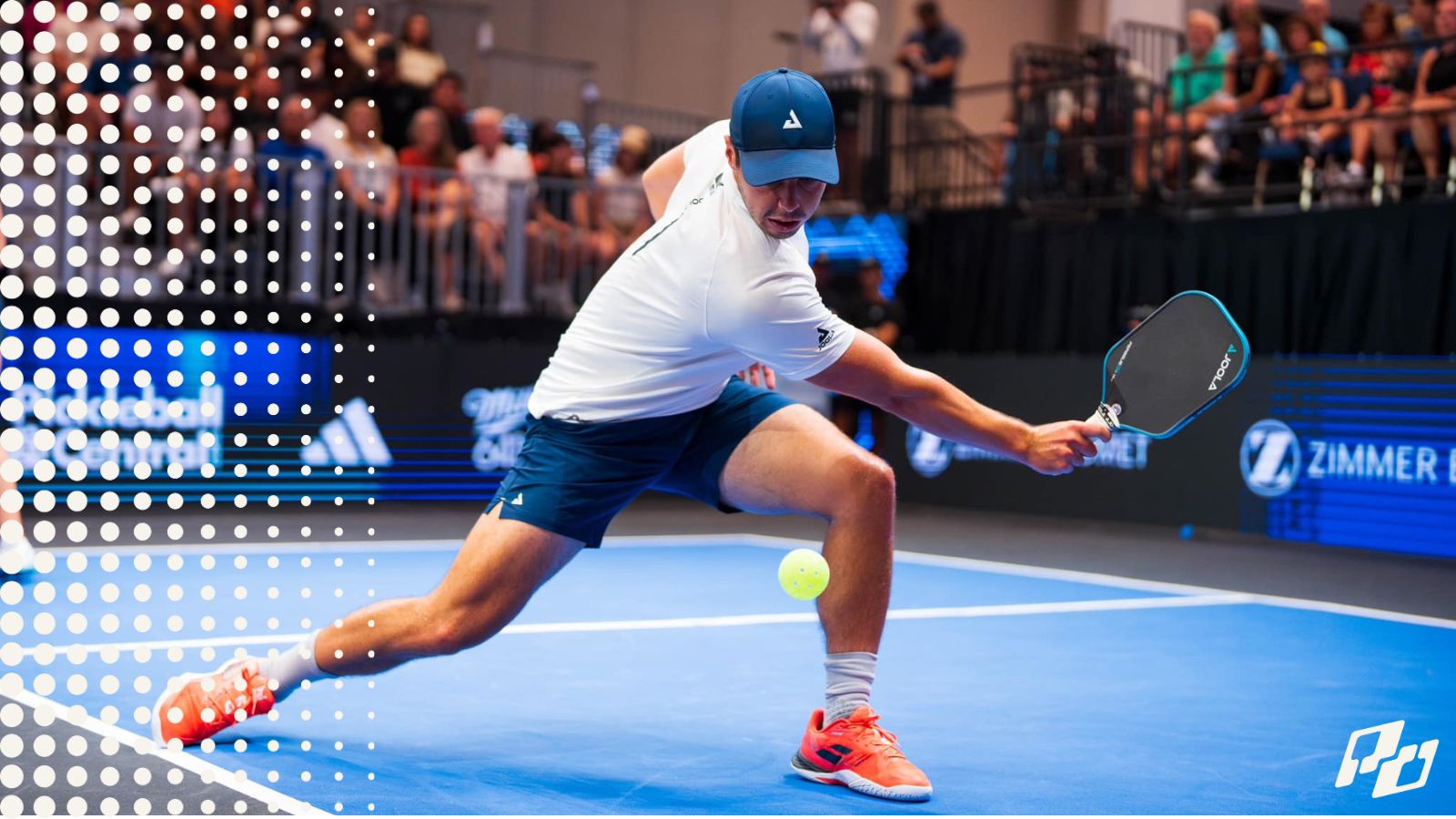
Most rec players think backhand dinking is about surviving rallies.
Ben Johns thinks it’s about shrinking the court.
That difference explains almost everything.
If you listen to Ben talk about backhand dinking, one idea comes up immediately — and it’s not spin, touch, or angles.
It’s this:
“Let me take everything I can out of the air.”
That single mindset changes how the entire dink exchange unfolds.
Why Ben Johns Tries to Take Backhand Dinks Out of the Air by Default
Ben’s default isn’t “let it bounce and reset.” It’s “volley it if I physically can.”
And his reasons are strategic — not flashy.
First, volleying keeps the ball in front of you. When you take a dink out of the air, you’re reacting to something that’s already traveled into your visual space, not something that’s dropping at your feet. That alone makes adjustment easier, especially on the backhand side.
Second, it reduces movement. Ben points out that when he volleys more dinks, he actually moves his feet less.
That sounds backwards to rec players, but it’s critical: less foot movement means more balance, and balance is what keeps your backhand dink stable under pressure.
But here’s the real payoff — the part most players miss.
Volleying Backhand Dinks Shrinks Your Opponent’s Margin
This is Ben’s favorite reason, and it’s pure strategy.
When you consistently take backhand dinks out of the air, your opponent knows something important: anything even slightly too high will get attacked.
That awareness forces them to aim for a smaller window:
- lower over the net
- closer to the kitchen line
- with less margin
Smaller targets create more errors.
So even when Ben isn’t attacking, he’s manufacturing mistakes simply by showing he can.
This is why volleying dinks doesn’t just help you — it actively pressures them:
When NOT to Volley Dink (Even If Ben Johns Does)
“Take everything out of the air” is a mindset — not a rule.
Ben is very clear about this when you listen closely: he volleys dinks when he’s balanced and in control. When those conditions aren’t there, he lets the ball bounce without hesitation.
Here are the situations where letting it bounce is the smarter play.
When the ball is below net height and pulling you forward
If you have to lean, reach, or tip forward to volley a dink, you’re already compromised. That’s how pop-ups happen.
Letting the ball bounce brings the contact point back into a safer zone and restores balance.
When your feet are still moving
Volley dinks require stability. If you’re still stepping, drifting, or recovering laterally, volleying turns into a timing gamble.
Ben slows his feet first — if he can’t, he lets it bounce.
When you’re stretched wide on the backhand
Wide backhand volleys shrink your margin and expose your body. In these situations, Ben often chooses the bounce because it gives him more time and a more neutral contact point.
When the ball is dipping fast
A fast-dropping ball that’s already below the net plane is asking to be popped up if volleyed. Letting it bounce allows the ball to rise into a controllable strike zone.
The takeaway is simple:
Volley when it keeps you balanced and in front.
Bounce when it restores control.
Once you understand when not to volley, Ben’s broader backhand dink philosophy becomes much clearer.
Ben’s Backhand Dink Isn’t About Winning — It’s About Predictability
Once the volley mindset is in place, everything else Ben does makes more sense.
He isn’t trying to win points with the backhand dink. He’s trying to control the next ball.
That’s why his dinks:
- clear the net with intention
- land deep instead of sharp
- repeat the same shape over and over
He’s not aiming for “perfect.” He’s aiming for boring and reliable. And boring is brutal when you’re the one forced to create.
The Paddle Motion: Smaller, Quieter, Repeatable
Another thing Ben emphasizes is how little his paddle actually moves. Rec players tend to over-swing on backhand dinks:
- long backswings
- last-second wrist flicks
- steering the ball instead of guiding it
Ben’s motion is compact. The paddle face stays calm, the swing is short, and the wrist stays quiet.
Less motion means fewer variables — and fewer variables mean fewer breakdowns when rallies speed up.
Depth First, Creativity Second
Watch Ben long enough and you’ll notice a pattern: depth comes before angles. His backhand dinks consistently land near the opponent’s kitchen line. That depth:
- forces lower contact
- reduces speed-up options
- buys him time
Only after he’s established depth does he start changing direction.
Rec players often reverse this order — chasing angles before they control depth — and that’s why their backhand dink feels streaky.
What Intermediate Rec Players Should Take From This
You don’t need Ben Johns’s hands to apply this.
Start with the mindset shift:
- Volley dinks when you can
- Let fewer balls fall into awkward bounce zones
- Use margin instead of flirting with the tape
- Prioritize depth over creativity
- Stop dinking while your feet are still moving
If your backhand dink can reliably:
- stay unattackable
- land deep
- force opponents to aim smaller
You’ll win more points without ever hitting a “winner.”
We also broke down the technique behind Ben Johns’s backhand roll. Don’t miss that one.