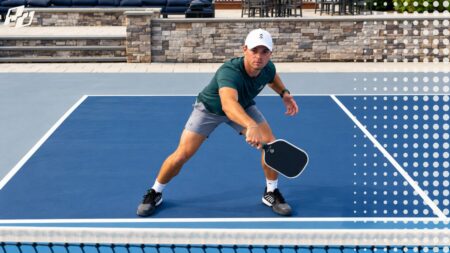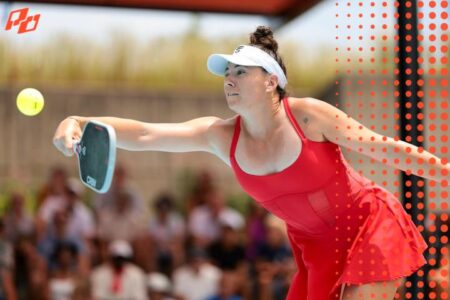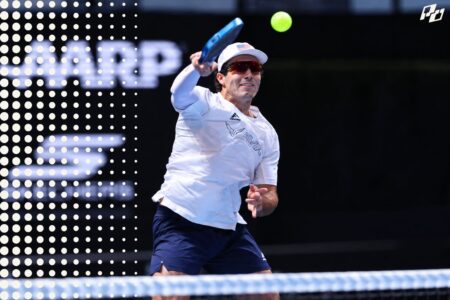

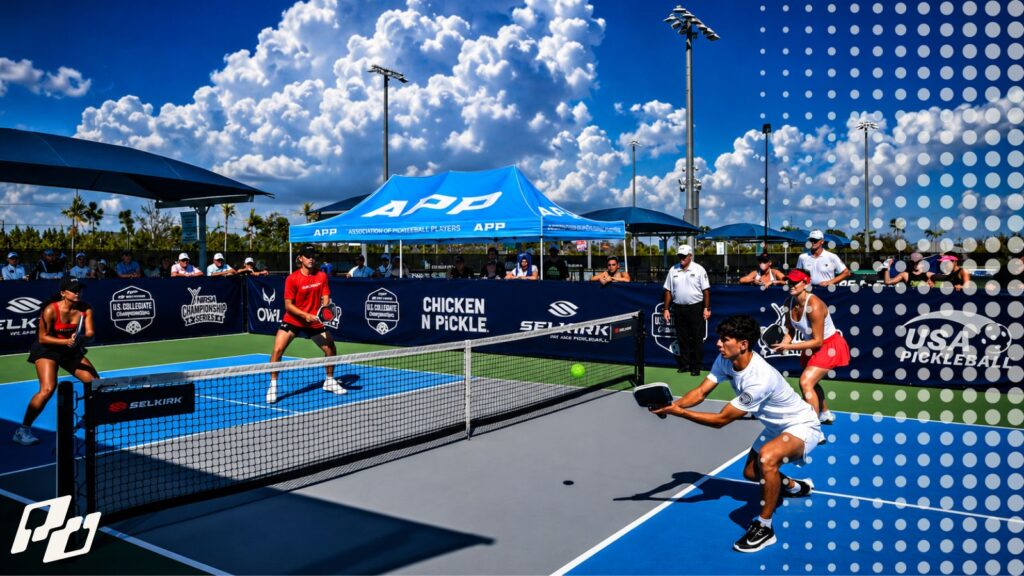
If you’re being targeted in crosscourt dink rallies, don’t keep hitting to the same spot. Instead, use a simple three-ball pattern: outside foot, outside foot, then inside foot. The first two dinks establish a rhythm, while the third crowds your opponent’s contact point, often producing a softer reply that gives your partner a chance to join the rally.
When opponents repeatedly target you at the kitchen line, the obvious temptation is to force your way out.
You try a surprise speed-up. You change direction from a poor ball. You aim closer to the sideline. Usually, that only gives the targeting team what it wants: a rushed mistake from the player already under pressure.
A better response is to change the pattern of the rally without abandoning the safety of the crosscourt dink.
One practical sequence is:
Outside foot crosscourt → outside foot crosscourt → inside foot crosscourt
The first two shots establish a rhythm. The third changes the opponent’s spacing and makes the next crosscourt redirect more difficult. That can produce a softer, more central reply your partner can finally reach.
The goal is not to hit a winner with the third dink. The goal is to change who can influence the next ball.
Why Repetitive Crosscourt Dinking Keeps You Isolated
A crosscourt dink is usually a high-percentage choice because you have more diagonal court to work with and can send the ball over the lower middle portion of the net.
But safe does not have to mean predictable.
If you keep sending the same dink to the same location, the opponent across from you begins receiving an almost identical ball every time. They can settle into one stance, prepare one paddle face and use the same crosscourt swing repeatedly.
They do not have to solve a new problem. You do.
That is why simply “making one more dink” may keep you in the rally without helping you escape the targeting pattern. Coaches increasingly teach dinking as a way to create positioning and contact problems—not merely as a waiting game.
The outside-outside-inside sequence gives each dink a specific job.
Ball 1: Move Them Toward the Outside Foot
Start by dinking crosscourt toward the opponent’s outside foot—the foot closer to their sideline.
Do not try to clip the line. Your useful target is an area inside the sideline and near the outside shoe.
This shot encourages the opponent to:
- move or lean away from the center
- contact the ball farther from the body
- prepare for another wide crosscourt exchange
Your cue is:
Move them, but keep your margin.
A dink that lands six inches from the sideline is not automatically better than one landing 18 inches inside it. You only need enough width to influence the opponent’s balance and expectations.
The ball must also remain low. If you create a sharp angle but leave the dink attackable, the pattern ends before it starts.
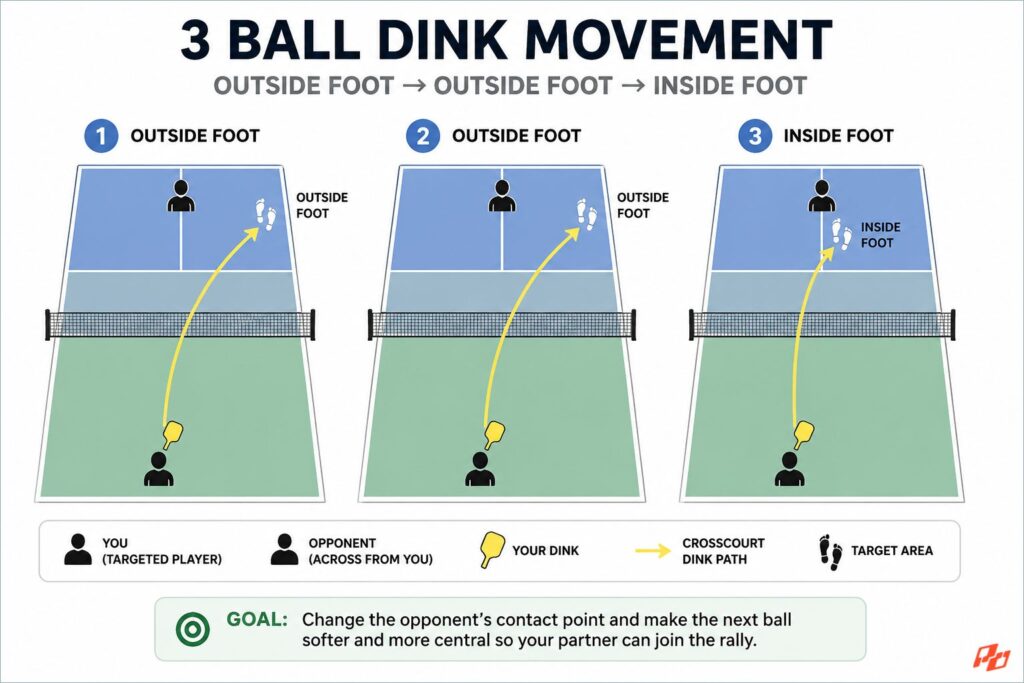
Ball 2: Repeat the Outside-Foot Target
The second ball is where the pattern becomes deliberate.
Many recreational players change direction after one shot because they are eager to surprise the opponent. But one outside-foot dink may look accidental. A second one encourages the opponent to believe the rally is staying in that channel.
They may begin to:
- shade farther toward the sideline
- lean before your contact
- open the paddle early
- prepare the same comfortable crosscourt response
You are not repeating the shot because repetition is inherently good. You are repeating it to build an expectation.
A useful cue is:
Show it twice before you change it.
You do not always need exactly two outside dinks. If the first ball stretches the opponent badly, you may change sooner. If neither ball moves them, you may need to establish the wide target again.
The sequence is a decision pattern, not a rigid three-shot rule.
Ball 3: Shift Crosscourt Toward the Inside Foot
Now keep the ball crosscourt, but change the landing area toward the opponent’s inside foot—the foot closer to the centerline.
This is the key detail from the original advice: you are not escaping by changing to a down-the-line dink. You are changing the opponent’s contact point while staying in the crosscourt exchange.
After preparing for another outside ball, the opponent must suddenly handle a dink closer to the body.
That can create several problems:
- Their paddle becomes crowded
- Their feet may still be moving outward
- They may be caught between a forehand and backhand decision
- They must redirect the ball across the body to maintain the sharp crosscourt angle
- Their contact may occur later or closer to the torso
Coaches commonly recommend the inside-foot target because it can jam the swing path, create indecision and make clean redirection more difficult.
The third dink does not need to be harder. In fact, adding unnecessary pace may give the opponent pace to redirect.
Think:
Same soft stroke, different contact problem.
Pro player Mari Humberg demonstrates the pattern in this quick video:
How the Pattern Brings Your Partner Back Into the Rally
Your partner becomes involved only if the inside-foot dink changes the quality or direction of the opponent’s reply.
A crowded opponent may no longer be able to send the ball sharply back toward your sideline. The reply may instead come:
- softer
- slightly higher
- shorter
- closer to the middle
- on a less severe crosscourt angle
That is the opening for your partner. Before using the pattern, tell your partner:
“When I go inside foot, look middle.”
Your partner should not blindly poach as soon as you hit the third ball. They should read the opponent’s contact.
A reasonable interception opportunity appears when:
- the opponent is jammed or off balance
- the ball is contacted below net height
- the reply begins drifting toward the middle
- your partner can reach it without leaving an easy opening behind them
The targeted player creates the weaker ball. The partner finishes the pattern by recognizing it.
Without that second part, the third dink may work perfectly and still fail to change the rally.
How to Change the Target Without Telegraphing It
The outside-foot and inside-foot dinks should look similar until shortly before contact.
A common mistake is rotating the shoulders dramatically or steering the paddle across the body when changing to the inside target. Better opponents will read that movement early.
Instead:
- use the same setup
- keep the swing compact
- maintain a stable wrist
- adjust the paddle path only slightly
- send the ball through a new window over the net
For the inside-foot ball, you usually do not need a dramatic directional change. The target may be only a few feet inside the previous landing area.
The cue is:
Change the window, not the whole swing.
Do Not Force the Third Ball From a Defensive Position
The pattern works when you have enough balance and control to choose a target. Abandon it temporarily when the incoming dink:
✖️ pulls you well outside the sideline
✖️ forces contact close to the ground
✖️ jams your own body
✖️ makes you reach while falling backward
✖️ arrives with enough pressure that placement becomes unreliable
From those positions, send a safe crosscourt dink and rebuild.
A tactical pattern should reduce your risk. It should not convince you to attempt a precision shot from a ball you are barely controlling.
Three Mistakes That Ruin the Pattern
1. Hitting the inside-foot dink too high
Players often become so focused on the new target that they guide the ball upward.
The inside-foot dink must still be unattackable. Keep the ball low until a genuine attacking opportunity appears.
Prioritize height control over perfect placement.
2. Expecting the third dink to win immediately
The inside-foot ball is usually a setup shot.
Its job is to weaken the next reply, not force an instant error. After hitting it, recover your paddle and expect the ball to come back.
3. Failing to involve the partner
If your partner does not understand the pattern, they may remain too wide or react late to the softer middle ball.
Discuss the play before the game or between points. A two-second conversation can turn an individual target change into a coordinated team tactic.
A Simple Drill for Learning the Pattern
Place two targets in the crosscourt kitchen:
- one near the outside foot
- one near the inside foot
Begin with cooperative crosscourt dinking.
The targeted player must hit:
- outside target;
- outside target;
- inside target.
The opponent then returns the third ball naturally. The hitter’s partner watches from the opposite kitchen position and calls:
- “Mine” if the reply enters a realistic interception window;
- “Yours” if it remains sharply crosscourt.
After several repetitions, play the point live after the inside-foot dink.
This teaches three separate skills:
- placing the pattern
- recognizing the weaker reply
- deciding whether the partner should intervene
Do not score the drill only by whether all three dinks land on the targets. Also evaluate what the third ball produces.
Did the opponent contact it closer to the body? Did the reply lose angle? Could the partner become involved?
That is the real measure of success.
Here’s How I’d Break the Pattern
When opponents keep targeting you crosscourt, do not give them the same comfortable contact over and over.
Establish the outside-foot exchange, repeat it long enough to create an expectation, then move the next crosscourt dink toward the inside foot.
The tactical sequence is simple:
Stretch them. Confirm the pattern. Crowd the next contact.
The third dink is not meant to end the rally. It is meant to soften or centralize the next ball so your partner has a chance to step in.
That is how you stop reacting to the targeting pattern and begin controlling it.