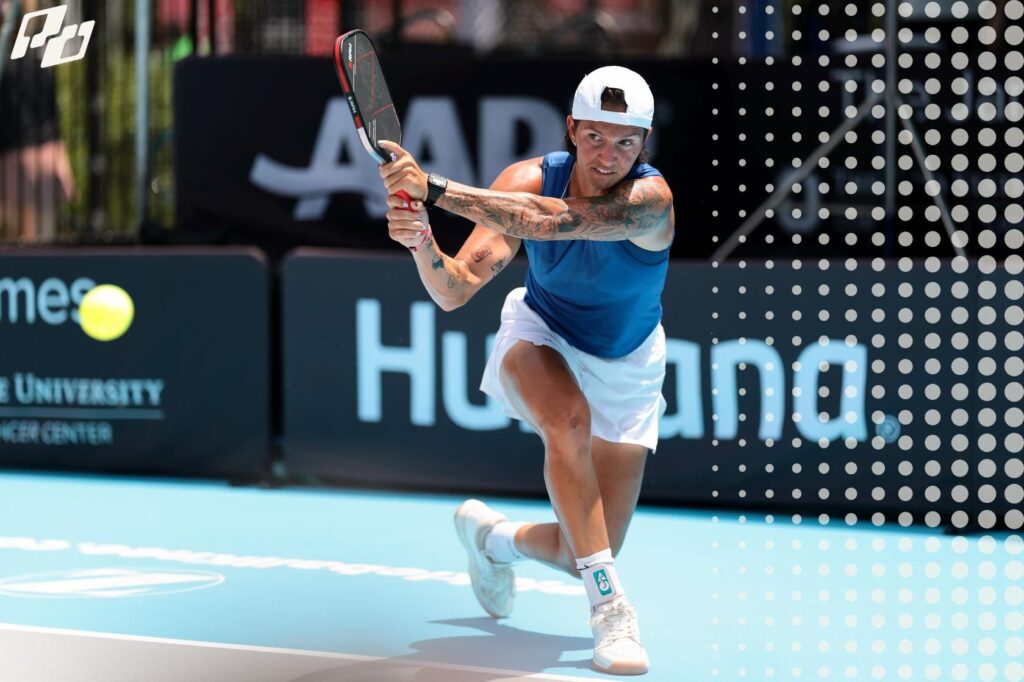
A better pickleball two-handed backhand drive starts with early spacing, a stable contact point, getting below the ball, using the top hand to shape the shot, and finishing balanced. If your twoey floats, jams, or sprays wide, the fix is usually better setup and paddle path — not more power.
You already have a two-handed backhand.
You use it in games. You trust it more than a one-hander. But there is a difference between a twoey that simply keeps the rally alive and one that actually puts pressure on opponents.
That is where many intermediate players get stuck.
The shot feels close, but something keeps leaking: the ball gets jammed, floats, pulls wide, or leaves you off-balance after contact.
Usually, the fix is not more power. It is better organization.
A stronger twoey comes from creating space earlier, getting below the ball, letting the top hand shape the drive, and finishing balanced enough to recover. Those small adjustments can turn your backhand from usable into dangerous.
The Adjustments That Make the Twoey Work
1. Create Space Before You Create Power
What it fixes: jammed contact, weak drives, late swings, and balls that float.
Most rec players get too close to the ball on their two-handed backhand. Once the ball crowds your body, both arms get trapped. Now you are not really driving the ball — you are trying to rescue it.
You want the ball in your hitting window, not buried near your ribs.
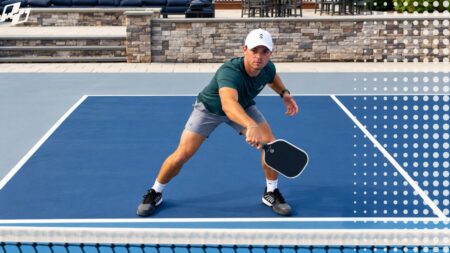
For a two-handed backhand drive, contact should usually happen slightly in front of your lead hip, with enough room for both arms to extend through the ball. It does not need to be way out in front like a stretched one-handed backhand, but it cannot be cramped either.
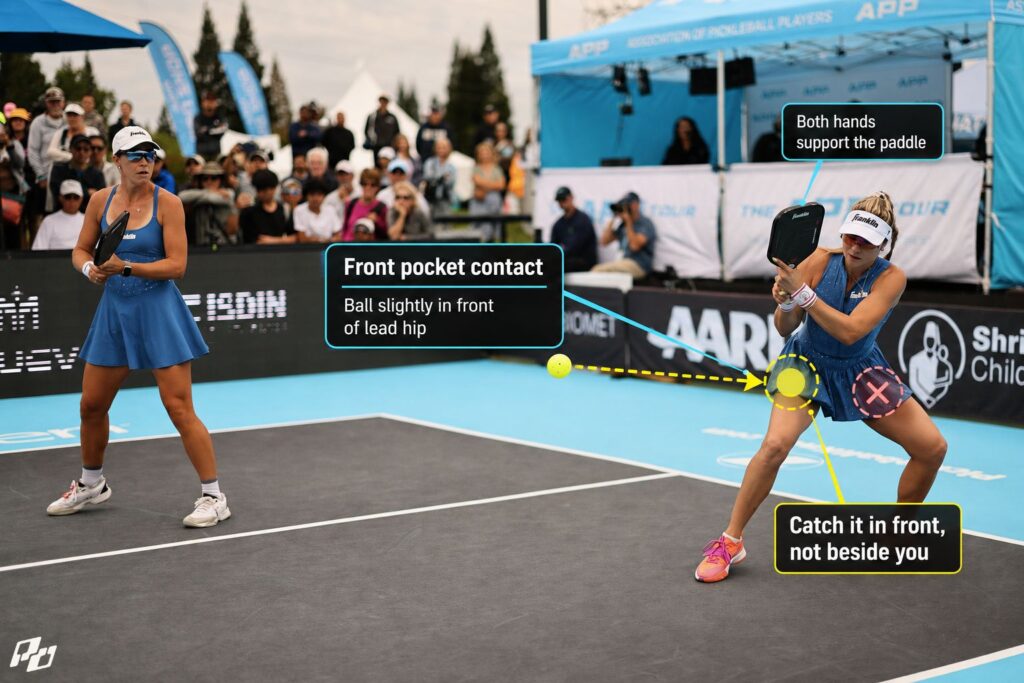
Why it matters: space gives your paddle room to travel forward and up. Without space, your hands get stuck and your paddle face starts guessing.
When to think about it: as soon as you recognize the ball is coming to your backhand side. Do not wait until the ball is already on top of you.
How to feel it: turn early, set your paddle early, and adjust your feet so your chest stays slightly behind the ball at contact.
A good cue: Keep the ball in your hitting window, not your personal space.
If your elbows feel glued to your body, you are too close. If your chest is already past the ball, you are late or drifting through contact.
2. Get Below the Ball Before You Swing
What it fixes: net balls, flat drives, late lifting, and scooped pop-ups.
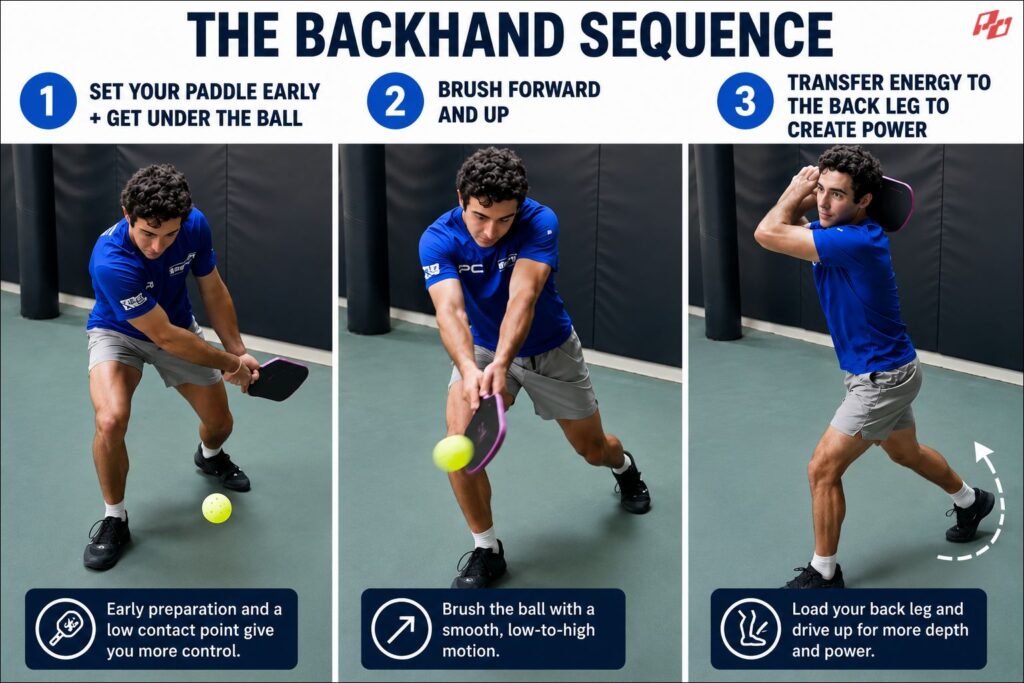
A good two-handed backhand drive usually starts from below the ball. That does not mean you scoop it. It means you get your body and paddle into a position where you can drive forward and up through contact.
The mistake is dropping late.
Many players stay tall, then suddenly dip as the ball arrives. Now the body is moving down while the paddle is trying to move up. That creates messy contact.
Why it matters: getting low early gives the ball shape. It helps you create topspin and clearance without floating the shot.
When to think about it: before the ball reaches your hitting zone. Your height should be mostly set before contact.
How to feel it: lower through your knees and hips, not just your hands. Let your paddle start under the ball, then swing through it.
A good cue: Set your height first, then swing.
If you are still dropping while you hit, you are making the shot harder.
3. Don’t Fire the Hips Too Soon
What it fixes: sideways misses, pulled drives, open paddle faces, and rushed contact.
Power matters, but early rotation ruins a lot of twoeys.
When your hips or chest open too soon, your paddle gets dragged across the ball instead of driving through it. The shot may spray wide, float, or lose shape.
The two-handed backhand should use body rotation, but it should not feel like you are spinning out of the shot.
Why it matters: your body should deliver the paddle to contact, not yank it away from the ball.
When to think about it: after your unit turn and before contact. This is the moment where many players rush.
How to feel it: turn early, hold your shape for a beat, then release through the ball. Let your rotation support the swing instead of taking over.
A good cue: Let the hips deliver the paddle, not outrun it.
If your chest flies open before the ball is gone, you probably rotated too soon.
4. Let the Top Hand Shape the Ball
What it fixes: wristy swings, weak contact, inconsistent paddle face, and drives with no dip.
On the two-handed backhand, your non-dominant hand is not just along for the ride.
For a right-handed player, the left hand should help guide the paddle path and shape the ball. The bottom hand stabilizes. The top hand helps create the drive and roll.
When the dominant hand takes over, the shot often becomes a pull, slap, or flick. That can work once in a while, but it is hard to repeat under pressure.
Why it matters: the top hand helps you control the paddle face and create topspin without forcing the wrist.
When to think about it: during the forward swing and follow-through.
How to feel it: imagine your top hand helping the paddle travel up the outside of the ball. Not straight up. Not around your body. Forward and up.
A good cue: Top hand shapes, bottom hand stabilizes.
If the ball keeps floating or spraying, check whether your dominant hand is yanking the paddle across your body.
5. Brush Forward and Up, Not Just Up
What it fixes: floaters, pop-ups, and soft balls that sit in your opponent’s strike zone.
A twoey needs shape, but it still has to be a drive.
Many players hear “topspin” and start lifting too much. The paddle face opens, the swing goes mostly upward, and the ball floats. It may clear the net, but it sits up and gets punished.
The better feeling is forward and up. The forward part gives the ball depth and pressure. The upward part gives it net clearance and dip.
Why it matters: a good drive does not just go over the net. It travels with enough pace and spin to dip before your opponent can attack comfortably.
When to think about it: once your body is set and the ball is in your window.
How to feel it: keep the paddle face stable and let the edge of the paddle work up through the ball. Avoid flipping the face open toward the sky.
A good cue: Brush the ball into the court, not into the air.
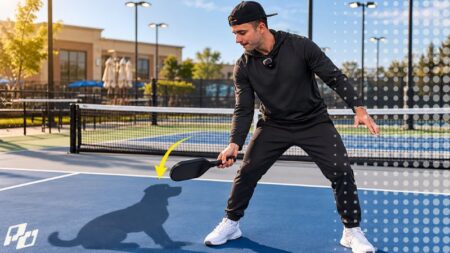
Pro player Richard Livornese breaks down exactly where to contact the ball, how to shape the shot, and the swing path that makes it work.
6. Finish Balanced Enough to Recover
What it fixes: falling forward, slow recovery, overhitting, and drives that leave you exposed.
The follow-through tells you whether the shot was organized.
If you cannot hold your finish for even a moment, something probably broke earlier. Maybe the ball was too close. Maybe you opened too early. Maybe your momentum carried you through contact. Maybe you tried to hit harder than your balance allowed.
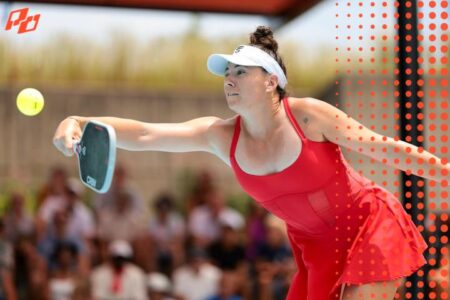
A good twoey finish should feel controlled. You should be able to recover for the next ball, not admire the shot while falling into the court.
Why it matters: the drive is only useful if you are ready for what comes next.
When to think about it: immediately after contact.
How to feel it: finish up and through the ball, with your weight transferred but not spilling forward. Your chest should not be wildly open, and your paddle should not wrap across your body.
A good cue: Finish like someone could take a picture.
Not stiff. Not posed. Just balanced.
7. Choose the Right Ball for the Twoey
What it fixes: forced attacks, emergency swings, and backhands hit from bad positions.
The two-handed backhand drive is not the right answer for every backhand ball.
Because both hands are on the paddle, you give up some reach. That means wide balls, late balls, and emergency balls may be better handled with a one-handed block, reset, slice, or defensive shot.
The twoey is best when you have time to turn, space to set, and a ball you can contact in front.
Why it matters: even a good technique breaks down when you use it on the wrong ball.
When to think about it: before you commit to the swing. Ask: can I get both hands set and contact this in my window?
How to feel it: attack the balls that let you organize. Reset the balls that force you to reach.
A good cue: Use the twoey when you can set it, not when you have to save it.
That one decision will clean up a lot of misses.
The Twoey Diagnostic Table
Use this to figure out which adjustment you need.
| What Happens | Likely Cause | Adjustment |
|---|---|---|
| Ball jams you | You are too close or spacing late | Create space earlier and contact in front of the lead hip |
| Ball floats high | Paddle face opens or swing gets scoopy | Lead with a stable face and brush forward/up |
| Ball goes into the net | Swing path is too flat or body height is late | Get below the ball before the swing starts |
| Ball sprays sideways | Hips/chest open too early | Hold the turn longer and release through contact |
| Shot feels weak | Dominant hand is pulling or contact is late | Let the non-dominant hand shape and extend through |
| Shot goes long | You are running through contact or over-hitting | Stabilize first, then transfer weight through the ball |
| Finish feels off-balance | Setup or momentum broke down | Hold a balanced finish you could “take a picture” of |
Three Cues That Make the Shot Click
“Space before speed”
Do not swing harder to fix a cramped contact point. Create the window first. Power comes after spacing.
“Top hand shapes, bottom hand stabilizes”
For a right-handed player, the left hand helps drive the paddle path and shape the ball. The right hand keeps the paddle stable. If the bottom hand yanks, the shot gets messy.
“Finish balanced before you admire it”
A great twoey should not leave you falling into the court. If you cannot recover after the shot, your drive may be powerful, but it is not controlled.
Mistakes to Be Aware Of
Mistake 1: Thinking two hands automatically means more control
Two hands help only if your spacing and contact point are good. If you are jammed, rushed, or late, the second hand just gives you more strength to make the same mistake.
Mistake 2: Trying to create topspin by flipping the wrists
Topspin should come from the paddle path and the top hand helping the paddle move forward and up. If you try to snap or scoop the ball, the face usually opens and the shot floats.
Mistake 3: Opening the chest too early
When your chest opens early, the swing often cuts across the ball. That is when you see sideways misses, weak contact, and drives that do not stay on line.
Mistake 4: Running through contact
Weight transfer is good. Falling through the ball is not. If your momentum is carrying you forward before you make contact, your paddle face becomes harder to control.
Mistake 5: Using the twoey on balls that are too wide
The two-handed backhand is powerful, but it has less reach. If the ball pulls you wide, late, or off-balance, use a one-handed reset or block instead of forcing a drive.
Mistake 6: Practicing only during games
Games are where old habits come back. To build this shot, practice controlled reps first: shadow swings, easy feeds, then feeds with movement. Add pressure only after the shape feels repeatable.
Mistake 7: Chasing power before shape
A hard, flat backhand drive may work against weaker players, but it becomes attackable as opponents improve. The better goal is a ball with pace, shape, and dip.
One More Thing We’ve Noticed
Here is something we have seen over and over: the twoey tends to fall apart late in a session, not early.
When you are fresh, you turn early, find the window, and stay balanced. But after an hour of play, fatigue creeps in and the first thing to go is your setup. You start reaching instead of moving. Your hips rush. Your chest opens before the ball arrives. The shot that felt clean in game one becomes a liability in game three.
So here is our bonus advice: practice this shot when you are a little tired, not just when you are fresh. A few shadow swings after a long rally. Some controlled feeds in the second half of a drilling session. That is when real muscle memory gets built.
Because a two-handed backhand that only works when you are rested is not a weapon. It is a highlight reel waiting for the right conditions.
Build it under a little pressure, and it will show up when it actually matters — late in a close game, against a player actively targeting your backhand, when the point counts.
That is when the twoey becomes something opponents genuinely have to think about.