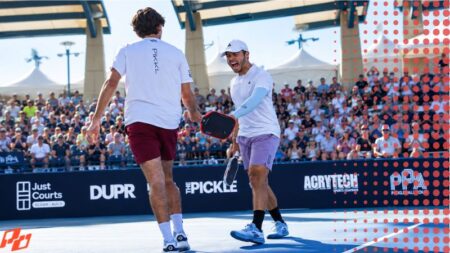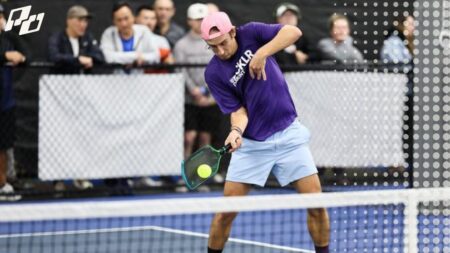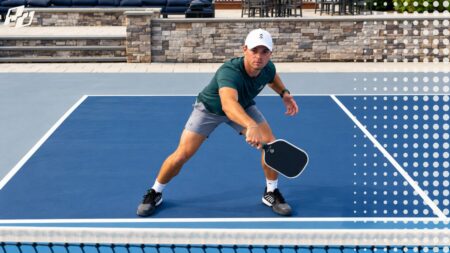

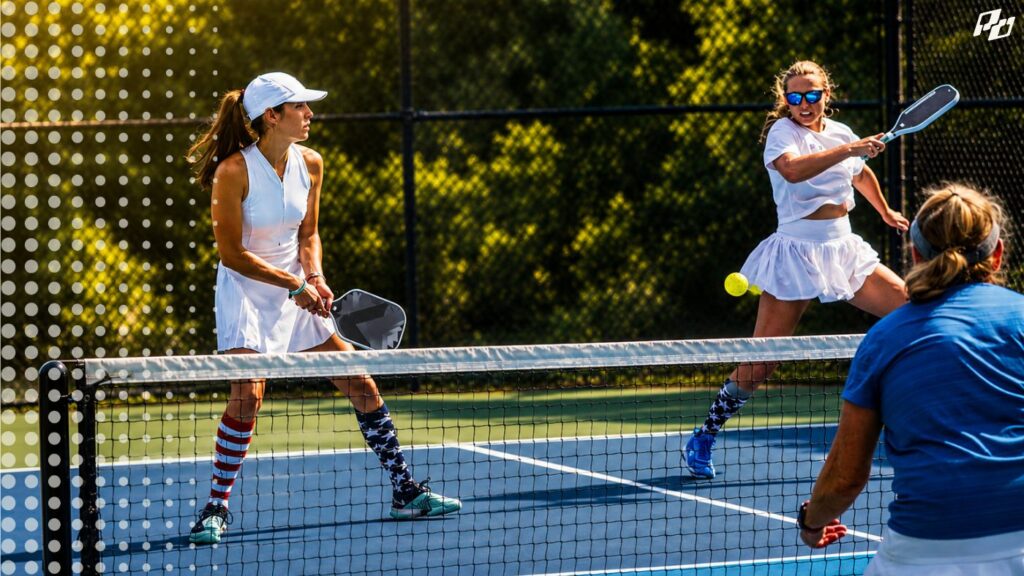
The 3-shot rule in pickleball means thinking in mini-sequences of three shots: serve, third, fifth when serving, or return, fourth, sixth when returning. Each shot should set up the next one, so you control the point early instead of reacting one ball at a time.
Most rec players think “strategy” means having some grand chessboard plan.
Serve here. Move them there. Predict the speed-up. Counter. Slide. Finish.
Sounds great.
Also sounds like way too much to think about while someone is blasting a return at your shoelaces. That’s why the simplest version of smart pickleball might be this:
⮕ Think in 3s.
Not ten shots ahead. Not the whole point. Not some pro-level decision tree. Just three shots.
Serve, third, fifth.
Or, if you’re returning: return, fourth, sixth.
That’s the whole framework.
Better players are not psychic. They recognize patterns, hit with intention, and understand what kind of response their shot is likely to create.
And here’s the opinionated part: If you’re a 3.0–4.0 player, this is probably more important than learning another new shot.
Because most rec points are not lost because someone lacks a nasty two-handed backhand flick. They’re lost because players hit one decent shot… then act surprised by the next ball.
The Problem: Most Rec Players Play One Ball at a Time
Watch a typical 3.5 doubles game and you’ll see this pattern everywhere:
- A player serves deep.
- Good start.
- Then the return comes back.
- Now they suddenly decide what to do.
They drive the third because it’s there. Or drop because someone told them they “should.” Or panic because the return landed deep. Then they hit the fifth like it’s an unrelated emergency.
That’s not strategy. That’s a series of reactions wearing a pickleball outfit. Better players are not planning every shot perfectly. They’re doing something more useful:
They’re choosing Shot 1 based on what they want Shot 3 to look like.
They’re choosing Shot 3 based on what kind of Shot 5 they expect.
They’re choosing Shot 5 based on whether the point is ready to be neutralized, pressured, or finished.
That’s the 3-shot rule.
Every three shots should have a job.
The 3-Shot Rule, Explained Simply
Here’s the rule: Every point should be played in mini-sequences of three shots, each with a purpose.
When your team is serving, your first sequence is:
Serve → Third Shot → Fifth Shot
Your job is usually to survive the return team’s early advantage, earn your way forward, and avoid giving them an easy fourth-shot attack.
When your team is returning, your first sequence is:
Return → Fourth Shot → Sixth Shot
Your job is to keep the serving team back, make their third shot uncomfortable, and punish anything they leave attackable.
That’s it.
You do not need to script the whole rally. In fact, trying to script too much can make you worse because you start playing the plan instead of the ball.
The sweet spot is planned flexibility.
You know your three-shot intention, but you still read the actual ball.
Why Thinking in 3s Works So Well at the Rec Level
Here’s the simple reason this framework is so useful: Most rec points are decided early.
At the club level, rallies are often shaped — and frequently lost — before both teams ever settle into a real kitchen battle. A missed return. A panicked third-shot drive. A fourth-shot volley dumped into the net. A fifth shot floated too high.
That’s the stuff that decides games at 3.0, 3.5, and plenty of 4.0.
Pro pickleball can turn into long, structured rallies. Rec pickleball usually doesn’t. The first six shots carry a ridiculous amount of weight.
So no, you do not need to win every 23-ball dink rally to become tougher to beat. You need to be better at the first six shots than everyone else.
That means:
Serving with a purpose.
Returning with a purpose.
Understanding what your third or fourth shot is supposed to create.
Being ready for the fifth or sixth instead of admiring your previous shot.
That alone will make you look much smarter than players who may hit the ball harder than you.
Sequence 1: When You’re Serving
Serve → Third → Fifth
Let’s start with the serving team, because this is where a lot of rec players misunderstand the point.
Your serve does not need to be an ace attempt.
At most levels, the serve’s real job is to shape the return.
A harder, deeper, heavier serve is useful because it can make the return shorter, higher, slower, or less angled. But if your serve is risky and misses one out of every five attempts, you’re not being aggressive. You’re donating.
The serving sequence should sound like this: “I’m serving to create the third shot I want, then using the fifth to finish the transition.”
Not this: “I hope they miss.”
That’s not a plan. That’s a wish.
Shot 1: The Serve Is Not the Attack — It’s the Setup
A smart serve has a target and a reason. Not just “deep.” That’s the obvious advice.
The better question is: Deep to what response?
For example:
- A deep serve to the backhand corner may create a weaker floating return.
- A body serve may jam a player who likes to run around their backhand.
- A serve near the T may reduce the receiver’s angle and make your third shot more predictable.
- A wide serve may pull a player off the court — but it may also open angles against you if you don’t know what you’re doing.
That last part matters.
A lot of rec players serve wide because it feels clever. But if you pull a good returner outside the court, they may send the ball crosscourt deep and wide, making your third shot harder.
Don’t just ask whether your shot moves them.
Ask what it buys you.
A wide serve that pulls someone off the court is only smart if the next ball is one you want to play. If it gives them an easy angle, you didn’t create pressure — you created a problem.
That’s 3-shot thinking.
Shot 3: Stop Asking “Drop or Drive?” Like There’s One Correct Answer
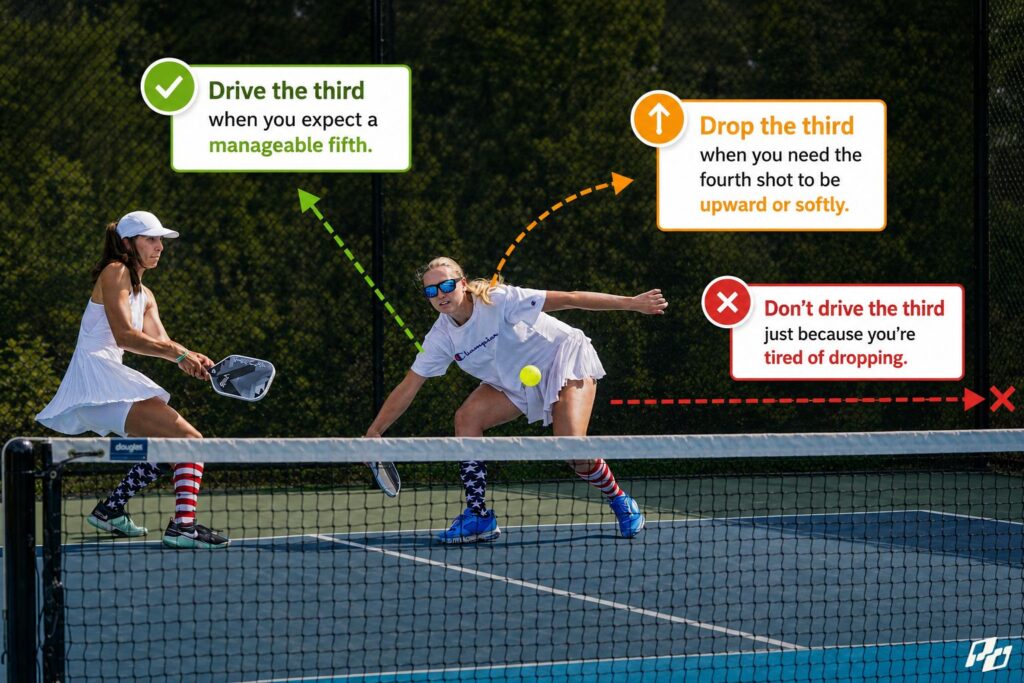
The most boring argument in pickleball is: “Should you third-shot drop or third-shot drive?”
The better answer is: What did your serve and their return create?
A third shot is not a moral decision. It’s a response to the ball in front of you and the position of the opponents.
- A strong third-shot drive can be valuable if the return is short, high, or gives you time to step in.
- A third-shot drop makes sense when you need to neutralize and buy your way forward.
- A third-shot lob can even work if opponents are crashing too hard, leaning in, or cheating forward — but only if you can disguise it and keep it deep enough to matter.
The point is not to marry one shot. The point is to understand what the ball is asking for.
Here’s the version rec players actually need:
Drive the third when you expect a manageable fifth.
Drop the third when you need the fourth shot to be hit upward or softly.
Don’t drive the third just because you’re tired of dropping.
That last one gets people. A 3.5 player misses two drops, gets annoyed, and says, “I’m just driving now.”
Fine.
But if your drive lands chest-high to an opponent already set at the kitchen, your “aggression” just gave them target practice.
A good third-shot drive is not just hard. It has a fifth-shot plan attached.
Shot 5: This Is the Shot Most Rec Players Forget Exists
The fifth shot is where smart players separate themselves.
Most rec players put all their emotional energy into the third shot. If the third-shot drop is good, they relax. If the drive is decent, they admire it. If the opponents block it, they act offended that the ball came back.
But at decent levels, the third shot often does not solve the point. It creates the fifth.
That’s why strong players think: What fifth shot am I trying to earn?
A third-shot drive usually earns one of three fifth shots:
- A soft block you can drop.
- A lifted volley you can attack.
- A firm counter you need to reset.
A third-shot drop usually earns one of three fifth shots:
- A dink you can continue.
- A volley you need to reset from transition.
- A pop-up you can pressure.
If you don’t know which one you’re looking for, you’re late. And in pickleball, late usually looks like panic.
The fifth shot is not optional. It is the bridge between “we hit a third” and “we actually made it to the kitchen.”
That is the exact mindset rec players need. Not “hit a great third.”
Hit a third that gives you a fifth you can handle.
A Serving-Team Example
Let’s say you’re serving from the right side. You notice the receiver is right-handed and tends to return backhand balls short and middle.
Your 3-shot plan might be:
Serve: Deep to their backhand hip, not too wide.
Third: If the return is short, drive through the middle seam at 70%, not 100%.
Fifth: Expect a block. Move in under control and drop the fifth into the kitchen, preferably toward the player who is still moving.
That’s smart pickleball.
Not flashy.
Smart.
Notice the third-shot drive is not intended to be a winner. It’s a pressure ball designed to create a softer fifth.
That’s where many rec players get the sequence wrong. They drive the third as if the point must end immediately.
The better player drives the third to make the fifth easier. That’s a huge difference.
Sequence 2: When You’re Returning
Return → Fourth → Sixth
The return team has the early advantage.
You already get to move forward first. The serving team has to let the return bounce, which means they’re stuck back for at least one more shot.
So your job is not complicated: Make the serving team hit an uncomfortable third shot, then punish or contain their next ball.
But again, most rec players only think one shot at a time. They hit a deep return, run to the kitchen, then hope.
Better players think: What third shot am I forcing, and what fourth shot am I ready to hit?
Shot 2: Your Return Should Make Their Third Shot Boring and Difficult
Everyone knows “return deep.” But intermediate players already know that, so let’s go deeper.
The best return is not always the deepest ball you can hit. The best return is the one that makes the server hit their third shot from a position they don’t like.
That might mean:
- Deep middle to reduce angles.
- Deep to the weaker player.
- Deep with height so you have more time to get fully established.
- Deep to the player who has the worse third-shot decision-making, not necessarily the worse stroke.
That last one is sneaky important.
Some players can hit a nice third-shot drop in warmups but make terrible decisions in games. They drive when off balance. They drop from too far behind the baseline. They try to be cute when they’re rushed.
Return to that person. Not because they have the worst technique. Because they give you the worst decisions.
Smart pickleball is often about attacking judgment, not strokes.
Shot 4: The Most Under-Coached Shot in Rec Pickleball
The fourth shot is where the return team either keeps control or gives it away. The fourth shot is the return team’s first chance to tell the serving team: “No, you don’t get to walk in for free.”
But most rec players make one of two mistakes.
- They either overattack a ball that is too low…
- or they baby a ball that should be pressured.
A smart fourth shot is based on one question: Is their third shot attackable, neutral, or effective?
- If it’s attackable, pressure it.
- If it’s neutral, keep them uncomfortable.
- If it’s effective, don’t panic — play a controlled dink or reset and make them prove they can keep coming in.
The fourth shot does not always need to be a winner. In fact, at 3.5, a great fourth shot often just does this: It keeps the serving team stuck in transition.
That’s enough. Make them hit a fifth from their feet. Make them volley up. Make them decide while moving.
That is where rec errors live.
Shot 6: The Trap Door Shot
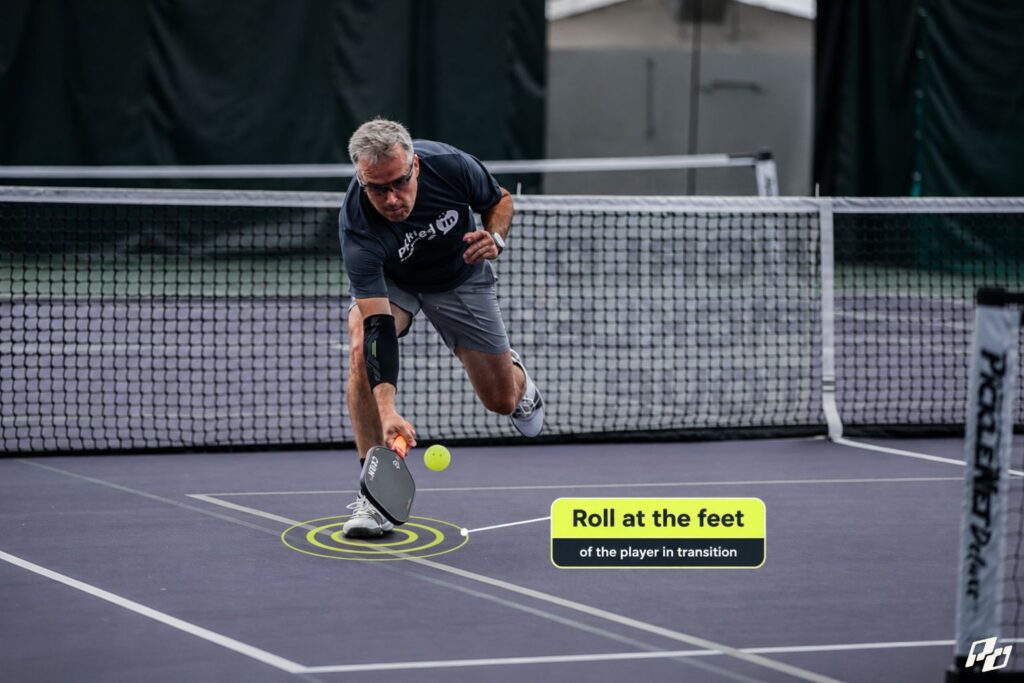
If the serving team survives the fourth, the sixth shot is where you often get your real chance.
Why?
Because a lot of serving teams make it partway in and get uncomfortable.
They’re in the transition zone.
Their feet are moving.
Their paddle is dropping.
Their partner may be ahead or behind them.
They’re not sure whether to crash, reset, or retreat.
That’s when the sixth shot becomes nasty. Not by being huge. By being precise.
The sixth shot is often the ball where you can go behind the moving player, roll at the feet of the player in transition, dink short to make them bend while still moving, or speed up only if the ball is high enough and the target is clear.
Again, the point is not “hit harder.”
The point is: Use your fourth shot to create a sixth shot where they are still uncomfortable.
That’s the 3-shot rule.
The Real Secret: Each 3-Shot Sequence Has a Theme
This is where the framework gets good. Don’t just think, “serve, third, fifth.” Think of each 3-shot sequence as having a theme.
Here are the themes smart rec players should use.
Theme 1: The “Earn the Kitchen” Sequence
This is for the serving team.
Your goal is not to win instantly. Your goal is to get from baseline to kitchen without feeding a putaway.
The sequence:
Serve: Deep enough to prevent an aggressive return.
Third: Drop or controlled drive that makes the fourth shot less dangerous.
Fifth: Reset, drop, or roll depending on what the fourth gives you.
The key is patience with pressure.
Not soft for the sake of soft.
Not hard for the sake of hard.
You are trying to cross the court in stages:
- Baseline to transition.
- Transition to kitchen.
- Kitchen to neutral or attack.
A lot of rec players lose because they sprint forward after a mediocre third shot.
That’s not transitioning.
That’s trespassing.
The fifth shot is your checkpoint. You don’t get to fully move in just because you hit the ball. You move in because your shot quality earned space.
Theme 2: The “Keep Them Back” Sequence
This is for the return team.
The sequence:
Return: Deep, preferably to the player you want hitting the third.
Fourth: Pressure their third without overhitting.
Sixth: Attack the transition gap or make them reset again.
Your goal is to make the serving team feel like the kitchen is far away.
A good return team doesn’t just stand at the line and slap volleys.
A good return team makes the serving team hit one more uncomfortable ball.
Then one more.
Then one more.
At 3.5, that’s often all it takes.
Theme 3: The “Pattern Test” Sequence
This one is underused.
Sometimes your first 3-shot sequence is not designed to win the point. It’s designed to gather information.
For example:
Serve to their backhand.
Watch whether they return crosscourt or middle.
Hit the third based on that pattern.
Next point, repeat and see if they do it again.
This is what smart players do naturally: they watch habits, notice tendencies, target weaker patterns, and pay attention to what opponents repeatedly give back.
That is not random. That is how you build a match plan. Rec players love to say, “I need to figure out their weakness.”
Okay. Here’s how: Test one pattern for two or three points.
Not one shot.
Not one guess.
A mini-experiment.
- Serve to backhand twice.
- Return middle twice.
- Dink to the same foot twice.
- Roll at the same hip twice.
Then watch.
✅ Do they pop up?
✅ Do they retreat?
✅ Do they speed up too early?
✅ Does their partner overcover?
✅ Do they leave the line open?
✅ Do they always reset crosscourt?
Now you have something better than a plan. You have evidence.
What “Thinking in 3s” Is Not
Let’s clear up a big misunderstanding. Thinking in 3s does not mean deciding before the point: “I’m going to serve wide, drive middle, drop crosscourt, then speed up at the right shoulder.”
That can work in your imagination.
Then the return clips the tape and lands short, and your beautiful plan becomes comedy. Thinking in 3s means: You know the purpose of the next three shots, but you let the ball choose the exact answer.
It’s like driving with a route in mind.
You’re not closing your eyes and forcing the same turn no matter what traffic does.
You’re just not wandering around the city hoping to accidentally arrive.
The 3-Shot Rule in Common Rec Situations
Let’s make this practical.
1. You keep getting stuck after your third shot
Most likely, you’re treating the third shot as the whole transition.
Before you hit it, ask: What fifth shot am I willing to hit from transition?
If the answer is “I have no idea,” don’t blast the third and charge.
Try this sequence instead:
✅ Serve deep middle
✅ Drive the third at 70% through the middle or at the weaker volleyer’s inside hip
✅ Expect the block
✅ Use the fifth-shot drop to move in under control
The third is not trying to win the point. It is trying to create a fifth shot you can handle.
2. Your drops keep getting crushed
This usually means one of three things:
✅ Your drop is too high
✅ Your drop is too short and sits up
✅ Your drop choice is wrong because the return pushed you too far back or off balance
The fix is not just “practice drops.”
It is this: Use your serve to create easier drops.
If your serve is soft and short, good returners step in, attack the return, and pin you deep. Now your third-shot drop has to travel too far under pressure.
So start the sequence earlier:
✅ Serve deeper and heavier
✅ Make the return less aggressive
✅ Drop from a better position
Your third-shot problem may actually be a serve problem.
3. You hit great returns but still lose the point
Then your fourth shot is probably too passive or too impatient. The return got you to the kitchen.
Good.
Now the sequence becomes:
✅ Return deep to the player with the shakier third shot
✅ On the fourth, read whether their third is attackable
✅ On the sixth, look for the player stuck in transition
If their third-shot drop sits high, don’t dink it back politely.
Pressure it.
If their third-shot drive is low and heavy, don’t try to be a hero. Block it down and make them hit the fifth from no-man’s land.
Smart fourth shots are not always aggressive. They are accurate about who is actually in trouble.
4. You win the setup, then rush the finish
This one is painfully common.
You build the point correctly.
You get the opponent moving.
You create a slightly high ball.
Then you try to end it from your ankles.
That’s not smart aggression. That’s impatience with good branding.
The 3-shot rule helps because it reminds you: Pressure does not have to become a winner immediately.
Sometimes your third earns a neutral fifth.
That fifth earns a weak seventh.
That seventh creates the real attack.
And if the point keeps going, you simply start another mini-sequence.
The Most Useful 3-Shot Patterns for 3.0–4.0 Players
You do not need 37 patterns.
You need a few that show up all the time — and that actually help you make better decisions during real rec play.
Pattern 1: Deep Middle Return → Fourth at Feet → Sixth Behind
This is a return-team pattern.
Return deep middle to reduce angles. Then use the fourth shot to pressure the feet of the player moving in. If they keep charging forward, send the sixth behind them.
Why it works:
Rec players often move forward in straight lines. They do not split-step well, and they usually hate changing direction in transition.
Going behind them is not cheap. It is correct.
Pattern 2: Body Serve → Controlled Third Drive → Fifth Drop
This is a serving-team pattern.
Serve at the receiver’s body or backhand hip. Look for a shorter or less aggressive return. Then drive the third at 60–75% through the middle or at the inside hip.
Expect the block. Then use the fifth-shot drop to move in.
Why it works:
You are not asking the third-shot drive to be perfect. You are using it to earn a softer fifth.
That is the grown-up version of driving.
Pattern 3: Backhand Test → Repeat → Punish the Escape
Pick a backhand target and watch the reply. Then hit it there again. If they escape the same way twice, plan the next ball.
For example:
✅ Dink to their backhand corner
✅ They dink middle
✅ Dink there again
✅ They dink middle again
✅ Now your partner is ready to squeeze the middle or speed up the predictable ball
That is how you stop “just dinking” and start constructing.
Pattern 4: Return to the Driver → Fourth Block Low → Sixth at Feet
Use this against the opponent who loves third-shot drives.
Return deep to them and expect the drive. Unless the ball is high, do not take a big swing on the fourth.
- Block it low.
- Make them hit the fifth from transition.
- Then attack their feet on the sixth if they keep charging.
Many bangers are only scary if you feed their rhythm.
Make them hit up while moving.
Pattern 5: Serve T → Crosscourt Third Drop → Fifth Middle Reset
Use this against aggressive fourth-shot players.
Serve near the T to reduce the return angle. If the return is deep but manageable, drop crosscourt to give yourself more court length.
Then expect pressure. Be ready to reset the fifth through the middle.
Why middle?
Because middle reduces angle and confusion. It also keeps you from trying to hit a perfect sideline reset while moving.
At 3.5, boring middle resets win a lot of points.
Nobody claps for them.
That’s fine.
Clapping is not scoring.
The Technical Detail Most Players Miss: Your Feet Must Match the Sequence
Thinking in 3s is not only about shot selection.
It changes how you move. If you hit a third-shot drive and sprint blindly, you are assuming the fourth will be weak.
Bad assumption.
If you hit a good drop and stay frozen at the baseline, you waste the shot.
Also bad.
Each shot in the sequence should come with a movement expectation.
- After the serve: recover and prepare for depth.
- After the third: move based on shot quality, not hope.
- Before the fifth: split-step or at least quiet your feet before contact.
Same on the return side:
- After the return: get fully to the kitchen, not halfway.
- Before the fourth: set your paddle early and read height.
- Before the sixth: expect the ball to come back if your fourth wasn’t decisive.
That sounds simple. But most rec players are late because they mentally end the point after their own shot. Smart players assume the ball is coming back.
That one habit changes everything.
How to Use This in a Real Game Tomorrow
Here’s the simplest version. For the next match, don’t try to overhaul your game.
Pick one serving sequence and one returning sequence.
That’s it.
Your serving sequence might be: Deep serve to backhand → controlled third through middle → fifth-shot drop or reset.
Your returning sequence might be: Deep middle return → fourth at feet → sixth behind the mover.
Run those patterns for a few games and pay attention.
Who handles it poorly?
Who adjusts?
Who panics?
Who gives you the same ball over and over?
That information becomes your strategy.
Not theory.
Not YouTube noise.
Actual match evidence.