Gen 5 pickleball paddles typically use more complex foam-core designs, but “Gen 5” is not an official standard. Compared with Gen 4, they may offer more tuned power, stability, and feel, yet construction, swing weight, shape, and testing data matter more than the generation label.
Before you spend a dollar on this, take the paddle quiz: ten questions, three paddles matched to how you actually play.
Pickleball paddles apparently move through generations faster than smartphones.
Gen 2 gave us thermoforming. Gen 3 added foam around honeycomb cores and brought a huge jump in power. Gen 4 moved toward full-foam cores.
Now we’re seeing paddles advertised as Gen 5.
So what changed?
Here’s the first thing you should know before spending $200–$300 on one: there is no official definition of a Gen 5 pickleball paddle.
USA Pickleball does not classify paddles as Gen 1, 2, 3, 4, or 5. Those labels developed within the paddle industry and reviewer community as a convenient way to describe construction changes.
And right now, “Gen 5” means different things depending on who is selling the paddle.
That doesn’t mean the technology is fake. Some genuinely interesting designs are appearing. It just means you should buy the construction, not the generation number.
Ten questions, three paddles matched to how you play, scored on lab data.
First, Here’s the Paddle-Generation Timeline
The labels are imperfect, but this is roughly how the market has evolved:
| Generation | Typical Construction | What Changed |
|---|---|---|
| Gen 1 | Cold-pressed polypropylene honeycomb | Traditional soft, control-oriented construction |
| Gen 2 | Thermoformed honeycomb | Stiffer perimeter, more pop and stability |
| Gen 3 | Honeycomb + foam perimeter / internal foam | Major increase in power, pop, and sweet-spot stability |
| Gen 4 | Full or nearly full foam core | Honeycomb largely disappears; more consistent structure and different feel |
| “Gen 5” | Usually multiple foam types or more complex full-foam architecture | Manufacturers tune different foam zones for rebound, stability, damping, and dwell |
CRBN, for example, explicitly calls its 100% TruFoam Genesis a fourth-generation paddle. Six Zero likewise describes the Black Opal as using a “G4 Aerospace Solid Foam Core.”
That matters because some newer companies are now calling similarly foam-based constructions Gen 5.
There is no governing body deciding which label is correct.
So What Are Companies Calling Gen 5?
The most common emerging definition is a multi-material foam core. Instead of one type of foam filling the paddle, designers combine different materials or densities.
Think of it like a mattress with different zones.
One foam might provide structural support.
Another might provide rebound.
Another might damp vibration.
The goal is to engineer different characteristics into different parts of the paddle instead of asking one material to do everything.
OEM manufacturers currently describing “Gen 5” construction commonly use combinations of EPP and EVA foam, while some designs add additional foams or reinforcing structures.
The common materials
EPP (expanded polypropylene) tends to provide structural stability and a relatively controlled response.
EVA (ethylene-vinyl acetate) is more elastic and can add rebound and liveliness.
Some manufacturers are experimenting with additional foam types or densities to tune vibration and stiffness.
The important point is not the acronym. It’s that manufacturers can now tune different areas of the core independently.
Gen 4 vs. Gen 5: What Actually Changes?
Here is the simplest way I’d explain the difference.
| Typical Gen 4 | What’s Being Marketed as Gen 5 | |
|---|---|---|
| Core | Full foam | Multi-foam or zoned foam |
| Main goal | Replace honeycomb | Fine-tune the foam response |
| Feel | Often plush, muted, or linear | Can be tuned softer or more explosive |
| Power | Varies enormously | Often engineered for stronger rebound |
| Sweet spot | Generally forgiving | Manufacturers aim for even more stability |
| Vibration | Usually reduced | Different foams can target vibration specifically |
| Durability | Avoids traditional honeycomb core crush | Potentially durable, but long-term data is still limited |
| Biggest advantage | Consistency | Greater ability to tune power vs. control |
| Biggest problem | Some players dislike muted feel | No standardized definition |
This is why calling Gen 5 simply “better than Gen 4” makes no sense.
A well-engineered Gen 4 paddle can easily outperform a poorly designed paddle carrying a Gen 5 sticker.
Real Paddles Being Marketed as Gen 5
There are now several actual products using the terminology.
JOOLA Pro V
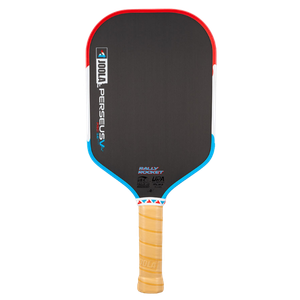
- Excellent control
- Highly consistent
- Stable feel
- Strong spin
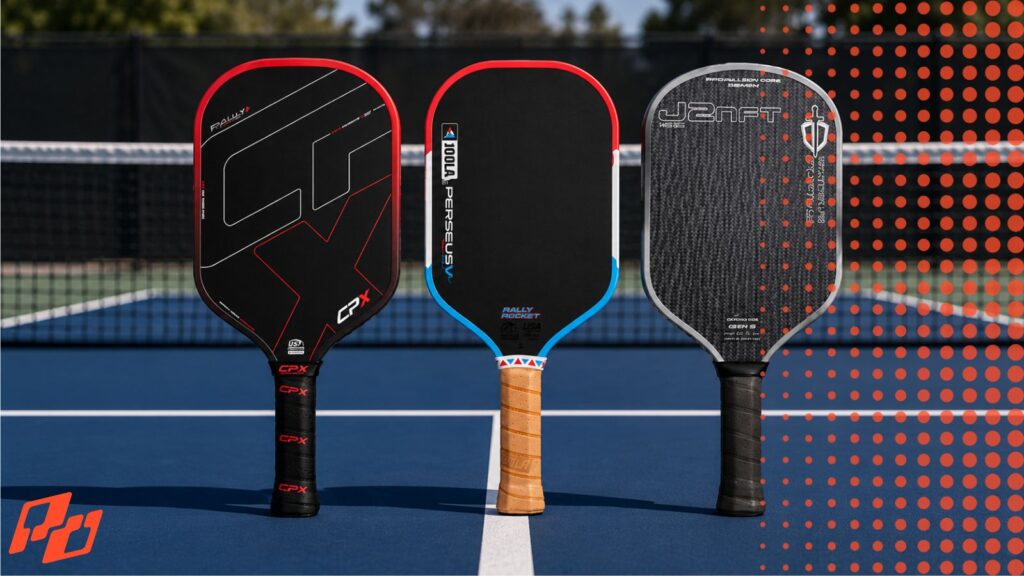
JOOLA’s new Pro V series is one of the clearest examples of how premium paddle construction is moving beyond the simpler Gen 3/Gen 4 conversation.
The big addition is JOOLA’s patent-pending KineticFrame, a frame engineered to flex and recover during impact—an idea JOOLA compares to kick-point engineering in hockey sticks and golf clubs. The paddles pair that structure with JOOLA’s Propulsion Core, rather than simply replacing the entire interior with a uniform block of foam.
The lineup includes the Perseus Pro V, Hyperion Pro V, Scorpeus Pro V, Kosmos Pro V, Agassi Pro V, and Graf Pro V, with the standard models currently selling for about $299.95.
That makes Pro V particularly useful for understanding why the term Gen 5 is getting messy. The next stage of paddle development isn’t necessarily “replace Gen 4 foam with a new foam.” Manufacturers are increasingly manipulating how the core, frame, perimeter, and face work together and flex under load.
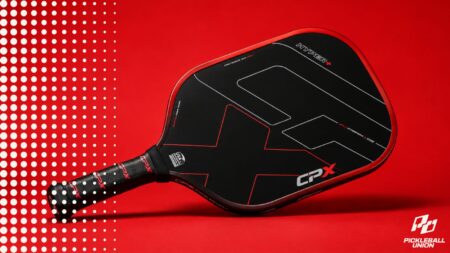
CPX HYPER+
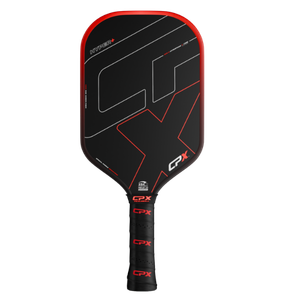
- Strong spin
- Stable sweet spot
- Good power
- Solid forgiveness
Save 10% with code PICKLEBALLUNION
CPX markets its HYPER+ series as “Gen 5 HyperFoam.”
It uses a full-foam thermoformed construction with internal perimeter tuning designed to increase stability and consistency across the face.
The interesting part here is that another company could reasonably call this Gen 4 because it remains fundamentally a full-foam paddle.
That illustrates the problem with the terminology.
And right now, you can save 10% on the HYPER+ with code PICKLEBALLUNION.
Honolulu J2NF Series
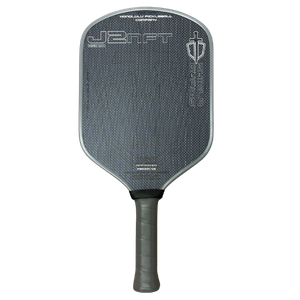
- Excellent spin
- Large sweet spot
- Soft, controlled feel
- Strong stability
The Honolulu J2NF family is a more recognizable example of the construction being marketed as the next generation of foam paddles.
The J2NF uses a full-foam core with a floating/notched foam architecture, rather than the conventional polypropylene honeycomb found in older thermoformed paddles. Honolulu has offered several versions using different face materials, including the J2NF, J2NFK and J2NFT, allowing the same basic foam platform to be tuned for different feel and performance characteristics.
More importantly, the J2NF illustrates why “Gen 5” remains controversial. Honolulu has used Gen 5 terminology around the family, while paddle reviewers and enthusiasts have argued that the construction is better understood as an evolution of Gen 4 full-foam technology rather than an entirely new generation.
That makes it a useful real-world example: the technological development is genuine, but whether it deserves a new generation number is largely a matter of terminology.
Compare That With Established Gen 4 Paddles
Now look at several paddles that are clearly marketed as Gen 4:
| Paddle | Core | Market Position |
|---|---|---|
| CRBN TruFoam Genesis | 100% proprietary foam | Gen 4 all-court |
| CRBN TruFoam Waves / Barrage | Tuned full-foam architectures | Gen 4 power variants |
| Six Zero Black Opal | Solid aerospace foam | Gen 4 power |
| Vatic Pro V-Sol Pro | Full foam + EVA perimeter | Full-foam all-court/power |
CRBN now uses several different internal TruFoam structures—Genesis, Waves, and Barrage—to produce noticeably different power and pop profiles while still labeling them Gen 4.
That is arguably every bit as technologically sophisticated as products another brand might call Gen 5.
Which proves the point:
The generation number is marketing shorthand. The core architecture is the real technology.
The Biggest Improvement May Be Tunability
This is the part of “Gen 5” that I do find interesting. The first foam paddles proved that replacing honeycomb could work. The next challenge is making foam behave exactly how designers want.
Single-density foam can produce trade-offs. Make it softer and you may gain dwell and control but lose pop. Make it firmer and you may gain rebound but create harsher feel.
Combining foam types gives designers another lever.
They can theoretically create:
- firm rebound in the center
- softer damping toward the perimeter
- structural support around the sweet spot
- different densities near the throat
- additional elastic layers for power
That does not automatically produce a better paddle. But it gives engineers more ways to tune one.
Are Gen 5 Paddles More Powerful?
Not necessarily. This is another trap.
A multi-foam paddle can be designed as: power, all-court, or control.
EVA-heavy designs may feel livelier because EVA can provide stronger rebound, while EPP-dominant constructions may feel more muted or linear.
But face layup, thickness, paddle shape, swing weight, foam density, and perimeter construction can matter just as much.
Two “Gen 5” paddles can feel completely different.
The same is already true of Gen 4. CRBN’s Genesis, Waves, and Barrage all use full-foam platforms, yet CRBN tunes them for very different levels of power and pop.
So never assume: higher generation = more power.
What About Sweet Spot and Forgiveness?
Foam architecture can improve stability because there are no thin honeycomb cell walls collapsing independently across the face. That can make off-center response more uniform.
But foam alone does not determine forgiveness.
You still need to look at:
- paddle width
- twist weight
- static weight
- perimeter mass
- shape
- balance point
A widebody Gen 4 paddle with high twist weight may be significantly more forgiving than an elongated Gen 5 paddle.
Do not let the core label distract you from paddle geometry.
Does Gen 5 Fix Core Crush?
Traditional honeycomb “core crush” happens when the internal cells deform or separate, changing the paddle’s response.
Full-foam construction removes that particular honeycomb failure mechanism.
That is one of the strongest arguments for Gen 4 foam paddles, and CRBN explicitly markets TruFoam around eliminating honeycomb-related core crush.
Multi-foam paddles should share that advantage if they contain no honeycomb. But that does not mean foam paddles are immortal.
Other failures can still occur:
- face-to-core delamination
- foam fatigue
- bonding failure
- edge separation
- surface-grit wear
And Gen 5 products are still too new for us to have years of independent durability data.
So I would say: potentially more durable architecture? Yes. Proven lifetime superiority? Not yet.
The Feel Is Different—and Not Everyone Likes It
This may matter more to recreational players than any engineering specification. Full-foam paddles often have a deeper, more muted impact feel than thermoformed honeycomb.
Some players love it.
They describe it as:
- plush
- connected
- stable
- comfortable
Others describe the exact same sensation as:
- dull
- muted
- disconnected
Recent player discussions show this divide clearly: some players prefer foam for comfort and consistency, while others miss the sharper feedback of honeycomb constructions.
There is no correct answer. Feel is personal.
This is one category where I strongly recommend demoing before buying.
The “Break-In” Question Is Still Messy
Some foam paddles change slightly after use.
The face may loosen.
The foam may settle.
Power or dwell can change.
But not every paddle behaves the same way, and “break-in” is increasingly used too loosely.
If a manufacturer tells you a paddle requires 10–20 hours before it performs correctly, I would want to know exactly what is changing.
A paddle becoming uncontrollably hot is not automatically desirable break-in. Consistency should matter more than novelty.
What Recreational Players Should Actually Compare
If you are shopping for a Gen 5 paddle, ignore the generation number for five minutes. Compare these instead:
| Metric | Why You Care |
|---|---|
| Swing weight | Determines how difficult the paddle is to accelerate |
| Twist weight | Helps predict stability on off-center hits |
| Static weight | Influences overall mass and fatigue |
| Balance point | Tells you whether weight sits toward the head or handle |
| Exit velocity / power testing | Better indicator of actual pace than “Gen 5” |
| Pop | Matters during counters and hand battles |
| Spin RPM | Tells you more about surface performance |
| Foam materials | Reveals what is actually inside the core |
| Shape | Strongly affects reach, sweet spot, and maneuverability |
Independent databases such as Just Paddles’ Paddle Lab are increasingly useful precisely because they let players compare measurable paddle characteristics rather than relying entirely on marketing terminology.
Should a 3.5 Player Buy Gen 5?
Maybe. But I would never recommend one because it is Gen 5.
For most recreational players, the meaningful question is:
⮕ Choose a newer multi-foam paddle if:
- you want a more dampened feel
- you value forgiveness and stability
- you dislike the durability concerns of honeycomb
- you want strong power without an extremely harsh response
- you enjoy trying newer paddle technology
⮕ Stay with a good Gen 4 or even Gen 2/3 paddle if:
- you already love its feel
- your control is predictable
- you prefer crisp honeycomb feedback
- you do not need more power
- the upgrade would cost $250 just to change a label
There are excellent full-foam paddles now selling close to $100—the Vatic Pro V-Sol Pro, for example, is currently listed at $109.99.
That makes it increasingly difficult to argue that simply having “Gen 5” printed on a paddle justifies a premium price.
Gen 5 Is a Useful Idea Wrapped in a Bad Name
I think we are seeing a real next step in paddle engineering.
Manufacturers are no longer asking: “Can we make the entire core from foam?”
They are asking: “Which foam should go where?”
That is genuinely interesting.
Different densities and materials give designers more control over rebound, stability, vibration, and feel.
But I would not call that an established fifth generation yet.
The industry has not agreed on what Gen 5 means, and some of the most sophisticated foam paddles available are still proudly labeled Gen 4.
So if someone tells you:
“You need Gen 5 because Gen 4 is outdated…”
I would ask them one question: what is actually inside the paddle?
If they can explain the foam types, density, architecture, swing weight, twist weight, power profile, and why those characteristics suit your game, then you have useful information.
If the entire argument is: “It’s Gen 5.”
Keep shopping.
The next generation of paddles may be very good. The number on the box just isn’t what makes them good.