The poke is one of the most misunderstood shots in pickleball.
Most rec players think it’s a bad speed-up.
Most defenders treat it like a block they should counter.
And most players never practice it—even though they accidentally hit it all the time.
In reality, the poke is its own category of shot. It’s not about spin, power, or flair. It’s about reach, timing, and stealing space when you don’t have time—or position—for anything else.
When you understand what the poke is for, it becomes one of the most reliable pressure tools you have at the kitchen.
What the Poke Actually Is
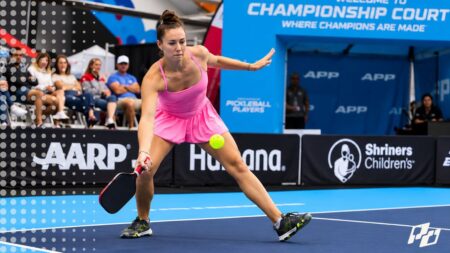
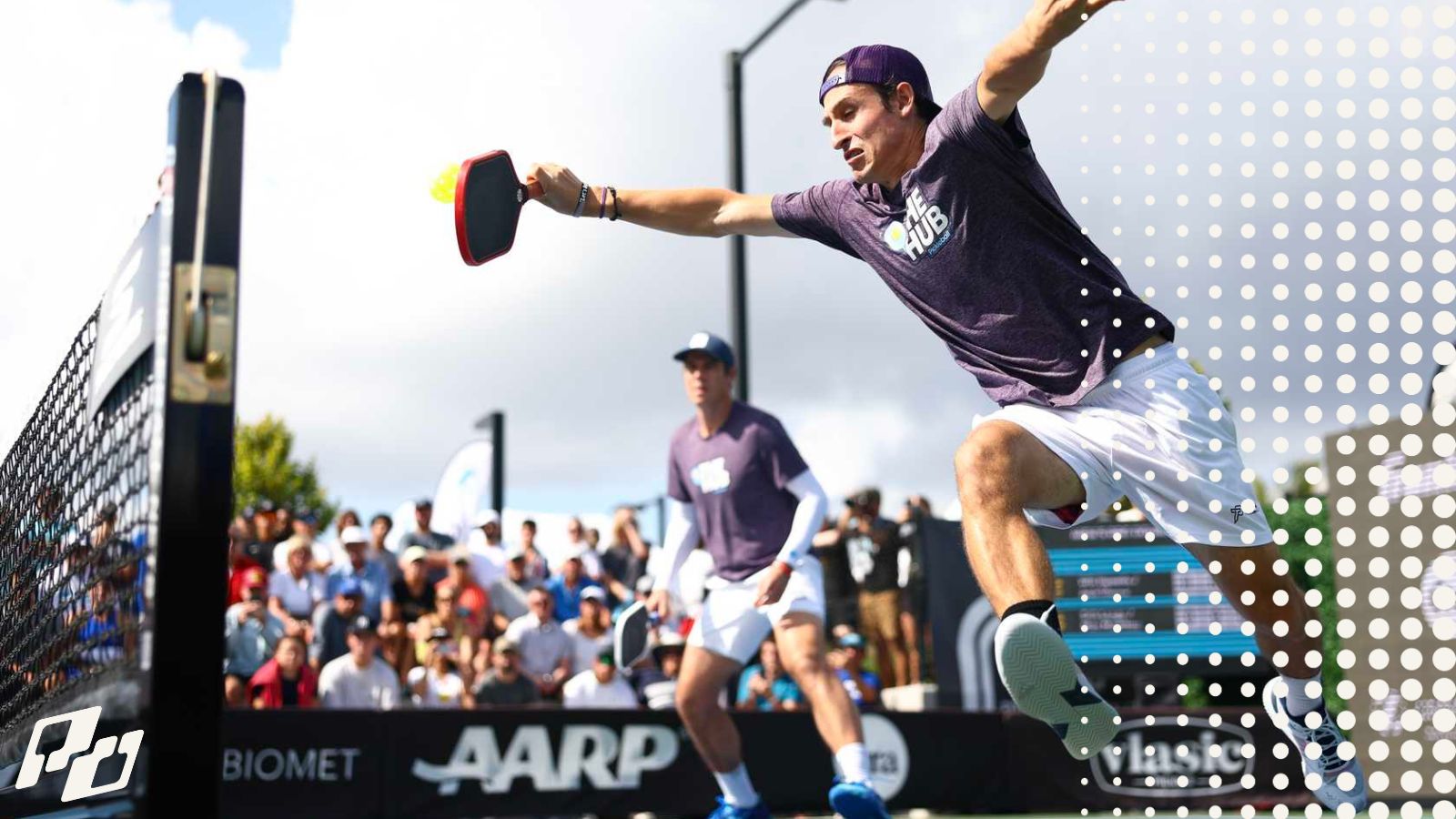
A poke happens when you’re fully extended at the kitchen, usually reaching outside your body frame, with no time or room to load a traditional speed-up or roll.
Because you’re so extended:
- there’s little to no brushing action
- topspin is minimal
- wrist use is limited
That’s not a flaw. That’s the point.
The poke is about taking time and space away, not winning with pace. You’re using reach and early contact to force a rushed response from your opponent.
Think of it as a positional attack, not a finishing shot.
Why the Poke Exists (The Problem It Solves)
At rec level, players are taught to dink patiently, wait for a pop-up and then seed up. But real rallies don’t always give you that clean window.
Sometimes the ball:
- sits just far enough away that you must reach
- arrives too fast to roll
- stays too low to attack cleanly
- pulls you wide or jams you mid-transition
In those moments, trying to “hit a real speed-up” usually leads to:
- late contact
- wristy flicks
- balls sailing long
- or shots straight into your opponent’s paddle
The poke solves that by simplifying the goal:
Get there early. Hit it direct. Take space away.
The Key Mechanical Truth Most Players Miss
The poke starts as a volley.
➡️ Not a swing.
➡️ Not a wrist flick.
➡️ Not a mini groundstroke.
You’re set up exactly like a volley:
- compact preparation
- paddle in front
- stable base
Then you do one thing differently: you accelerate through the ball instead of absorbing it.
That’s why coaches describe the poke as:
“Load like a volley, accelerate a bit more.”
You’re not adding spin.
You’re not snapping the wrist.
You’re simply redirecting pace early.
Watch pro Zane Navratil break down the poke:
What the Poke Is Not
This is important, because mislabeling the shot causes most errors. The poke is not:
- a panic speed-up
- a desperation flick
- a full-swing attack
- a replacement for proper roll volleys
If you have time, space, and balance to roll the ball with topspin—do that instead. The poke is for moments when you don’t.
Targeting: Where the Poke Actually Works

Because the poke has limited spin and margin, targets matter more than power.
The best poke targets are:
- the inside hip of the opponent in front of you
- the chicken wing (dominant-side shoulder/arm)
- the body of a player transitioning forward
These work because they shrink reaction time, force awkward paddle positions, and limit your opponent’s counter-attack options.
Trying to poke sharp angles or paint sidelines is how rec players turn a good idea into an unforced error.
Common Situations Where the Poke Shines
You’ll see the poke show up naturally in a few recurring scenarios:
1. Full reach at the kitchen
You’re stretched wide, the ball is low, and rolling it isn’t realistic. A poke lets you stay offensive without overreaching.
2. Opponent creeping forward
When someone is transitioning toward the NVZ, a poke straight at the body steals space before they’re set.
3. Fast dink exchanges
In hand battles where the ball speeds up naturally, the poke keeps you from defaulting to passive blocks.
4. Late recognition moments
You read the ball a split second late. Instead of forcing a swing, you poke early and take time away.
Why the Poke Feels Uncomfortable at First
Most rec players struggle with the poke because:
- it doesn’t feel “finished”
- it doesn’t look flashy
- it relies on trust in positioning, not swing mechanics
There’s also a mental hurdle: the poke doesn’t always win the point outright. It often sets up the next ball. That’s why experienced players value it.
The Biggest Mistakes Rec Players Make
The most common errors aren’t technical—they’re conceptual. Players miss pokes because they:
- add wrist trying to “do more”
- aim too fine instead of going through the body
- treat it like a speed-up instead of a space-taking shot
- poke when they actually had time to roll
A useful internal cue:
“Early, simple, through the body.”
If you feel rushed, you’re probably doing it right. If you feel like you’re swinging, you’re probably doing too much.
How the Poke Fits Into a Complete Kitchen Game
The poke isn’t a standalone weapon. It works because it lives between other shots. A balanced kitchen player:
- rolls when they have time
- resets when they’re under pressure
- volleys aggressively on floaters
- pokes when extended
Once opponents know you can poke effectively, they hesitate to crowd the line, leave you slightly higher dinks, and lose confidence in hand battles—and that hesitation is the real value of the shot.
What Finally Made the Poke Click for Me
The moment I stopped trying to “make something happen” with it—and instead trusted it as a pressure shot—it started working. Not because it won points immediately, but because it forced rushed replies, awkward paddles, and slightly better balls on the next exchange.
Here’s the bonus advice most rec players need: if you feel like you have to do more with the poke, you’re already late. The best pokes feel almost boring—early, direct, and hard to counter.
Use it sparingly. Aim through the body. And remember: if the poke sets up your next shot, it did its job.