Pickleball UnionPickleball Union
  • Pro Community
  • News
    • Recent Posts
    • Interviews
  • 101
    • Pickleball 101
    • Where To Play
    • Rating Quiz
  • Training
    • All Training Posts
    • Injury Prevention & Recovery
    • Pickleball Ratings
    • Strategic Stretching for Pickleball
  • Gear
    • All Reviews & Guides
    • Beginner Paddles
    • Intermediate Paddles
    • Advanced Paddles
    • Aesthetic Paddles
    • Pickleball Nets
    • Pickleball Eyewear
    • Pickleball Machines
  • Newsletter

Staying in the pickleball loop just got easier

Get the 5-minute newsletter over 40,000+ of your pickleball friends read every week.

By subscribing you agree to the Pickleball Union's Privacy Policy and Terms & Conditions
Instagram YouTube TikTok Facebook X (Twitter)
Pickleball UnionPickleball Union
  • Pro Community
  • News
    • Recent Posts
    • Interviews
  • 101
    • Pickleball 101
    • Where To Play
    • Rating Quiz
  • Training
    • All Training Posts
    • Injury Prevention & Recovery
    • Pickleball Ratings
    • Strategic Stretching for Pickleball
  • Gear
    • All Reviews & Guides
    • Beginner Paddles
    • Intermediate Paddles
    • Advanced Paddles
    • Aesthetic Paddles
    • Pickleball Nets
    • Pickleball Eyewear
    • Pickleball Machines
  • Newsletter
Instagram TikTok YouTube Facebook X (Twitter)
Pickleball UnionPickleball Union
Home»Training»“Drill, Baby, Drill”… Sounds Great. Now What?

“Drill, Baby, Drill”… Sounds Great. Now What?

AnaBy Ana01/07/2026Updated:04/23/20265 Mins Read
Facebook Twitter LinkedIn Pinterest
“Drill, Baby, Drill”… Sounds Great. Now What

At some point, every rec pickleball player hears the same advice:

“You need to drill more.”

Which is fair — and also incredibly unhelpful.

Lessons are expensive. Clinics are hit-or-miss. Drill partners are unreliable. And most days, what you actually have is an empty court, a bag of balls, and maybe a wall that doesn’t bounce cleanly.

So the real question isn’t should you drill. It’s this: how do you practice in a way that actually makes you better — with limited time, space, and help?

The answer isn’t more drills. It’s a clearer system.

Why “Just Playing More” Eventually Stops Working

Rec games are great for competing and staying sharp. They’re terrible for changing habits.

In games, your brain is overloaded: score, opponents, partner dynamics, pressure. When things speed up, your body defaults to whatever it already knows — even if those habits are the reason you’re stuck.

Practice works differently. It reduces chaos. It lets you slow things down and repeat one priority long enough for it to stick.

That’s why experienced players separate their time like this:

  • Practice = build
  • Games = test

If you only play games, you’re mostly reinforcing what you already do.

What Coaches Actually Mean When They Say “Drill”

Most rec players hear “drill” and think:

  • complicated patterns
  • long sessions
  • exhausting reps

That’s not what coaches are really after. When coaches say drill, they usually mean calibration. Calibration is teaching your body to repeat the same:

  • contact point
  • paddle face angle
  • swing size
  • recovery position

Once those stabilize, everything else gets easier — drops, dinks, blocks, even decisions — because you’re no longer reinventing your mechanics every rally.

You Can Improve Without a Partner (Here’s How)

Not having a partner feels like a dead end. It isn’t. Some of the most important skills in pickleball don’t need an opponent at all:

  • serving (repeatability, depth, shape)
  • paddle control (compact swings, stable face)
  • movement patterns (balance and timing)

Serving is the obvious one. Practicing alone lets you build a default serve you trust under pressure.

A useful trick: don’t judge success by makes and misses alone. Notice how you miss. Misses that cluster (mostly long, mostly net) usually mean your mechanics are stabilizing.

Random misses usually mean they aren’t.

The Wall: Not for Rallies — for Control

Wall work isn’t about seeing how long you can keep the ball alive. It’s for training the moments rec players struggle most with: speed-ups and resets.

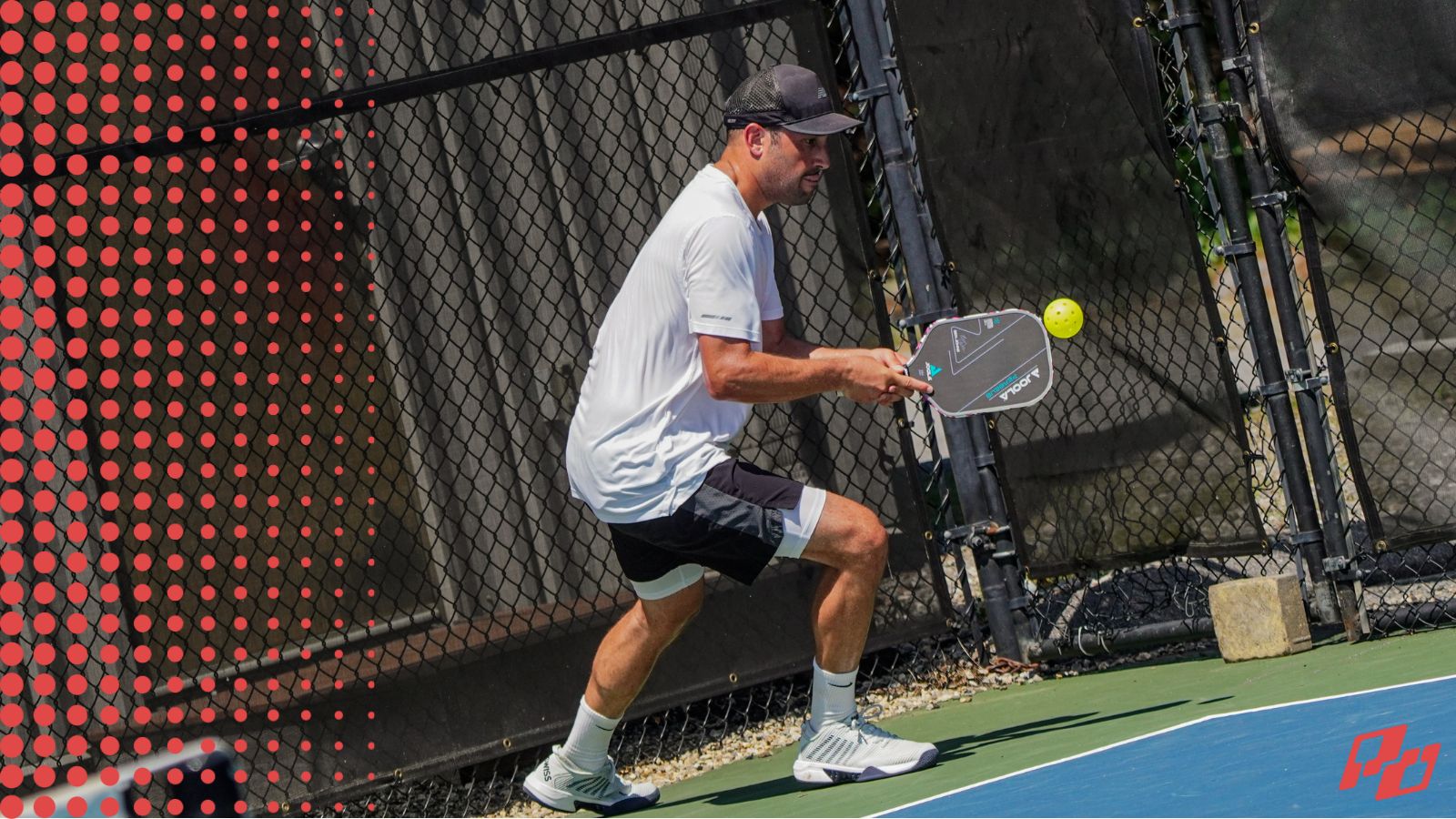
Start with a compact punch or roll into the wall — paddle out in front, no backswing. As the ball comes back faster, shift your focus to absorbing pace, not matching it. Guide the ball back under control.

Think of each rep as: initiate → absorb → reset

Every rep should finish balanced, paddle up, ready again. That recovery habit is what transfers to real kitchen exchanges.

Here’s how to do it:

View this post on Instagram

A post shared by Kevin Dong | Pickleball Tips & Clips (@kevindongpickleball)

Shadow Work: Quietly Powerful (If You Do It Right)

Shadow swings feel awkward — which is exactly why they work.

By removing the ball, you remove outcome pressure. That lets you focus on what actually drives good shots: footwork, balance, and swing path.

Coaches often use shadow work to clean up drops, resets, and transition movement because mechanics usually break down before contact, not at contact.

You don’t need many reps:

  • 10–15 slow, deliberate swings
  • 2–3 short sets

Half speed is ideal. The goal isn’t fatigue — it’s clarity.

One rule matters most: every rep finishes balanced, paddle up, eyes forward, back in ready position.

As one coach put it:

“Shadow work teaches your body the answer before the ball asks the question.”

The Fastest Way to Stall Your Progress

Trying to work on everything at once.

Skill learning improves faster when the goal is narrow. If you try to fix serves, drops, dinks, volleys, drives, and footwork in one session, nothing gets enough quality reps to change.

A simple structure most coaches agree on:

  • one main focus per session
  • enough reps to lock in the feel
  • stop when quality drops

That’s not being precious. That’s respecting how learning actually works.

Using Coaching Without Becoming Dependent on It

Coaching is valuable — but it works best as course correction, not constant supervision. If lessons are expensive, the best return usually looks like this:

  • take a lesson to identify 1–2 priorities
  • leave with clear homework
  • do most of the reps on your own

That’s how improvement actually happens: feedback + repetition.

If You Take One Thing From This…

You don’t need perfect drills, constant coaching, or a partner every week.

You need:

  • one clear priority
  • fewer, better reps
  • enough patience to let it settle

If practice ever feels overwhelming, that’s usually a sign you’re trying to fix too much at once.

Bonus gut check: if you can’t explain what you’re working on before you step on court, your practice probably won’t stick.

When you practice with that kind of clarity, “drill baby drill” stops sounding like a cliché — and starts feeling like something you can actually do.

smart mag child\assets\img\YouTube Thumbnail Featured Image.jpg

How useful was this post?

Click on a star to rate it!

We are sorry that this post was not useful for you!

Let us improve this post!

Tell us how we can improve this post?

How to Improve at Pickleball Pickleball Practice Pickleball Training Tips Pickleball Wall Drills Rec Pickleball Advice Solo Pickleball Drills
Share. Facebook Twitter Pinterest LinkedIn
Previous ArticleHow to Return Fast Serves (Even the Nasty Ones at Your Feet)
Next Article You’re a 3.5… But Are You a Good 3.5?
Ana
  • LinkedIn

Ana Nodilo, Pickleball Union's Editor, combines her love for racket sports and a holistic lifestyle to enrich our community. Starting on tennis courts, Ana transitioned seamlessly into pickleball, bringing strategic insight and finesse. An avid yogi and hiker, she integrates her passion for active living into every article, advocating a balanced approach to fitness and wellness.

Related Posts

unny way of messing with your pickleball schedule. New job. New baby. Injury. Travel. Family stuff. Burnout. Weather. Work stress. Aging parents. A season where you just cannot be on court as much as you were before. And if you’ve been improving fast, that can feel scary. You start wondering: If I go from playing almost every day to just two or three times a week, am I going to lose everything? Will my timing disappear? Will my rating drop? Will I stop progressing? Is it even worth taking the game seriously if I can’t train like I used to? Here’s the honest answer: you probably will not fall apart. But your progress will change. You may lose a little sharpness at first. Your timing may feel off. Your hands may feel slower for a few games. Your conditioning may dip if you do nothing else. But if you use your limited court time well, you can absolutely maintain — and in some cases continue improving — on less pickleball than you think. So the better question is: “How do I make fewer sessions count?” That’s where smart recreational players can make a huge jump. First, Separate Three Different Things: Skill, Fitness, and Sharpness When players say, “I’m getting worse,” they usually mix three things together. 1. Skill This is your technique and decision-making: drops resets dinks drives counters serves returns shot selection court positioning Skill tends to be more durable than people think, especially once it has been learned well. You may feel rusty, but the motor pattern is not erased just because you took a few days off. 2. Fitness This is your body’s ability to keep up: legs lungs hips balance recovery shoulder endurance core stability ability to play long sessions without breakdown Fitness can decline faster if you go from high activity to very little activity. But you can protect it with shorter workouts, strength training, walking, cycling, mobility, and basic conditioning. 3. Sharpness This is the “pickleball feel”: timing touch ball tracking hand speed confidence under pressure reading attacks feeling the paddle face Sharpness is usually the first thing you notice when you play less. You might miss a few more returns. Pop up a few resets. Feel late in hands battles. Overhit balls you normally control. But sharpness also comes back quickly. That is the important distinction. You may feel worse before you actually are worse. What Actually Happens When You Cut Back? Let’s say you go from playing seven days a week to three. You are losing volume. That matters. More reps usually mean more chances to improve, especially if those reps are intentional. But you are also gaining something most overactive rec players underestimate: recovery. And recovery is not laziness. Recovery is when your body adapts. If you were playing every day, especially hard rec games, ladders, drilling, and competitive sessions, you may have been carrying more fatigue than you realized. Sore knees, tight calves, cranky elbow, slower split steps, mental impatience, and sloppy footwork often get normalized when you never fully recover. Sports medicine research on pickleball injuries consistently points to musculoskeletal strains, sprains, tendon issues, and overuse-type problems as common concerns, especially as participation rises among older adults. Cutting back from daily play can actually reduce injury risk if you replace some court time with strength, mobility, and recovery instead of simply doing nothing. So what happens? ⮕ In the first week or two You may feel fresher physically but slightly less automatic on court. Your touch might feel a little inconsistent. Your first few games may need a longer warmup. You may feel like your hands are half a beat late. That is normal. ⮕ After a few weeks Your body may start feeling better. Your legs may feel fresher. Your shoulder and elbow may calm down. You may become more intentional because you know you have fewer sessions. This is where a lot of players discover something surprising: Less volume can produce better focus. ⮕ After a few months Your progress depends on what you do with the reduced schedule. Three random open-play sessions per week may maintain your level but not improve your weak spots. Two focused drilling sessions plus one competitive play session can still build your game. One casual game per week plus no off-court work may cause a gradual drop in timing and conditioning. The schedule matters less than the structure. The Research Translation: You Don’t Need Maximum Volume to Maintain Here’s the encouraging part. Training research across sports and fitness consistently shows that complete stopping and reduced training are not the same thing. When people stop training entirely, physiological adaptations can reverse over time. Cardiorespiratory and metabolic systems are especially sensitive to long interruptions. But when people keep some training in place — especially with enough intensity — they can maintain a lot. Resistance-training research, for example, has found that short detraining periods do not always erase strength or muscle gains immediately, and some studies show strength or muscle-related qualities can be preserved better than people expect over brief interruptions. Sports medicine guidance often recommends reducing volume while maintaining intensity as a way to minimize detraining effects. ⮕ Translated for pickleball: you do not need to play every day to keep your game. But you do need enough exposure to: keep your timing alive challenge your decision-making maintain your movement and touch the key shots regularly The problem is not going from seven days to three. The problem is going from intentional reps to unstructured games where you never work on anything specific. The Big Shift: From Volume-Based Improvement to Precision-Based Improvement When you have tons of time, you can improve through sheer exposure. Play every day. Drill often. Get hundreds of resets, dinks, counters, drops, and returns. Make mistakes. Adjust. Try again tomorrow. But when time gets limited, you cannot rely on volume anymore. You need precision. That means every session needs a job. Not a vague goal like: “Play better today.” A real goal like: “Today I’m working on third shot decisions.” “Today I’m tracking how many returns I miss.” “Today I’m resetting middle instead of panic-countering.” “Today I’m not attacking below net height.” “Today I’m drilling backhand dinks before games.” This is where fewer sessions can actually sharpen your learning. Motor learning research supports the idea that practice quality, structure, feedback, and retention matter. Skill acquisition studies repeatedly emphasize that learning is not just about repetition; it is about how practice is designed and whether the athlete gets useful transfer to game conditions. In plain English: ten mindful reps beat fifty sloppy ones. And three focused sessions can beat seven tired, random ones. Will You Lose Your Touch? Maybe a little at first. Touch is one of the first things rec players notice when they play less because soft shots depend on fine control: paddle angle grip pressure contact point rhythm body quietness feel for depth If you play every day, your hand has constant feedback. When you cut back, that feedback loop gets interrupted. But touch is also easy to refresh if you give it attention. The mistake is showing up for your limited play time and immediately jumping into full-speed games with no touch work. Then you spend the first two games spraying resets and thinking, “I’m getting worse.” You may not be worse. You may just be unwarmed. The fix: build a touch primer Before every session, spend 5–8 minutes on: soft dinks crosscourt dinks short resets blocks that die in the kitchen slow hand exchanges and a few controlled drops This does not need to be a full drill session. It just tells your nervous system: “We are playing pickleball again. Here is the paddle face. Here is the ball. Here is the touch.” If you only have three days a week, never waste the first 30 minutes finding your feel. Prime it on purpose. Will Your Hands Get Slower? Not exactly. Your raw reaction speed probably does not collapse because you cut back. What usually drops is your readiness. Fast hands in pickleball are not just about reflexes. They depend on: paddle position spacing from the kitchen anticipation compact movement relaxed grip and knowing where the ball is likely to go If you play less, you may temporarily lose some timing in firefights. But if you practice the right things, you can maintain hands well with short, focused work. The fix: train the first two contacts Most rec players over-train long hands battles and under-train the first two contacts. Instead, work on: opponent speeds up you block or counter you recover paddle to ready next ball comes you stay compact That pattern matters more than just trading wild volleys. You do not need endless firefight reps. You need clean, repeatable, compact reps. Will Your Fitness Drop? It depends what you replace pickleball with. If you go from seven days of movement to three days of pickleball and four days of sitting, yes, your conditioning will likely decline. But if you go from seven days of pickleball to three days of pickleball plus two short strength or conditioning sessions, your body may actually become better prepared for the sport. Pickleball is demanding in ways people underestimate. It includes quick lateral movement, deceleration, lunges, repeated split steps, trunk rotation, and fast reactions. Injury-prevention recommendations commonly include lower-body strength, warmups, agility, balance, and shoulder-support work. That means your “off days” do not have to be pickleball-free development days. They can become body-maintenance days. The simple off-court formula Two days a week, 20–30 minutes: Legs and hips: squats, split squats, lateral lunges, step-downs Calves and ankles: calf raises, tibialis raises, balance work Core: planks, dead bugs, Pallof presses Shoulders: band external rotations, rows, scapular work Mobility: hips, calves, thoracic rotation This is not glamorous. But it can keep you on court, reduce nagging injuries, and make your three pickleball sessions higher quality. The 3-Day Pickleball Plan That Actually Works If you can only play three days a week, do not make all three days the same. A good reduced schedule needs three ingredients: Skill work Competitive play Physical maintenance Here is a simple template. Day 1: Drill and Pattern Day This is your improvement day. Not open play. Not random games. Not “let’s just play and see what happens.” Pick two skills and drill them. Examples: third shot drop plus fifth shot reset crosscourt dink plus speedup defense serve plus return depth transition resets backhand counters drops after a drive attacking only from above net height Keep the session tight. A great 75-minute session might look like: 10 minutes: warmup and touch 20 minutes: one main skill 20 minutes: second main skill 15 minutes: controlled point play 10 minutes: notes, cooldown, serves The key is not doing everything. It is doing the right things well. Day 2: Competitive Game Day This is your pressure day. You need real games because drilling does not fully replicate: nerves score pressure awkward partners strange opponents bad bounces wind fatigue and decision-making But even competitive play should have a theme. Pick one tactical focus: “I’m returning deep all day.” “I’m not missing thirds into the net.” “I’m resetting instead of swinging in transition.” “I’m speeding up only when the ball is high enough.” “I’m targeting the weaker counter.” Do not try to fix your whole game during one play session. That is how rec players overload themselves. One theme. Real games. Honest feedback. Day 3: Hybrid Day This is the bridge between drilling and playing. Start with 20–30 minutes of focused reps, then play games where those reps must show up. For example: Drill: crosscourt dinks and speedup counters Games: every time you get into a dink rally, you must move the ball crosscourt before attacking Or: Drill: drops and fifth shot resets Games: every serving point, you track whether you got to the kitchen under control This is how practice transfers. You are not just checking a drill box. You are forcing the skill into live play. Sample Training Plan When You’re Playing Less When you have less court time, the goal is not to cram everything into every session. The goal is to give each session a clear job. Here’s a simple structure you can adjust based on whether you can play three days, two days, or only once a week. Available Court TimeBest Use of TimeWhat to Focus OnSimple Session Structure3 days/weekBest balance of improvement and maintenanceOne drill day, one competitive play day, one hybrid dayDrill once, play strong games once, and use one mixed drill/play session.2 days/weekStill enough to maintain and improve if focusedOne skill-priority day and one quality game dayDrill your biggest weakness once, then play quality games once.1 day/weekMostly maintenance mode, but still valuableTouch, timing, serves, returns, and one key patternWarm up with touch work, then play games with one clear goal.No court that weekProtect feel and fitnessPaddle feel, footwork, mobility, strengthDo short wall work or shadow swings, plus basic strength or mobility. The simple rule: fewer sessions need clearer priorities. If you only play once or twice a week, do not waste the whole session “just getting loose.” Start with a short touch primer, pick one skill focus, and make your games count. What If You Only Get Two Days? Two days can still work. You just need to be even more intentional. Day 1: Skill priority Drill the thing that most limits your game. Not the thing you enjoy most. If you lose because you cannot reset, drill resets. If you lose because your returns are short, drill returns. If you lose because you pop up dinks, drill dinks. If you lose because you attack bad balls, drill decision-making. Day 2: Competitive play Play the best games you can find. Quality matters more than quantity. Two hours of strong games with players who expose your weaknesses is better than four hours of casual games where nothing is challenged. What If You Only Get One Day? One day a week is maintenance mode for most players, but it does not have to be useless. Your goal becomes: touch every major pattern and protect your body. A one-day session should include: touch warmup serves and returns a few drops/resets compact hands work then games Do not show up cold and play only random open play. That is how timing fades. Even 15 minutes of structured work before games can make one-day-per-week pickleball much more productive. The 10-Minute Home Plan for Busy Players If life is crowded, you need tiny habits. You may not have two hours for the court. But you probably have 10 minutes at home. Here are useful options. Wall touch Stand close to a wall and work on soft volleys, compact blocks, and paddle control. Shadow swings Practice serve motion, drop motion, dink posture, and reset mechanics without a ball. Split-step practice Do short split-step and lateral shuffle patterns. Grip-pressure rehearsal Hold the paddle lightly and practice soft hands. Many players grip too tightly when they are rusty. Mobility snack Hip flexors, calves, ankles, thoracic spine, shoulders. Will this replace playing? No. Will it help you avoid feeling completely disconnected when you return? Absolutely. The 80/20 Rule for Limited Pickleball Time When court time is limited, you need to train the shots that show up most and matter most. For most 3.5–4.5 rec players, the highest-return areas are: 1. Serve and return These happen every rally. A weak return creates pressure immediately. A missed serve is free points gone. 2. Third shot decision Drive, drop, or hybrid? This determines whether you get stuck back or work forward. 3. Transition resets This is where many points are lost. If you can reset from midcourt, you survive more rallies. 4. Dink quality Not just “get it over.” Make it low, purposeful, and hard to attack. 5. Speedup defense If you can punish bad attacks, people stop attacking everything. If you only have three days, these should appear every week in some form. How to Tell If You Are Maintaining or Slipping Do not judge your level by one bad day. Instead, track a few signals over several sessions. You are maintaining if: ✓ your serve and return are still reliable ✓ your drops are landing often enough to create progress ✓ you can still reset under pressure ✓ your hands recover after the first game ✓ your decision-making is calm ✓ and you are not losing mainly because of fitness You may be slipping if: ✘ you are consistently late to the kitchen ✘ you miss routine returns ✘ you pop up most resets ✘ your legs feel heavy every session ✘ you avoid shots you used to trust ✘ or you need half the session just to feel normal If you notice slipping, do not panic. Ask which system is fading: Skill? Drill the specific shot. Fitness? Add off-court work. Sharpness? Improve warmups and touch reps. Decision-making? Play more intentional games. That is much more useful than saying, “I’m just worse now.” What About Ratings? This is where players get emotionally tangled. If you were playing seven days a week and competing constantly, your rating may have reflected not only your skill but also your rhythm, sharpness, and match volume. If you cut back, your rating might fluctuate. That does not mean you failed. It means your life changed, and your training inputs changed. For rec players, the healthier goal is: can I keep improving my quality of play inside the time I actually have? Not: can I maintain the exact same rate of improvement I had when I had unlimited court time? Those are different questions. If you expect three days a week to produce the same improvement curve as seven days a week, you may feel disappointed. If you expect three days a week to produce slower but more sustainable progress, you can stay motivated. The Hidden Benefit of Playing Less: You May Stop Practicing Bad Habits Here is something nobody likes to admit: playing every day does not automatically make you better. It can also make your bad habits more permanent. If you play tired, impatient, and unfocused, you may simply repeat: attacking too low drifting after drops rushing speedups missing returns overusing the wrist on dinks standing tall in transition swinging too big in hands battles targeting the wrong player ⮕ Practice makes permanent. ⮕ Better practice makes improvement. So a reduced schedule can actually help if it forces you to become more deliberate. Instead of collecting random games, you start designing your development. That is a good thing. The Best Weekly Structure for a Busy Rec Player Here is a realistic version for someone with work, family, and limited time. Weekly plan Pickleball Day 1: 60–90 minutes drilling or focused practice Pickleball Day 2: 90 minutes competitive games Pickleball Day 3: 60–90 minutes hybrid drill/play Off-court Day 1: 20–30 minutes strength Off-court Day 2: 20–30 minutes mobility, balance, or conditioning Daily micro-dose: 5 minutes of shoulder, hip, or paddle-feel work when possible That is enough to maintain a strong rec game. It may even be enough to keep improving if the practice is specific. The Simple Rule: Reduce Volume, Protect Intensity If you remember one training principle, make it this: when time goes down, intention has to go up. You can reduce total hours. But try not to reduce: focus intensity quality of opponents quality of reps recovery habits warmup discipline and honest feedback That is how you keep your game alive. A sloppy seven-day schedule can beat up your body and blur your focus. A sharp three-day schedule can maintain your level, protect your joints, and give you a real path forward. So… Will You Get Worse? Maybe a little, temporarily, in sharpness. Maybe your improvement slows. Maybe your rating does not climb as fast. Maybe your first game back each week feels rusty. ⮕ But no, you are not doomed. If you have built real skill, it does not disappear overnight. If you keep touching the game consistently, train with purpose, maintain your body, and choose quality over random volume, you can stay strong and keep improving. The players who decline fastest are usually not the ones who cut back. They are the ones who cut back and stop being intentional. So if life gives you less pickleball time, do not treat it as the end of your progress. Treat it as a new phase. If You Play Less Pickleball, Will You Get Worse?

If You Play Less Pickleball, Will You Get Worse?

How to Actually Win with a Random Partner (Tournaments & Open Play)

How to Win with a Random Partner (Tournaments & Open Play)

What to Do When Your Partner Calls a Ball Wrong

What to Do When Your Partner Calls a Ball Wrong

Staying in the pickleball loop just got easier

Get the 5-minute newsletter over 40,000+ of your pickleball friends read every week.

By subscribing you agree to the Pickleball Union's Privacy Policy and Terms & Conditions

Access more inside Pickleball Union Pro


pickleball getaways with vibe getaways

YouTube TikTok Instagram Facebook X (Twitter)
  • Pro Community
  • About Us
  • Contact us
  • Write For Us
  • Advertise With Us
  • Disclaimer
  • Privacy Policy
© 2026 Pickleball Union
A Legion Media brand - powered by Digital Authority Group
N28W23000 Roundy Dr.
Pewaukee, WI 53072

Type above and press Enter to search. Press Esc to cancel.

We use cookies to ensure that we give you the best experience on our website. If you continue to use this site we will assume that you are happy with it.