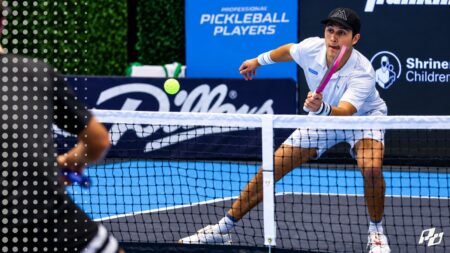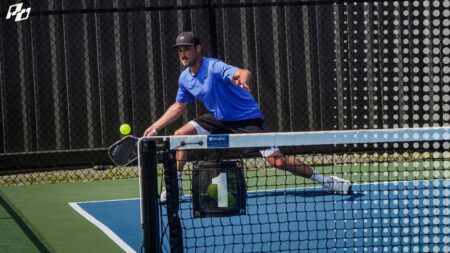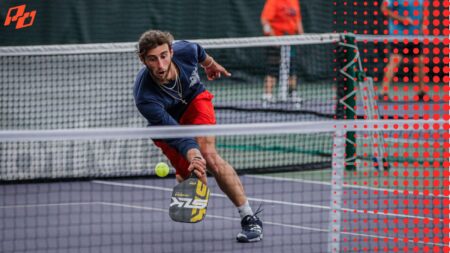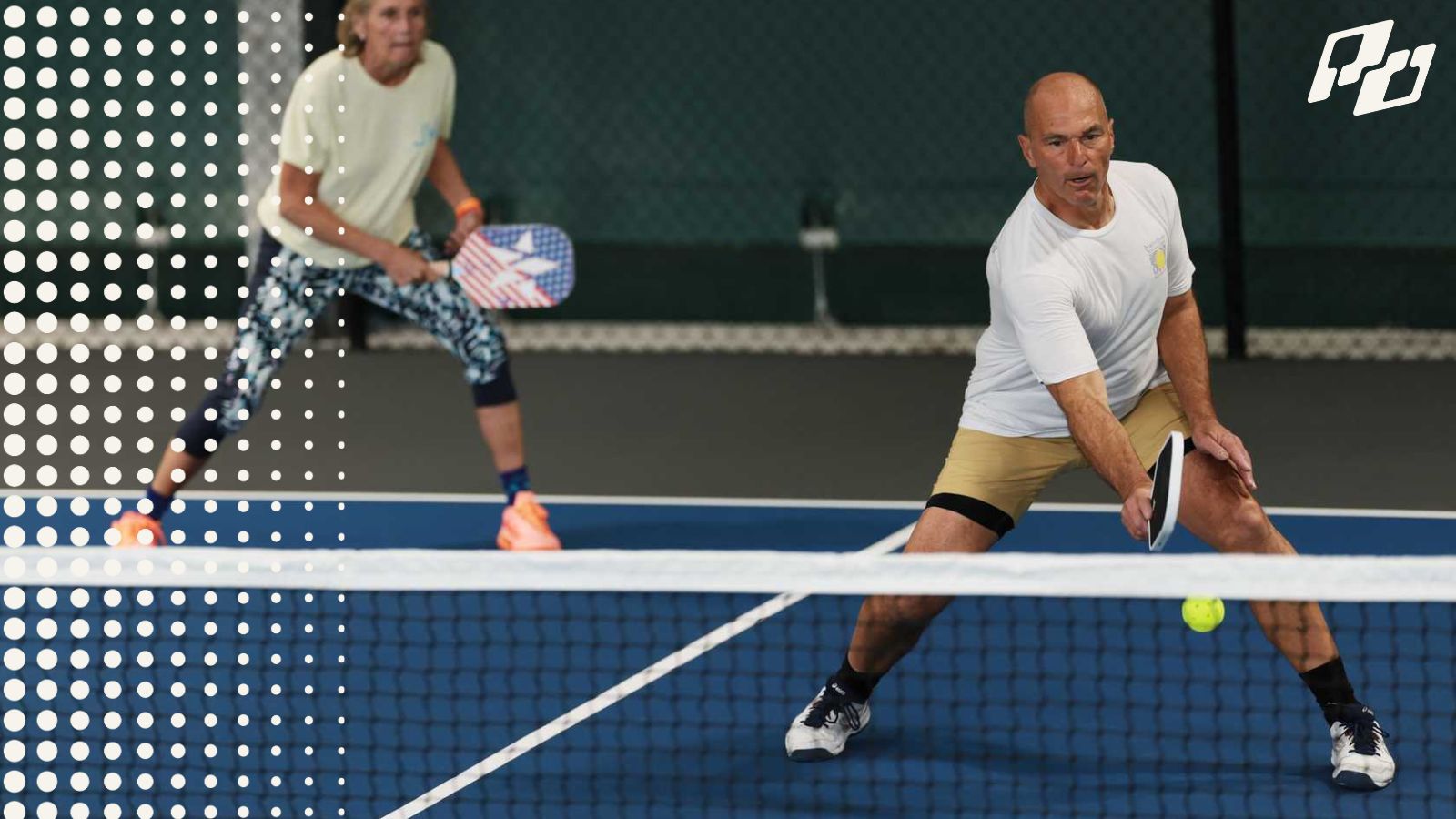
There’s one shot in pickleball that feels deceptively simple but quietly derails points at every level: the inside foot dink.
You’ve been there. You’re dinking along just fine, and then your opponent slides a soft little ball toward your inside foot—your backhand side when you’re on your “non-dominant” side of the court. You try to get under it, and suddenly you’re off-balance, lunging, maybe even popping it up. And just like that, the point’s over.
But here’s the twist: what if that shot wasn’t your weakness, but your greatest opportunity to control the court?
In this article, we’re diving deep into how to handle this awkward dink like a pro—not just to survive it, but to use it to dictate pace, reset momentum, and force your opponent into errors. We’ll talk technique, footwork, drills, strategy, and even mindset.
Why the Inside Foot Dink Is So Tricky
Let’s break this down from the biomechanics first.
If you’re a right-handed player on the right side of the court (or a lefty on the left), your inside foot is your left foot. A dink that lands here typically falls right around your hip or thigh area, near your non-dominant hand. And that causes all kinds of problems:
- It’s too close to your body for comfortable paddle extension.
- Your natural reach is limited—you can’t extend fully without compromising balance.
- You’re often jammed, leading to rushed or off-balance shots.
- Practice habits make it worse: Most warm-ups are crosscourt, not “same-side” dinking to your inside foot. So your body isn’t used to this pattern.
Even advanced players struggle here, not because the shot is physically difficult, but because it messes with rhythm, spacing, and balance.
But this is where the real opportunity lies—if you train for this shot specifically, you’ll gain control in rallies where most players lose it.
Watch this quick breakdown to see why the inside foot dink is so tricky—and how to make smart decisions under pressure:
Step 1: The Footwork Fix – Anchor, Pivot, or Create Space
Let’s talk about the three core footwork adjustments that make this shot manageable—and eventually, weaponizable.
1. Anchor Foot: Simplify Your Movement
The concept of an anchor foot is a game-changer. Instead of dancing around like you’re still playing tennis, pickleball rewards small, efficient movements. When that inside-foot dink comes in:
- Keep your anchor foot planted (right foot, if you’re right-handed).
- Use your outside foot (left foot) to step slightly back or to the side to create space.
- This gives you just enough room to make clean contact without compromising your balance or getting jammed.
The goal isn’t to dance—it’s to pivot with precision.
2. Pivot and Reset
If the dink is deeper or lower, you may need to pivot off the kitchen line:
- Step your left foot back at a 45° angle while keeping your paddle out in front.
- Maintain a stable, athletic stance—don’t lean backward or let your paddle drift behind your body.
- After you hit the ball, immediately reset back to your ready stance near the kitchen line.
This pivot isn’t about backing up defensively. It’s about creating space to stay offensive, even in awkward positions.
3. The “Create Space” Decision
You won’t always be able to take this ball out of the air. But you also don’t want to catch it at your feet.
So if you see it dropping into that uncomfortable zone:
- Slide your inside foot out of the way to open up your body.
- Let the ball bounce.
- Create space with your step, then lift the ball with a soft, high dink back to the middle or toward the opponent’s inside foot (yes—return the favor).
Early decision-making here is key. If you hesitate, you’ll get jammed. If you commit to one of these three movements, you stay in control.
Step 2: Shot Mechanics – Lift, Don’t Flick
Here’s where many players go wrong: they see that inside-foot dink and try to either punch it through the middle or go for a trick shot. Big mistake.
This is not your moment to attack. It’s your moment to stabilize the point.
Shot Checklist:
- Use a lifting motion with your paddle, especially if you’re off-balance.
- Keep your paddle in front of your body at all times.
- If the ball is very low, don’t volley it—let it bounce, step back with balance, and lift it up softly.
- Avoid slicing too much here unless you’re fully stable—excess spin increases the chance of mishits when you’re jammed.
BONUS: Grip Pressure Tip
Your grip is your control dial.
- Use a soft grip pressure (3–4 out of 10) on your scale.
- Tight grip = rigid wrist = less feel = more errors.
- Looser grip = more paddle responsiveness and touch.
When you’re jammed, lightening your grip is often what lets you absorb and lift the ball instead of popping it up.
Step 3: Elite Habits – Eye Tracking, Drills & Reps
You don’t rise to the level of your hopes—you fall to the level of your habits. And this shot only improves through intentional repetition.
Eye Tracking
One overlooked technique that top players swear by is locking your eyes on the paddle-ball contact point, especially when you’re handling low, inside-foot balls.
This reduces mistimed shots and forces you to stay in the moment, even under pressure.
Drill 1: Left Foot to Left Foot (Same Side Dinks)
- Both players stand on their dominant side (e.g., righties on the right).
- Dink only to each other’s inside foot.
- Focus on stability, clean paddle angle, and shot shape.
- Start slow. Add speed and variation only after you gain control.
Drill 2: Anchor Foot Movement
- Stay in ready position at the NVZ line.
- Partner feeds dinks randomly toward your inside foot.
- Move only your outside foot to create space—don’t cross over.
- Occasionally pivot if the ball dips too low.
Drill 3: Air vs. Bounce Recognition
- Partner mixes floaty and fast dinks toward your inside zone.
- You must decide instantly: volley it, pivot and bounce it, or lift.
- Goal: Make one clean decision, with no hesitation.
Pro Tip: Record yourself doing these drills. Most players are shocked to see how much they lean, reach, or pull their paddle too far back.
Step 4: Tactical Match Play Application
Now that your mechanics and footwork are tuned up, let’s apply this to real matches.
When You Receive This Dink:
- Slow the point down. Your opponent may be trying to bait a speed-up or pop-up.
- Reset to the middle. Don’t try to counterattack. Make them hit another difficult shot.
- Check your balance before and after—stable players win dink rallies, not the flashy ones.
When You Want to Hit This Dink:
- Send it to your opponent’s inside foot early and often.
- Observe if they panic, cross over, or pop it up.
- Mix in this dink with crosscourt patterns to break their rhythm.
This move is especially powerful against tennis converts or power players who hate slowing the game down.
Step 5: Transition and Pattern Reset
Once you lift and reset from your inside foot:
- Flow back into a diagonal crosscourt pattern, or
- Hit a neutral middle dink to slow things down.
Avoid staying in an isolated, same-side pattern too long. Instead, use your inside-foot recovery dink as a transitional tool to regain your rhythm and rebuild the point structure.
This isn’t just shot recovery—it’s pattern control.
Learn how Tyson McGuffin deals with the inside foot dink and where he targets it to stay in control:
Step 6: Mental Reset – From “Danger Zone” to Comfort Zone
Change the story in your head.
Instead of thinking:
“Ugh, not this again…”
Tell yourself:
“Perfect. Here’s my chance to regain control.”
This shot is a test of maturity. The players who handle the unglamorous stuff—the resets, the footwork, the awkward takes—are the ones who win the most matches.
You’re not looking to win the point off this dink. You’re looking to stay in control while your opponent gets impatient.
Win the Boring Points
Mastering the inside foot dink isn’t about style—it’s about substance.
It teaches you:
- How to move efficiently without overcommitting.
- How to dink with intent, not desperation.
- How to regain control in high-pressure exchanges.
- How to make your opponent feel like you never miss.
This shot won’t make the highlight reels. But it will build the foundation for the kind of game that frustrates bangers, disorients shot-makers, and quietly wins championships.
So the next time that tricky dink creeps toward your inside foot, don’t flinch. Breathe. Adjust. Lift.
You’ve trained for this. And now it’s your turn to control the court.