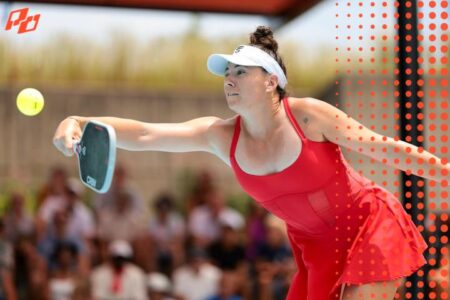

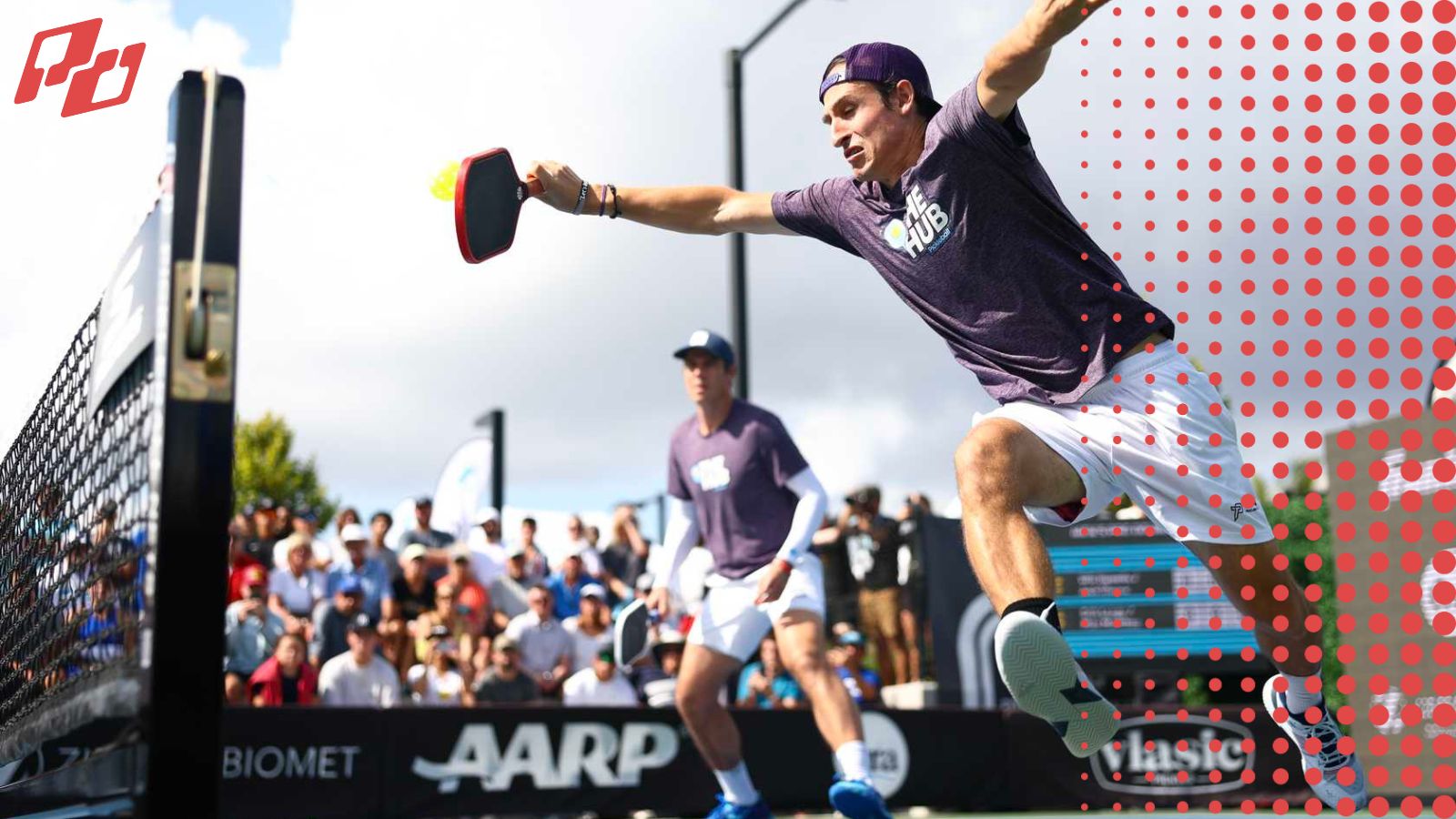
Every once in a while, you hit a shot that makes your opponent freeze — they stretch, stab, and watch the ball curl just out of reach near the sideline.
That’s the angle roll.
It’s not a drive. It’s not a dink. It’s that sneaky, crosscourt roller that slides past their paddle and earns you a grin (and maybe a muttered “nice shot”).
At its best, the angle roll is placement perfection — part disguise, part geometry, and part nerve.
Let’s unpack how it works, why it’s so effective, and how to start landing it yourself.
What Makes an “Angle Roll” Different
Most players learn the standard roll first — a low-to-high brush that lifts a low ball with topspin.
The angle roll, though, adds a directional twist: you’re not just lifting, you’re curving the ball out and away from your opponent.
It’s a crosscourt, low-trajectory roller that skims just above the net and bends off the kitchen line.
The goal isn’t power — it’s precision. You’re shaping the ball into open space, ideally where your opponent isn’t.
Think of it as a controlled escape route: you’re using spin and placement to pull them wide, reset the rally on your terms, or even win the point outright:
When to Use It
The angle roll is all about timing and recognition. It shines in these moments:
- Crosscourt Dink Battles: When your opponent drifts toward the middle, roll the next dink sharply crosscourt. The change of angle pulls them wide and opens up the middle for your next ball.
- After a Neutral Reset: You just absorbed pace, they’re recovering — that’s your chance to roll it out wide while they’re still moving.
- Against Net Huggers: If someone crowds the kitchen expecting a straight exchange, the angle roll exposes their weak side or their outside foot.
- On Low Floaters: Those “too low to attack but too good to dink” balls — perfect for a soft, sharp brush that catches them leaning the wrong way.
It’s not about power. It’s about surprise. The ball looks ordinary until it bends off the line and your opponent’s left lunging.
How to Hit the Perfect Angle Roll
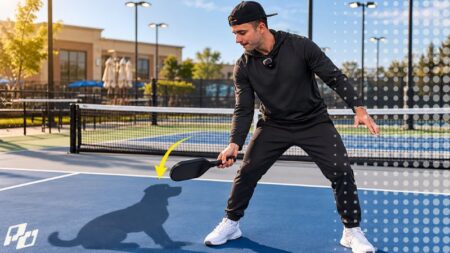
- Start with Position: Stand close to the kitchen with your paddle out front and knees bent. If you’re too upright, you’ll overhit.
- Brush Outside the Ball: Instead of brushing straight up (like a topspin roll), brush around the outside edge — think 5 o’clock to 11 o’clock on a clock face.
- Open Paddle Face Slightly: A touch of openness helps lift the ball over the net and adds shape.
- Stay Compact: The best angle rolls are short and snappy. Follow through across your body, not up and over your shoulder.
- Aim Wider Than You Think: Pros like JW Johnson and Anna Bright use this trick: your target isn’t the sideline — it’s about a paddle’s width inside it. That margin keeps it playable and still unreachable.
You’re not swinging big — you’re painting edges.
Forehand vs. Backhand Angle Rolls
Both sides can hit beautiful angle rolls, but they feel totally different.
On your forehand, the motion feels freer and faster. You’re reaching out in front, brushing up and across the outside of the ball — almost like swiping diagonally toward the sideline. It’s easy to generate pace here, so focus on keeping the motion short and smooth.
Your backhand roll is tighter and more controlled. The contact point is closer to your body, usually right in front of your hip. The motion is smaller, guided by your shoulder and forearm instead of your wrist. It’s sneaky — and perfect for crosscourt dink battles when your opponent least expects it.
If you’re learning, start with the backhand. It naturally limits over-swinging and helps you feel the brush. Once that feels solid, move to your forehand — you’ll instantly notice more shape and confidence.
One Hand or Two?
You can hit the angle roll with either grip — it just depends on what the situation calls for.
Simple rule:
Go one-handed when you’re reaching for space.
Go two-handed when you’re holding your ground.
Both can create that same, beautiful curve — you’re just choosing the tool that fits the moment.
The Strategy: Angles Create Openings
The magic of the angle roll isn’t just the shot itself — it’s the chain reaction it causes.
Hit one sharp crosscourt angle and suddenly:
- Your opponent has to sprint wide.
- Their partner shifts over to cover.
- The middle of the court is yours.
That’s the real value: you’re dictating movement. Even if you don’t win the rally with the roll, you control what happens next.
Pro coach Mark Price says it best:
“Feet first, angles last — but once you’ve earned that wide ball, take it early and make them pay for drifting.”
You’re not just hitting to space — you’re building pressure until that final, wide winner is the easiest ball on the court.
Practice Drills for Real Angles
1. The Wide Brush Drill
Stand crosscourt from your partner. Take slow dinks and exaggerate brushing the outside of the ball, aiming to land it near the sideline without going wide.
2. Feet-to-Corner Game
Alternate two dinks at your opponent’s feet, then one sharp angle roll crosscourt. This trains the pattern — build pressure first, then surprise.
3. Target Zone Challenge
Place two cones a few feet inside the sideline and try to drop your roll between them. Keep it low — the ball should skid, not bounce high.
Mistakes to Avoid
- Closing the paddle too much: The ball dives into the net. Keep the face slightly open and trust the brush.
- Going too steep: Brushing too vertically sends it long — think forward and up.
- Forcing the angle early: Set it up first; if your opponent’s already wide, you’re hitting into their zone.
- Over-using it: It’s a surprise shot — if you spam it, it loses its sting.
Hooked on the Crosscourt Angle
The angle roll isn’t about showing off; it’s about outthinking the player across from you. It’s the moment where touch meets intention, where you stop reacting and start creating.
So next time you’re locked in a crosscourt dink rally, don’t just keep feeding neutral balls. Watch their feet. Wait for that tiny lean or that half-step too far toward the middle — then roll it past them before they even realize what happened.
And here’s a bonus tip: practice your angle roll at half-speed first. Slow reps help you feel the brush and shape of the ball. Once you can land ten in a row without overhitting, then speed it up. You’ll find the shot’s not about power at all — it’s about patience, timing, and just the right touch of boldness.
Angles don’t just win points — they make pickleball fun again.