

You’re in a hands battle, you do the “right thing” and try to block… thud. Net. Again.
Most netted blocks come from the same small handful of mistakes—and the fixes are pleasantly boring, repeatable, and fast to implement.
Below, I’ll start with the #1 tip that stops netted blocks immediately, then stack on pro-backed tweaks, a simple decision tree, and a few high-yield drills you can run this week.
The #1 Tip: Start at the Right Height (and Slightly Open the Face)
The most common reason a block dies in the net? Bad starting position. If your paddle is too high at the wrong time, you end up chopping down. Too low at the wrong time, and you get jammed in the chest. The trick is knowing where to set your paddle depending on the situation.
- At the NVZ (hands battles): Keep the paddle around sternum height, slightly in front, face a touch open, grip pressure 3/10. Most speed-ups come hip to shoulder—this position lets you meet them square.
- In transition (defending drives to your feet): Drop the paddle to mid-thigh to knee height, still in front, face a touch open. Here you’ll see more attacks aimed at your shoelaces, so starting lower saves you from a desperate “dig.”
That one adjustment—right paddle height for the right zone—fixes most netted blocks instantly.
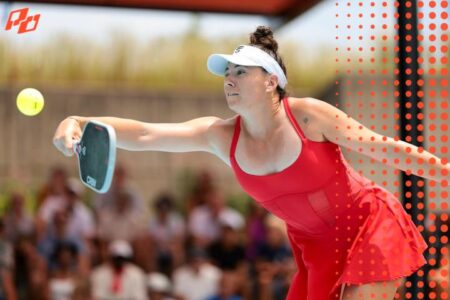
Pro Callie Jo Smith shows the ideal paddle position at the kitchen line—and how a slight open face makes all the difference:
Why This Works (and Why Net Happens)
Blocks miss because of setup errors, not slow hands.
- Starting high = down contact. You meet the ball late and swipe down.
- Flat face = no lift. Even a slight downward path sends the ball into the net.
- Tension kills loft. A tight grip reflects the ball forward instead of lifting it over the tape.
The fix is boring but powerful: relax and guide instead of push.
The Big Three: How to Perfect Your Block Volleys
- Right Height, Soft Hands: Let me reiterate this – at the NVZ, keep your paddle sternum-high; in transition, lower to thigh/knee. In both, stay loose (3/10 grip) and angle the face slightly open. Think “catch and set,” not “punch.”
- Freeze the Feet at Contact: Use a split-step as your opponent swings. If your feet are still moving when you block, you’re doomed to mishit.
- Aim Smarter: Send defensive blocks deep middle, or jam your opponent at the body and feet. Both rob them of angles and time.
The #1 Mistake to Avoid: “Helping” the Ball
Most players try to add a little push to their block. That small forward swing turns the paddle face flat, the ball skids low, and—yep—net again.
Think “absorb and nudge.” If you truly need a bailout, add loft instead of swing. A high, soft reset that drops in the kitchen might feel like giving up, but it actually buys you time, gets you balanced, and keeps you in the rally.
Common Situations (and Simple Fixes)
Let’s talk about where blocks really break down.
- Netting blocks in transition. The cure here is all in timing. Split earlier, set lower, and tilt the face just a hair open to clear the tape.
- Getting jammed at the feet. If you’re always late, check your stance. Go wider, drop the handle lower, and block back to the middle or their shoelaces.
- Watching blocks float long. That’s grip tension again. Ease your pressure to a 2–3 out of 10, shorten your motion, and keep the paddle angle steady.
- Hands battles at the NVZ. Inches matter. If your extended forehand and your partner’s extended backhand can’t touch, you’re standing too far apart and leaving a seam. Close the gap so blocks feel natural, not desperate.
Doubles Layer: Make Your Partner Your Shield
Great blocking isn’t a solo skill—it’s a team skill. The best pairs move like a wall.
- Close the gap at the line. Too far apart and the seam becomes an open runway. Better to be slightly too close than too far.
- Move as a wall. If your partner is pulled wide, you tilt with them and cover the T (that key center intersection at the kitchen line).
- Own communication. A quick “mine” or “yours” saves you from both freezing or clashing on the same ball.
When your blocks and your partner’s positioning sync, rallies suddenly feel easier:

Pro Notes You Can Steal
A few cues from high-level play that filter down beautifully to rec games:
- Split earlier than you think. Your brain has lag time. If you wait until contact, you’re late.
- Loft isn’t weakness. A high, soft reset that bounces unattackably isn’t bailing—it’s smart defense.
- Small swings win. The best blockers look like they aren’t moving at all. Copy that calm, compact frame.
Block Volleys vs. Punch Volleys: Know the Difference
Here’s where many intermediates get stuck—they block everything. But not all volleys should be blocked. Sometimes, you need a little punch.
Block Volley (Absorb & Redirect)
- When to use:
- Opponent rips a hard drive at you.
- You’re defending in transition.
- You need to neutralize pace and buy time.
- How it looks:
- Soft hands, loose grip.
- Short motion, let the ball’s speed do the work.
- Ball floats back neutral, not aggressive.
Punch Volley (Add Pace & Pressure)
- When to use:
- Ball sits higher in the strike zone.
- Opponent pops up a dink or weak drive.
- You’re balanced and looking to finish.
- How it looks:
- Firmer grip, compact forward push.
- Paddle face square to target.
- Ball comes off quicker, aiming body or deep corners.
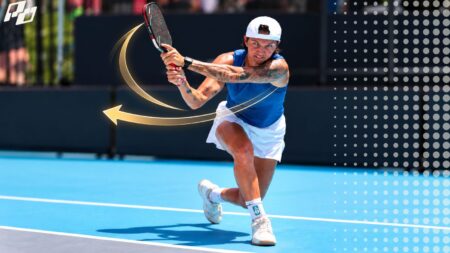
Block vs punch: Callie Jo shows the difference:
The golden rule: Block when under attack, punch when you’re in control. Misusing them is why so many players either float “winners” back or net defensive shots.
Pro James Ignatowich puts it simply: “Good players don’t block every ball—they choose when to turn defense into offense.”
Drills to Lock It In
1. Wall Catch Blocks (Video Below 👇)
One of the fastest ways to sharpen your block control is on the wall. The goal isn’t power—it’s compact swings, quiet hands, and precise contact.
Watch this quick demo to see how to keep volleys controlled instead of chaotic:
2. Height Awareness Drill
Have a partner feed at random levels while you practice switching paddle height—sternum at the NVZ, thigh in transition.
Call “high / mid / low” before blocking to force awareness.
3. Loft Reset Rescue
Have a partner fire balls at your feet in transition. Your goal: float a high reset crosscourt, then step forward behind it.
4. Middle Jam Drill
From the NVZ, block everything deep middle or at their body/feet until it’s automatic.
Turning Panic Into Poise
Here’s the truth—everyone struggles with block volleys at first. Even advanced players still net a few under pressure. The difference is that they treat the block as a skill to own, not something to just survive.
🎯 Bonus Tip: Train your eyes, not just your paddle. Most errors come from staring at the oncoming paddle swing instead of locking onto the ball early. Pick up the ball off your opponent’s paddle face, and your blocks will feel twice as easy.
At the end of the day, block volleys aren’t about reflexes—they’re about discipline and trust in simple mechanics. And once you feel the confidence of absorbing pace instead of fearing it, you’ll wonder why you ever dreaded the fast game.
So the next time the ball comes screaming at you, smile. You’re not bracing anymore—you’re building.