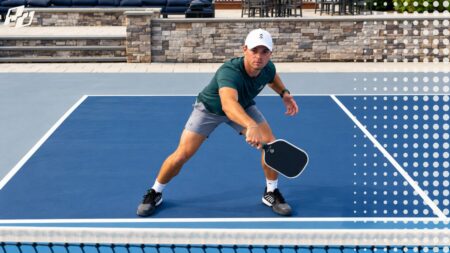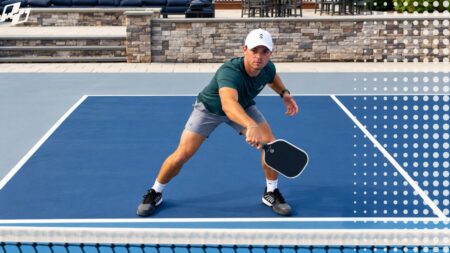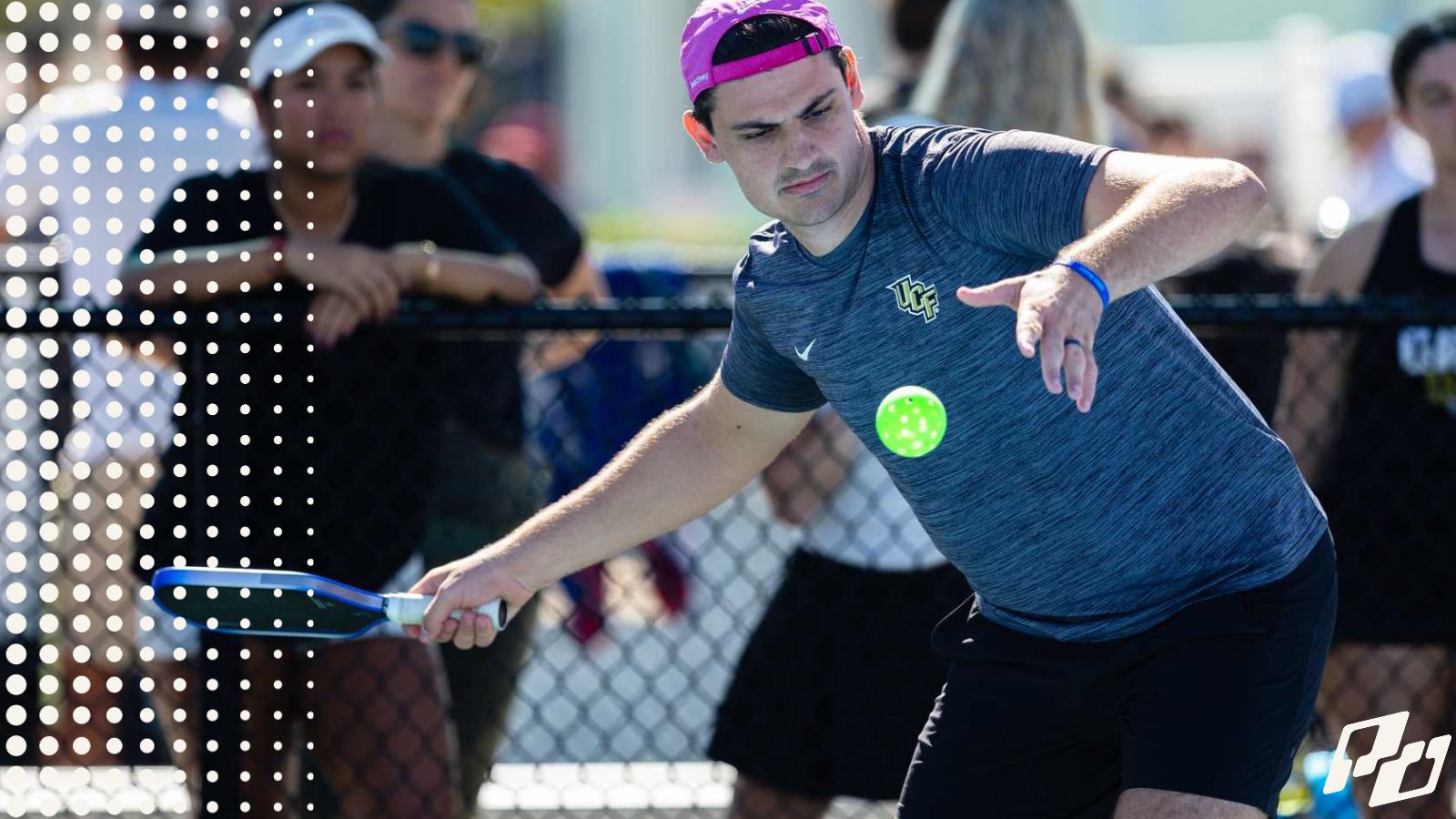
A serve tip recently made the rounds that sounds almost too simple: take pressure off your pinky, hold mainly with your middle and ring fingers plus the base of your thumb, relax the wrist, and let it “lag.”
The result? More power — without feeling like you’re swinging harder.
It looks subtle. It feels almost effortless. But mechanically, it changes a lot.
Watch the Grip & Wrist Adjustment Here
Before we break it down technically, watch the clip that demonstrates the grip shift and relaxed wrist lag in action:
Pay attention to two things while watching:
- How relaxed the wrist looks during the swing.
- How the paddle trails slightly behind the hand before contact.
Now let’s unpack why that works.
What the Tip Is Really Changing (Mechanically)
When the instructor says:
“Take the pinky off the grip pressure… feel the lag… relax the wrist…”
They’re targeting one thing: wrist stiffness.
Most recreational players choke the paddle during serves. When you squeeze tightly:
- The wrist locks.
- The forearm tightens.
- The swing becomes shoulder-dominant.
- The paddle moves as one rigid piece.
That creates effort — but not efficient speed. By shifting pressure toward the middle and ring fingers (and the base of the thumb) and reducing pinky tension, you:
- Decrease forearm tension
- Allow natural wrist extension
- Create paddle lag
- Improve paddle-head speed
This is very similar to how tennis players generate racquet-head speed. The paddle trails slightly behind the hand during acceleration — then catches up at contact.
That “lag” is free speed.
Why Relaxation = More Power
This feels counterintuitive. Most rec players try to hit harder by:
- Swinging faster with the shoulder
- Tensing the forearm
- “Muscling” through contact
But power in rotational sports (tennis, golf, baseball, pickleball) comes from sequence and acceleration, not tension.
When the wrist stays relaxed:
- The paddle lags slightly behind the hand.
- As the forearm rotates forward, the paddle accelerates late.
- Contact happens with higher paddle-head speed.
- Effort feels lower — output feels higher.
That’s why the player in the clip says,
“I feel like my wrist is way more relaxed.”
Exactly.
Tension slows the chain. Relaxation speeds it up.
Where This Works Best (And Where It Doesn’t)
✔ Best For:
- Intermediate rec players (3.5–4.0)
- Players who already have a consistent serve
- Players who feel like their serve lacks depth or penetration
- Tennis converts who over-grip
⚠ Not Ideal For:
- Beginners still learning legal serve mechanics
- Players struggling with serve consistency
- Players who already hit long frequently
If your serve already sails deep or long, adding lag without control may reduce accuracy.
This is a refinement tool — not a beginner fix.
The Grip Adjustment Explained Clearly
The cue “take the pinky off” doesn’t mean literally remove it. It means:
- Reduce pressure from the outer fingers.
- Allow the handle to sit deeper in the palm.
- Maintain control with the middle/ring fingers.
- Keep the wrist mobile.
A helpful checkpoint: if your forearm feels pumped after 10 serves, you’re gripping too hard.
A serve should feel smooth — not like you’re squeezing toothpaste.
The Role of Wrist Lag (Without Breaking the Rules)
Important clarification: this is not about snapping your wrist violently. In pickleball, the serve must still follow:
- Paddle head below wrist at contact (for volley serve)
- Upward swing path
- Below navel contact
The lag happens before contact — not as a flick at contact.
If you try to actively “snap,” you’ll lose control and risk illegal motion.
✅ Think: loose → accelerate → stable contact.
❌ Not: loose → whip → slap.
Additional Power Tips for Intermediate Rec Players
Now let’s layer in additional, proven mechanics that increase serve speed without sacrificing consistency.
1️⃣ Use Ground Force (Most Underrated Tip)
Many rec players serve flat-footed.
Instead:
- Start with slight knee flex.
- Shift weight from back foot to front foot.
- Let hips rotate slightly through contact.
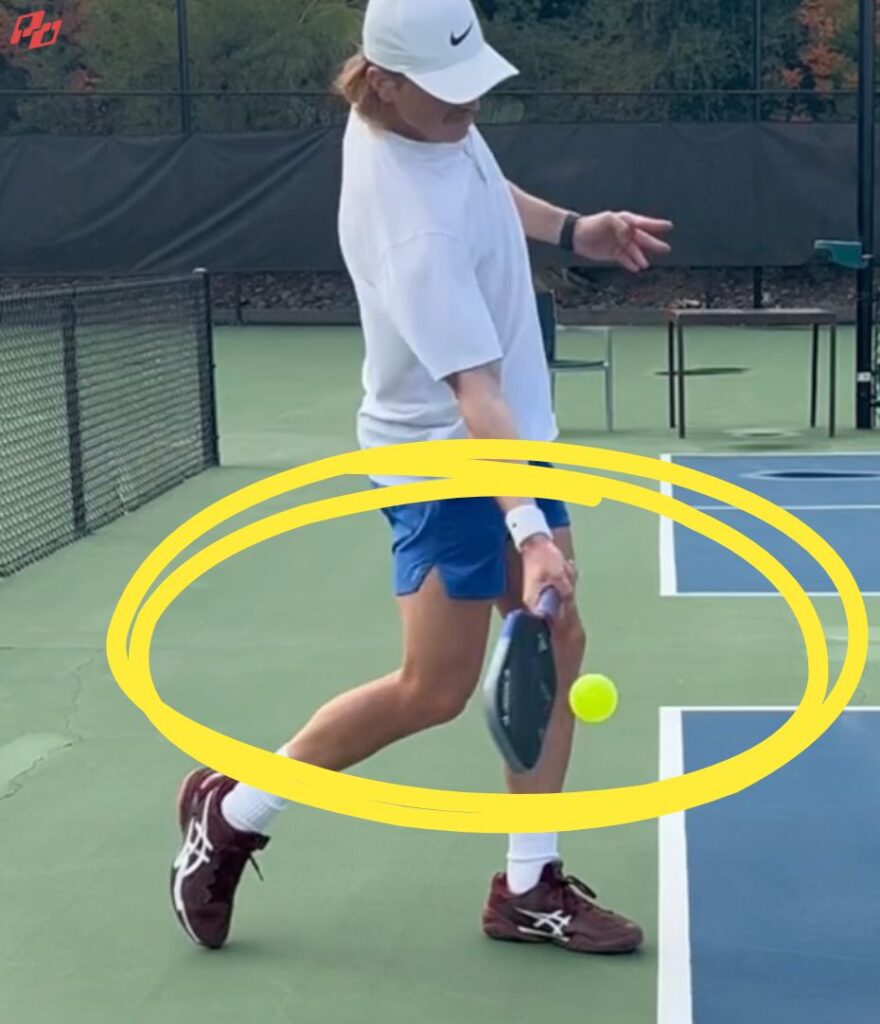
You don’t need a massive coil — but power begins from the ground up.
2️⃣ Contact Slightly More Out Front
Power drops when contact drifts beside your body. Ideal serve contact:
- In front of your lead hip
- Arm extended (not locked)
- Paddle accelerating forward
Late contact reduces leverage.
3️⃣ Don’t Over-Open the Paddle Face
Players trying to hit hard often open the face too much, which:
- Adds loft
- Reduces forward penetration
- Causes deep misses
Power serve ≠ high arc.
It’s forward velocity with controlled trajectory.
4️⃣ Avoid These Common Power Mistakes
❌ Death grip
❌ Big backswing
❌ All-arm swing
❌ Over-rotating shoulders
❌ Trying to hit at 100%
The video starts with “show me 80% power.” That’s intentional.
Elite serving rarely feels like 100%.
It feels smooth and repeatable.
If you can’t hit the same serve five times in a row, you’re swinging too hard.
When to Add Power in Rec Doubles
Serve power is situational. Add pace when:
- Opponents stand close to the baseline
- You want to push them deep early
- Wind is behind you
- You’re ahead in the score
Reduce pace when:
- Opponents are struggling with depth
- You’re tight on score
- You’re prioritizing consistency
Power is a tool. Placement still wins more points in rec play.
The Big Picture: Effort vs Efficiency
The reason this relaxed-wrist tip works is simple: most rec players confuse effort with speed. When you relax the outer fingers and reduce tension:
- Your swing chain becomes smoother.
- Your wrist naturally lags.
- Paddle-head speed increases.
- The ball penetrates deeper — without extra strain.
It should feel almost too easy.
If your serve feels violent, you’re doing too much. If it feels smooth and the ball carries deeper with less effort, you’re on the right track.