
If you’ve ever shopped for a pickleball paddle online, you’ve probably noticed something confusing.
A pro player says one paddle is incredible.
A reviewer says another one is better.
Your friend at open play swears by something completely different.
So who’s right?
The short answer: they all might be—because they’re often judging paddles through completely different lenses.
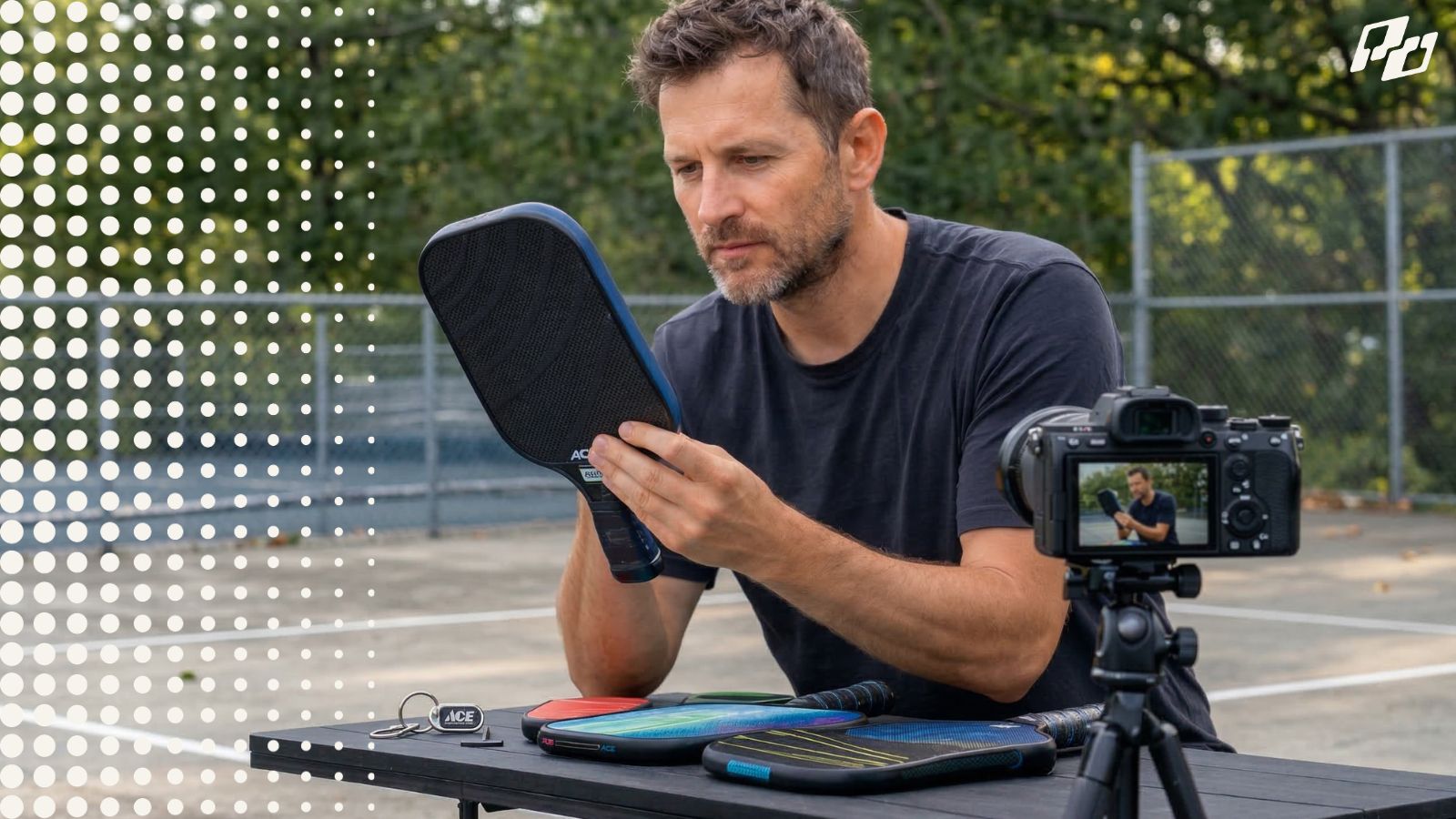
Recently, pro pickleball player Zane Navratil explained this in a short Instagram video. His point was simple: pros and recreational players often need very different things from a paddle.
That difference explains why pros, reviewers, and everyday players frequently recommend completely different gear.
And once you understand why, choosing the right paddle becomes a lot easier.
Pros Are Optimizing for Maximum Performance
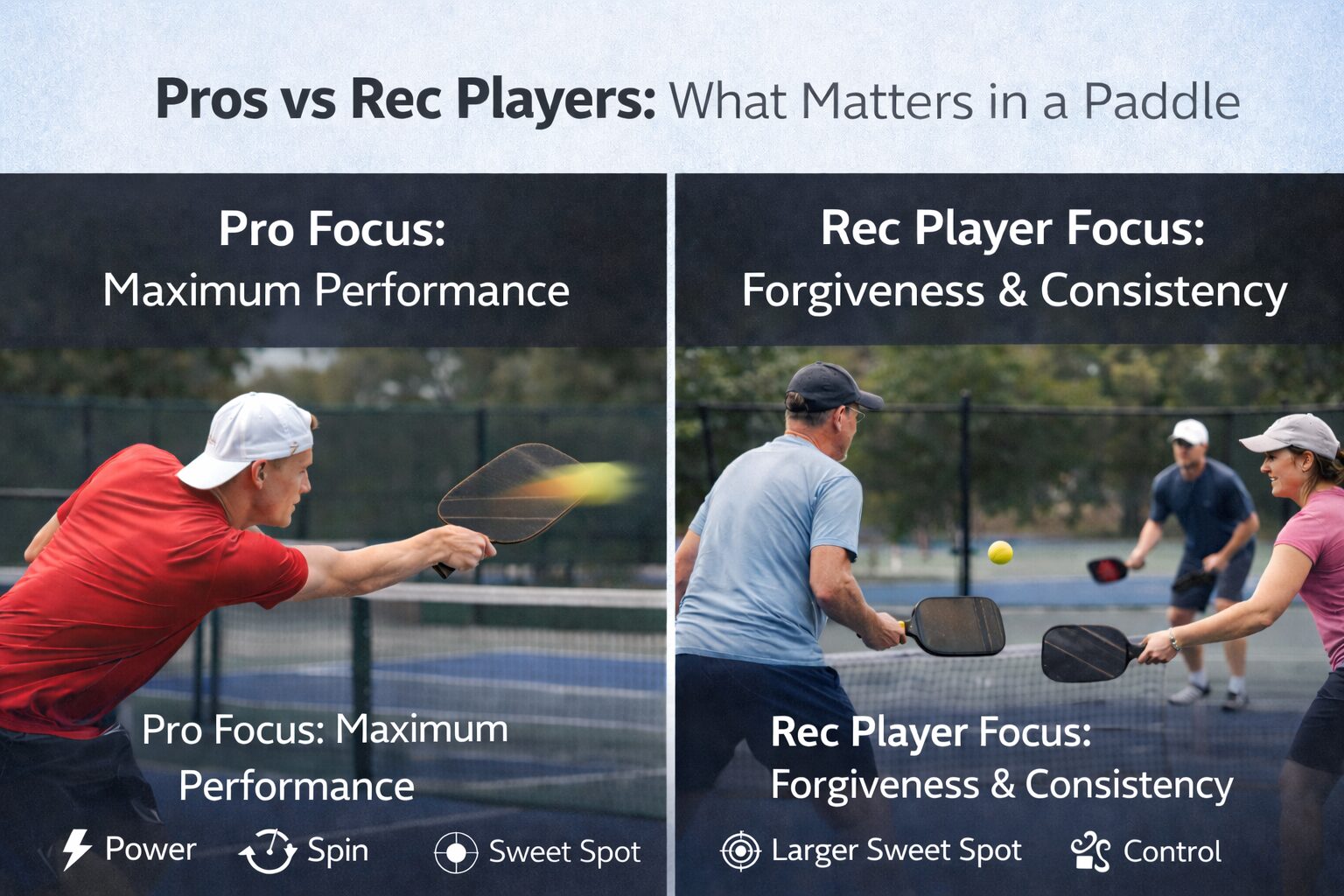
Professional players evaluate paddles based on what happens when the ball hits the sweet spot perfectly.
At the pro level, that happens a lot. Elite players have:
- exceptional footwork
- extremely consistent contact points
- refined timing and paddle control
Because of that, pros can prioritize maximum output from the paddle. That often means they prefer paddles with:
- stronger trampoline effect
- more explosive pop
- higher spin potential
- more aggressive power
Those characteristics help pros finish points faster, counterattack harder, and generate more spin on drives and speed-ups.
But there’s a tradeoff.
Paddles designed for maximum performance often come with smaller sweet spots and less forgiveness.
For a pro, that’s fine. For a recreational player, it can be a problem.
Rec Players Usually Need Forgiveness
Most recreational players judge a paddle very differently. Instead of asking: “What happens when I strike the ball perfectly?”
They’re asking: “What happens when I don’t?”
Because the reality is simple: recreational players miss the sweet spot more often. That’s normal.
So paddles that feel good to most rec players usually have:
- larger sweet spots
- more forgiving faces
- better stability on mishits
- easier touch on resets and dinks
Those qualities may make a paddle feel slightly less explosive—but they often make it much easier to play consistently.
That’s why paddle reviewers often recommend paddles that feel stable and predictable rather than purely powerful.
The Sweet Spot Debate
One of the biggest differences between pro preferences and reviewer recommendations comes down to sweet spot philosophy.
Pros tend to care more about how the paddle performs inside the sweet spot. Recreational players usually care more about how big the sweet spot is.
That difference changes how paddles are evaluated.
A pro might love a paddle because the sweet spot delivers incredible spin and power. A reviewer might downgrade that same paddle if the sweet spot is small and mishits feel harsh.
Neither perspective is wrong. They’re simply measuring different things.
Paddle Shape Is a Perfect Example
Another place this difference shows up is paddle shape.
Many pros prefer elongated paddles. Elongated designs typically provide:
- more reach
- extra leverage on drives
- stronger power potential
But they usually come with smaller sweet spots. That’s not a big issue for players who consistently strike the center of the paddle.
But for many rec players, that smaller margin for error can make the paddle feel demanding. Because of that, reviewers frequently recommend standard or widebody shapes, which tend to provide:
- larger sweet spots
- more forgiveness
- easier hand battles at the kitchen line
Again, neither option is universally better. It simply depends on the player.
Pros and Amateurs Sometimes Play Under Different Standards
There’s another wrinkle that many recreational players don’t realize. Most amateur tournaments require paddles that are approved by USA Pickleball (USAP).
But professional tours like PPA and Major League Pickleball now operate under a separate certification system run by the UPA-A.
Many paddles are approved by both organizations, but not all of them.
That means some paddles used on the pro tour may not appear on the USAP approved list used in many amateur tournaments.
For most recreational players this doesn’t change much day to day—but it does help explain why the paddle landscape can sometimes look slightly different between what pros use and what appears in amateur gear recommendations.
A Data-Driven Way to Compare Paddles
One of the challenges when choosing a paddle is that a lot of recommendations are still based on opinion and feel.
That’s why tools like JustPaddles’ Paddle Lab can be helpful for players trying to make sense of the market.
Instead of relying only on marketing claims or subjective reviews, Paddle Lab measures paddles using standardized performance tests. These tests look at factors such as:
- exit velocity (power)
- spin generation
- swing weight
- twist weight (stability on mishits)
- balance point
- consistency across the paddle face
Seeing these numbers side by side can help players understand how paddles actually perform rather than guessing based on brand descriptions.
For example, a paddle with a very high exit velocity might appeal to players who want more offensive power, while a paddle with higher twist weight might be more forgiving on off-center hits.
In other words, tools like Paddle Lab help bridge the gap between pro-level performance metrics and everyday player needs, giving rec players a clearer picture of what a paddle is designed to do.
The Real Question: Who Should You Listen To?
So when choosing a paddle, should you follow the pros or the reviewers?
The best answer is: listen to both—but for different reasons.
Pros are excellent at explaining:
- how paddles generate spin
- how power helps attack balls
- how paddle design affects offensive play
Reviewers, on the other hand, are often better at explaining:
- how forgiving a paddle is
- how it performs on mishits
- how comfortable it feels for typical players
Think of it this way: pros show you what a paddle can do at its absolute best.
Reviewers help you understand how it will perform for most players most of the time.
A Better Way for Rec Players to Choose a Paddle
Instead of asking “What paddle does this pro use?” try asking a few more useful questions.
→ How often do I hit the sweet spot?
If the answer is “not every shot,” forgiveness matters.
→ Do I play mostly doubles or singles?
Doubles players often benefit more from control and stability.
→ What shots define my game?
If you rely on drives and speed-ups, power may help.
If you rely on resets and dinks, control may matter more.
Choosing a paddle that supports your current strengths is usually far more valuable than chasing pro-level performance.
The Biggest Paddle Mistake Rec Players Make
The most common gear mistake recreational players make is buying a paddle designed for their future game instead of their current one.
A paddle that maximizes pro-level power might feel exciting—but if it shrinks your margin for error, it can actually make the game harder.
The best paddle isn’t the one that makes your best shots slightly better. It’s the one that makes your average shots more consistent.
So What Should You Actually Do?
Pros and paddle reviewers often disagree because they are answering different questions.
Pros ask:
“What paddle gives me the most performance when I strike the ball perfectly?”
Reviewers ask:
“What paddle will help the most players succeed?”
Understanding that difference removes a lot of the confusion.
And once you start evaluating paddles based on your own game instead of someone else’s, choosing the right paddle becomes much easier.