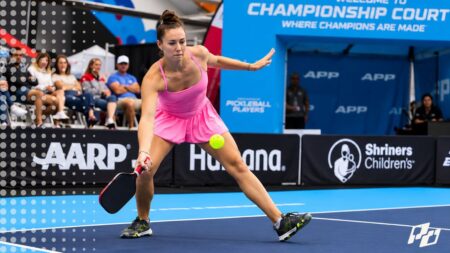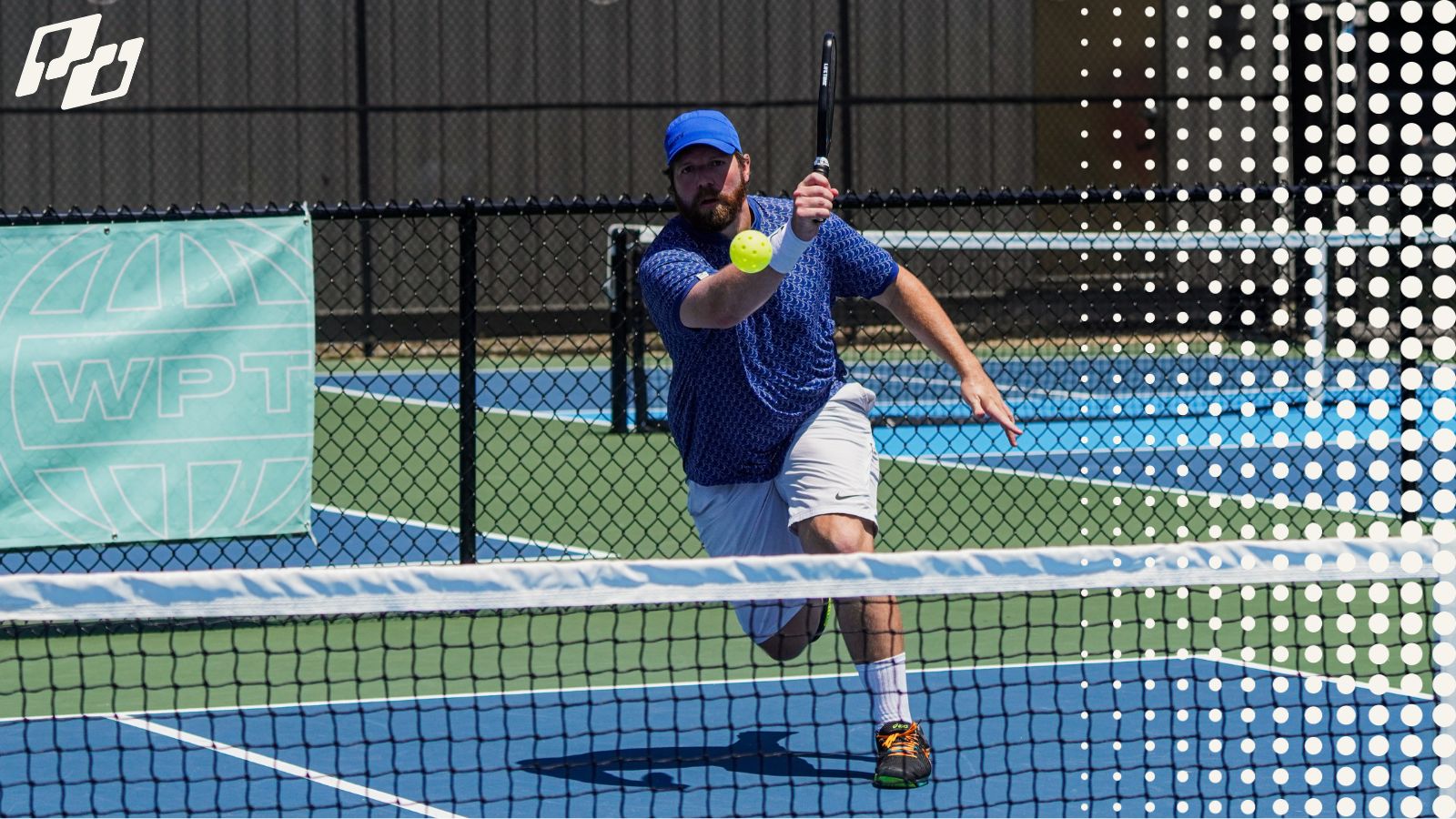
If you watch enough pickleball, you start hearing the same advice over and over: attack short balls.
And to be fair, that advice exists for a reason. A short return can absolutely create offense. It can give you better court position, let you move forward, and sometimes even hand you an easy put-away.
But this is where a lot of 3.0–4.0 rec players get into trouble: they hear “short ball” and immediately think “rip it.”
That is not always the right read.
In fact, one of the most common intermediate mistakes is trying to drive every short return just because it feels attackable. The ball lands shorter, you are moving forward, your momentum is carrying you in, and it feels like the perfect time to unload. But a lot of those balls are actually bait. They look offensive, but the contact point, height, and situation make them much worse to drive than they seem.
That is exactly why this matters.
A short return is not automatically a green light. Sometimes it is. Sometimes it is not. And if you do not learn the difference, you will keep losing points you feel like you should be winning.
The real problem: short does not always mean attackable
This is the key idea of the whole article.
➜ A ball being short tells you where it landed.
➜ It does not tell you whether it is a good ball to attack hard.
That second decision depends on more than depth. It depends on:
- how high the ball is
- where you will contact it
- whether you are balanced
- whether your opponents are set
- what kind of reply your shot is likely to invite
That is where rec players often get fooled.
They see a ball land short and think the court is giving them permission to attack. But if the ball is still low, awkward, or below net height, driving it hard often puts you in a worse position, not a better one.
So the smarter question is not: “Is this ball short?”
It is: “Is this ball actually attackable?”
Those are not the same thing.
Why short returns are so tempting
This mistake is easy to understand because the feeling is real.
- You hit a good serve.
- You get a weaker return.
- It lands shorter than usual.
- You are stepping into the court with forward momentum.
- Your brain says: go.
That is the trap.
A short ball creates emotional urgency. It makes players feel like they need to capitalize right now. And sometimes that instinct is correct. But a lot of the time, especially at the rec level, it causes players to speed up the wrong ball from the wrong position.
That is why so many intermediate players lose points on balls they were sure they were supposed to attack. The temptation is not the problem by itself. The problem is attacking before you properly read:
- the height
- the quality of the contact
- your body position
- your opponents’ readiness
What coaches are really teaching
This is what pickleball coach John Cincola explains so well in his video below.
He points out that the short return can lure you into trying to drive a ball that does not actually deserve that shot. You see the short bounce, you feel your momentum moving forward, and you want to unload. But from back there, your main goal is still not necessarily to finish the point.
Your main goal is often to get to the kitchen line cleanly.
That is the big reframe.
Instead of asking: “Can I hit this hard?”
You should ask: “What shot helps me get in without losing the point?”
That question leads to much better decisions.
Why driving the short return often backfires
Cincola’s warning is so good because it lines up with what rec players experience all the time. When you try to rip a short but low return, one of three things usually happens.
1. You hit it long
This is incredibly common.
The ball is short, but it is also low. That means you still need some lift to clear the net. But because you are moving forward and trying to be aggressive, you often end up driving through the ball too much. Now the ball launches.
This happens because you are trying to create two things at once from a bad contact height:
- enough upward shape to clear the net
- enough pace to attack
That combination is tricky, especially when you are still moving and not fully set.
A lot of players think they missed long because they were too aggressive. That is partly true. But more specifically, they were aggressive from the wrong ball height.
2. You dump it into the net
This is the opposite miss, and it happens just as often.
You know the ball is low, so now you try to rip it with just enough shape to make it work. But because the ball is below net height and your body is still moving forward, your margin is tiny.
If you are even a little rushed, a little late, or a little too flat, the ball goes straight into the net.
This is why low short returns are so deceptive. They look attackable because of the depth, but the actual geometry of the shot is still difficult.
A short ball below net height is not a free attack ball. Very often, it is a low-percentage drive.
3. You hit a decent drive — and still lose the point
This is the one many rec players do not think through enough.
Let’s say you hit the drive pretty well. Not perfect, but solid. It clears the net, lands in, and has some pace. You might still lose the point immediately.
Why?
Because if your opponents are already established near the kitchen, that driven ball can become the exact volley they want. They can block it or counter it right back down at your feet while you are still moving through the transition zone.
And that is one of the hardest balls in pickleball to handle.
- You are not fully set.
- Your momentum is still going forward.
- Your paddle is often lower than it should be.
- And now the ball is being volleyed down at your shoes.
Even a decent drive can be a bad shot if it creates an easy counterattack from a ready opponent.
The real goal from back there
This is where a lot of rec players need a mindset shift. From the backcourt or early transition zone, especially on the third shot, your job is often not to end the point. Your job is to earn your way to the kitchen.
That is such an important distinction. Use the short ball to move in under control.
That might mean attacking sometimes. But more often, especially if the ball stays low, it means hitting a controlled drop or a softer hybrid ball that lets you keep moving forward without feeding your opponents an easy volley.
So when should you drive it?
This is the clarification many players need. The lesson is not “never drive a short return.” The lesson is: do not drive it just because it is short.
A short return becomes much more driveable when:
- it sits up above net height
- you can contact it comfortably out in front
- you are balanced
- your opponents are not fully set
- you can drive with shape and margin
- the ball does not force you to manufacture lift from a very low position
That is a very different scenario from a low, skidding short ball you are running into while the other team is already planted at the kitchen. So yes, some short returns should absolutely be driven. But many should not.
And knowing the difference is a major part of getting from 3.0 to 4.0.
A simple rule for rec players
Here is a practical rule that works really well:
✔ If the ball is short and high, you can think offense.
✔ If the ball is short and low, think get in first.
That is not a law. There will always be exceptions. But for most 3.0–4.0 rec players, that one rule will clean up a lot of bad third-shot decisions immediately.
It simplifies the read without making you passive. You are not giving up offense. You are just choosing offense from the right balls instead of the tempting ones.
Why this matters so much for 3.0–4.0 players
At the intermediate level, a lot of points are lost not because players are too passive, but because they try to attack from unstable positions.
That is a huge difference.
Many 3.0–4.0 players are already aggressive enough. In fact, they are often too aggressive in the wrong moments. They attack because the ball looked tempting, not because the situation truly supported the shot. The better players at this level are often the ones who understand:
- which balls deserve aggression
- which balls deserve patience
- when to move in under control
- when to stop trying to force winners from below net height
That is how rallies get cleaner. That is how transition gets stronger. That is how players stop giving away the exact points they think they should be winning.
A quick self-check for your own game
If this is a pattern in your matches, it usually sounds like one of these:
- “It was short, so I thought I had to attack it.”
- “I felt like I should do something with that ball.”
- “I hit it okay, but they volleyed it right at my feet.”
- “I keep missing these short returns in the net.”
- “I get excited when I see that ball.”
If that sounds familiar, you probably do not have a short-ball execution problem. You probably have a short-ball selection problem.
And that is good news, because shot selection can improve fast once you start seeing the trap more clearly.