

We’ve all been there. You finish a few solid games, go home feeling good, and then the next morning—hello, stiffness. Maybe it’s your shoulder. Maybe your heel feels like you stepped on a Lego. Maybe your back gives you a little “hey there” every time you reach for the coffee pot.
Most of us brush it off. “Just pickleball aches,” we tell ourselves. And a lot of the time, that’s true.
But not always. So how do you know when it’s just soreness—and when it’s your body throwing up a red flag?
First: What’s Normal Soreness in Pickleball?
Muscle soreness after a solid session—especially if you played longer than usual, faced tougher opponents, or added new drills—is totally normal. This kind of soreness is called DOMS (delayed onset muscle soreness) and typically:
- Feels dull, achy, or tight (not sharp or stabbing)
- Peaks 24–48 hours after play
- Fades over 2–5 days
- Improves with light movement, gentle stretching, or activity
In pickleball, normal post-match soreness often shows up in the quads and glutes (from lunging and split-stepping), shoulders (from overheads and resets), forearms (from gripping the paddle), and core muscles (from rotational swings and balance work). Calves, hip flexors, and even your non-dominant side can get sore too—especially if you’re playing hard or on back-to-back days.
So if you’re feeling that general, even soreness in the muscles you actually used, and it’s improving day by day—you’re probably in the clear. Just hydrate, stretch, and give your body the rest it needs to adapt.
But When Should You Worry?
Now here’s where we shift gears.
There’s a big difference between normal soreness and pain that signals injury—especially if it keeps showing up in the same spot or starts interfering with your play. Look out for these red flags:
Pain that:
- Lasts more than 10–14 days
- Is sharp, stabbing, or burning (not dull or achy)
- Gets worse during or after play
- Wakes you up at night
- Comes with swelling, bruising, or warmth
- Limits your range of motion or strength
- Involves numbness, tingling, or joint instability
Basically, if your “little ache” is sticking around like an unwanted doubles partner and getting in the way of your everyday life, it’s time to hit pause.
The “3-Session Rule” for Pickleballers
Here’s a simple rule I like to use—and it’s helped many players avoid long-term downtime:
Session 1 – You feel a twinge. Fine. Play gently. Ice it later.
Session 2 – Still there? Scale back intensity. Shorter session. More rest.
Session 3 – If the pain hasn’t improved—or it’s worse—it’s time to stop playing and get it checked out.
Don’t wait until you’re limping off the court or trying to dink with one arm. Listen to your body early.
Most Common “Hidden” Problem Spots
Here are some common injuries players think are just soreness… until they’re not:
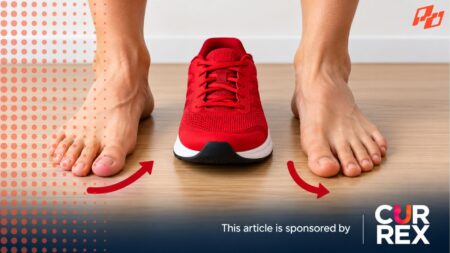
1. Plantar Fasciitis (Bottom of Heel & Arch)
That sharp, stabbing pain under your heel in the morning? It’s not just tired feet.
Plantar fasciitis happens when the thick fascia under your foot becomes inflamed from repetitive loading—like lunging, shuffling, and pushing off the balls of your feet on hard courts.
Most common in:
- Players who suddenly increase court time
- Those with worn-out shoes or poor arch support
- Anyone playing multiple days without adequate recovery
Early sign:
- Pain with your first steps out of bed, especially in the heel or mid-arch
- Aching underfoot when standing after sitting for a while
- Soreness after long rallies involving lots of movement or foot pivots
Here’s how to fight off plantar fasciitis and keep playing—just a few simple exercises and recovery tips that actually work:
2. Pickleball Elbow (Lateral Epicondylitis – Outside of Elbow)
A dull ache on the outside of your elbow that turns sharp when you drive, block, or even lift groceries? Classic pickleball elbow.
This overuse injury affects the forearm extensors—especially when you grip the paddle too tightly, use poor mechanics on your backhand, or hit a lot of fast-paced volleys without wrist stability.
Most common in:
- Players who play 3+ times a week with minimal rest
- Those who have recently switched paddles or added lead tape
- Players with wristy mechanics on blocks or flicks
Early sign:
- Tenderness to the touch on the bony bump on the outside of your elbow
- Pain when you shake hands, lift a drink, or rotate your forearm
- Increasing discomfort after drives, rolls, or paddle flicks at the net
3. Shoulder Tendinopathy (Front or Top of Shoulder)
If your shoulder quietly starts aching during resets or overheads, then flares up at night—that’s a strong signal of rotator cuff tendinopathy, often involving the supraspinatus tendon.
This develops from repetitive overhead motions, poor shoulder mobility, or weak rotator cuff muscles. Players often don’t notice until it becomes chronic.
Most common in:
- Players who frequently overhead slam or lob
- Those with tight chest muscles or poor shoulder posture
- Players transitioning from tennis or using heavier paddles
Early sign:
- Deep ache in the front or top of the shoulder
- Pain with reaching overhead, serving, or putting on a shirt
- Worse after long dink rallies or when sleeping on that side
Our physiotherapist breaks down 3 simple exercises to help fix shoulder pain for pickleball players—quick, targeted, and court-tested:
4. Knee Pain: Meniscus Irritation or MCL Sprains (Inner Knee or Behind the Knee)
That tug behind your knee or pinchy pain along the inner side isn’t just “old knees.”
Meniscus irritation often stems from deep squatting, twisting while loaded, or hard stops. The MCL (medial collateral ligament) can be strained when you change direction too quickly or pivot off a planted foot.
Most common in:
- Older players or anyone with previous knee injuries
- Players who lunge a lot at the kitchen or chase drops on the run
- Those wearing improper shoes with poor lateral support
Early sign:
- Discomfort or tightness in the inner knee or behind the kneecap
- Swelling or stiffness after play, especially after side-to-side movement
- Pain when twisting or changing direction suddenly
5. Lower Back Pain or SI Joint Dysfunction (Base of Spine or One Side of Low Back)
If you feel an ache across your low back or a stabbing sensation on one side near your pelvis—especially after twisting—that could be SI joint dysfunction or a low back strain.
Pickleball demands tons of trunk rotation, especially in resets, roll volleys, and overheads. Weak glutes and core muscles leave your spine doing all the work.
Most common in:
- Players who twist a lot during points or serve with a full windup
- Those with poor hip mobility or weak glutes/core
- Players who jump into intense matches without warming up
Early sign:
- Pain on one side of your lower back, especially when bending or twisting
- Stiffness after games or long car rides
- Difficulty rotating to hit a forehand or serve without discomfort
How to Play Smarter: Prevention & Protection
Staying healthy in pickleball isn’t just about avoiding injury—it’s about building a resilient, responsive body that can handle the game’s demands: explosive starts, sudden stops, twisting shots, overheads, dinks, and hours of lateral footwork.
Here’s your comprehensive blueprint to stay on the court—and out of the PT clinic.
✅ Before You Play: Build the Foundation
1. Activate, Don’t Just Stretch: Forget static stretching before matches—it reduces power. Instead, warm up dynamically:
- 5–8 minutes of light cardio: brisk walking, jump rope, or shadow footwork
- Dynamic moves:
- High knees and butt kicks (ankles/knees)
- Leg swings (hip flexors/hamstrings)
- Arm circles + crossovers (shoulders/pecs)
- Lunge-to-twist (hip mobility + thoracic spine)
2. Fire Up the Kinetic Chain: Use mini resistance bands to activate your glutes, hips, and core—your stabilizers.
- Lateral band walks
- Glute bridges
- Dead bugs or bird-dogs
These exercises “prime the engine,” so your muscles absorb the workload—not your joints.
3. Hydrate + Fuel: Even 1–2% dehydration reduces coordination and increases injury risk.
- Drink 8–16 oz of water 30 minutes before play
- Add electrolytes if you’re playing in heat or over 90 minutes
- Eat a small carb-rich snack (like fruit or a granola bar) for energy if needed
✅ During Play: Move with Intention
1. Mechanics Matter: Don’t “arm” your shots. Use full kinetic flow: legs, core, shoulder, then paddle.
- On overheads: Load through your legs, not just your shoulder
- On drives: Rotate your torso instead of muscling with your wrist
Poor mechanics don’t just cost you points—they cost you body parts.
2. Protect Your Lower Half
- Pivot through your toes—never twist your knee over a planted foot
- Split-step before reacting to each shot, especially at the kitchen
- Wear court shoes, not running shoes—look for reinforced sides and low-profile soles for lateral support
3. Pace Yourself
- Take a 3–5 minute rest every 60–90 minutes of play
- Use that time to stretch your calves and hips, rehydrate, and mentally reset
- If you feel a small tweak, sub out before it becomes a real issue
✅ After Play: Recover Like You Mean It
1. Cool Down Properly: You’re not done just because you’re off the court.
- Walk for 2–3 minutes to slowly lower heart rate
- Then stretch:
- Calves (to reduce Achilles tightness)
- Hip flexors & glutes (to decompress the low back)
- Shoulders & pecs (to open up your posture)
- Forearms (to protect elbows and wrists)
2. Address Soreness Early
- Use ice or cold packs for any joint soreness (elbow, knee, ankle)
- Use light compression or kinesio tape if you’re dealing with a minor strain
- Foam roll tight areas like the IT band, quads, or upper back
3. Monitor and Log Pain: Your body keeps the score—but a simple pain log helps you catch patterns early and stay ahead of injuries.
- Keep a pain log: jot down what hurts, when, and how it changes over 24–48 hours
- If pain increases, shifts, or persists after rest, it’s time to see a specialist
- Early intervention = less downtime
Bonus: Long-Term Injury-Proofing Habits
- Cross-train 1–2x per week: strength training (especially for legs, hips, and rotator cuffs) is your best long-term defense
- Improve balance and ankle stability: use a wobble board or single-leg drills
- Improve mobility in key areas: especially the hips, thoracic spine, and shoulders—where tightness can lead to compensations and injuries.
- Get bodywork: regular sports massage or mobility-focused physical therapy can extend your playing life dramatically
Our physiotherapist shared 7 quick warm-ups you can do in under 7 minutes—easy, effective, and game-ready:
Don’t “Tough It Out” Blindly!
Here’s the truth: every great player you admire has rested when they needed to. They’ve skipped games, sat out tournaments, and taken care of their bodies—because they want to keep playing for years to come.
Pain is a teacher. The smart move is to listen early.
So the next time your heel nags, your shoulder protests, or your knee flinches—don’t just grab the ibuprofen and hope for the best.
Take the moment. Do the check-in. And if needed—sit one out to stay in the game.