Why Pros Love It—and Why It Might Be the Easiest Drop You’ll Ever Learn
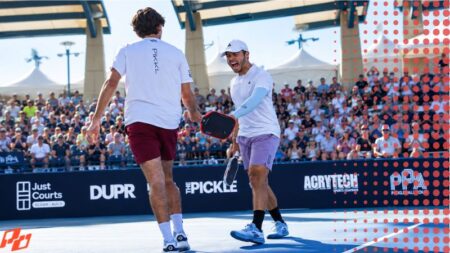
If you’ve ever watched James Ignatowich or Collin Johns in person—or slowed down their footage online—you’ve probably noticed something subtle.
When things get tight, rushed, or awkward… they don’t swing harder.
They bunt.
The forehand bunt drop has quietly become one of the most reliable, repeatable drops in modern pickleball. It’s not flashy. It’s not dramatic. And that’s exactly why pros love it.
For intermediate rec players, it might also be the most accessible drop you can add to your game.
Let’s break down what it is, why it works, and how to use it without overthinking it.
What the Forehand Bunt Drop Actually Is (And What It’s Not)
First, let’s clear up a misconception.
A bunt drop is not:
- A scoop
- A wristy flick
- A baby topspin roll
- A “hope it clears the net” push
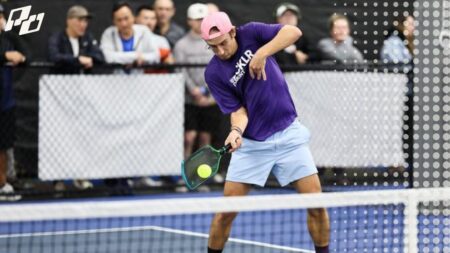
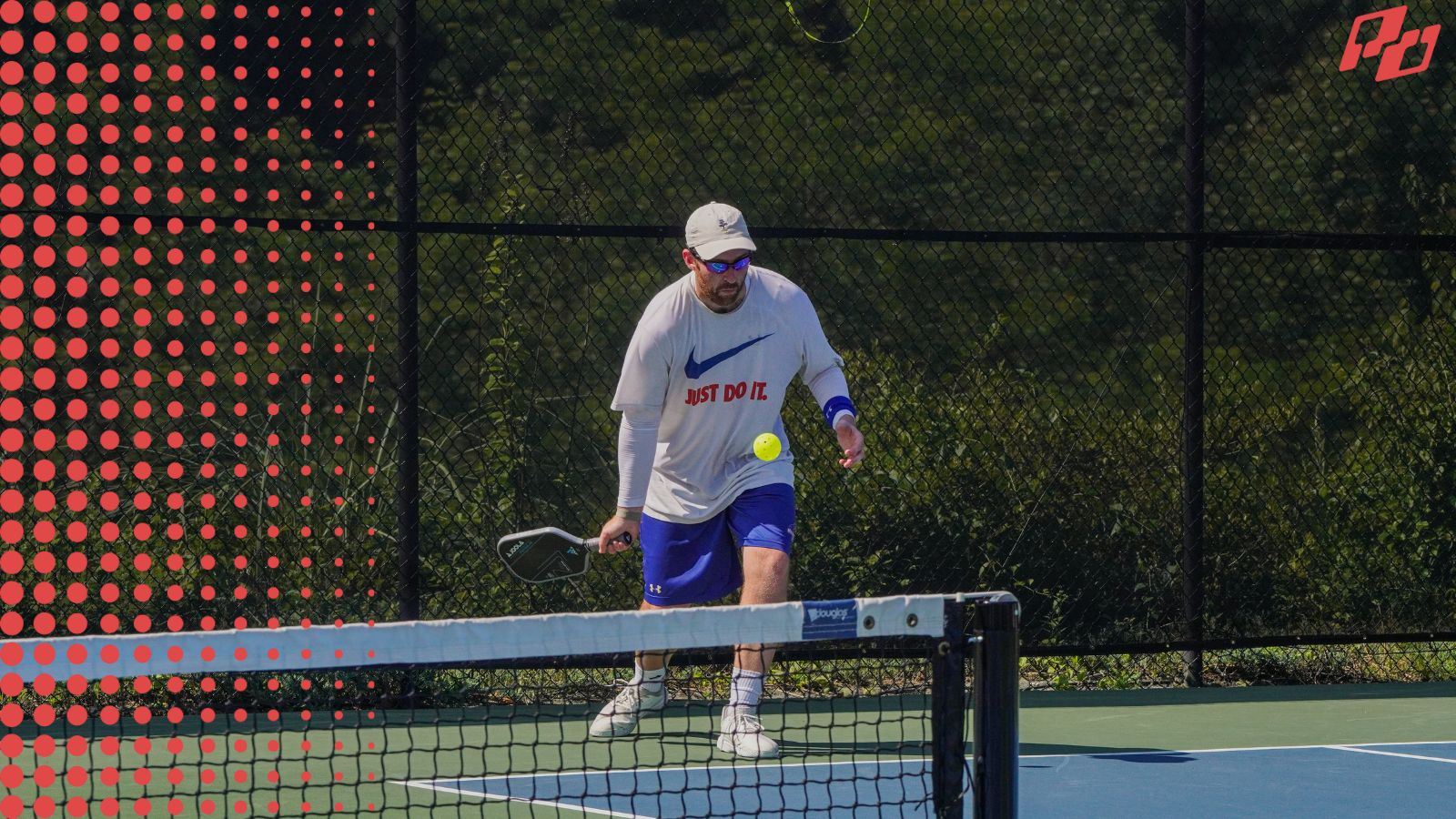
The bunt drop is a compact, open-stance forehand drop with almost no backswing. Think of it as guiding the ball into the kitchen rather than hitting it there.
Collin Johns describes it as one of the simplest and most fundamental drops a player can learn — especially for amateurs — because the mechanics naturally limit your ability to overdo it.
Why the Open Stance Changes Everything
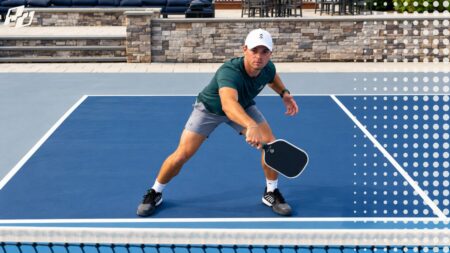
The defining feature of the forehand bunt drop is the open or semi-open stance.
Instead of stepping closed and loading up like a drive, you stay open to the court. This does a few important things immediately:
- It prevents a big backswing
- It keeps the paddle in front of your body
- It forces a shorter, quieter motion
- It makes direction control easier
In other words, the stance itself protects you from your worst instincts.
James Ignatowich puts it simply: paddle in front, smallest swing possible. The open stance makes that almost unavoidable.
Paddle Position: Your Built-In Training Wheels
One of Collin Johns’ best cues is where the paddle starts.
In the forehand bunt drop, the paddle head lines up roughly with the inside of your outside foot (for right-handers, that’s your right foot). Crucially, the paddle starts below the ball.
That matters because a drop needs lift. Not pace.
Starting under the ball allows you to create a soft, looping trajectory that clears the net with margin and gives you time to move forward.
This isn’t about touch magic. It’s about geometry. Same paddle start. Same contact zone. Over and over.
Footwork Does the Aiming (Not Your Hands)
Here’s where this shot really shines for intermediate players.
Instead of steering the ball with your wrist or arm, the bunt drop uses your feet to control direction.
Collin Johns calls this “boxing out the ball.”
If you want to hit more crosscourt, you subtly angle your stance that way. If you want to go middle, you square up. The paddle motion stays the same — the body alignment does the work.
This is huge for consistency.
When your hands try to aim, things get messy. When your feet aim, the paddle just follows.
The Swing (If You Can Even Call It That)
The bunt drop swing is intentionally boring.
- No loop
- No snap
- No jump
- No elbow drifting behind you
The paddle moves forward and slightly up, staying in front of your torso the entire time. The elbow stays close. The wrist stays quiet. Your body stays still.
Ignatowich emphasizes this point a lot: don’t jump.
Any upward body movement adds pace and removes control. The power in this shot comes from stability, not momentum.
If it feels almost too simple… you’re probably doing it right.
Why Pros Use the Bunt Drop Under Pressure
Here’s the part most rec players miss.
Pros don’t use the bunt drop because it looks clean in drills. They use it because it holds up when things are chaotic.
Late in rallies.
On rushed third shots.
From awkward spacing.
When the return comes deep and fast.
The bunt drop survives because:
- The swing is short
- The margin is built in
- The trajectory is predictable
- The recovery time is fast
You hit the drop, and because the motion is so compact, you’re already balanced and ready to move forward.
That’s why it feels so “calm” when you watch it.
When the Forehand Bunt Drop Is the Right Choice
This shot is especially effective when:
- You’re slightly late on the ball
- You don’t have time to step closed
- You’re moving forward or laterally
- You want a high-percentage reset, not a winner
It’s not the drop you use to show off feel. It’s the drop you use to stay in the rally.
And staying in rallies is how games are actually won.
Common Mistakes Rec Players Make With This Shot
Most issues don’t come from under-hitting. They come from doing too much.
The biggest problems:
- Letting the elbow drift behind the body
- Adding wrist at the last second
- Taking too big of a swing
- Jumping or rising through contact
If your bunt drops keep sailing long, it’s almost never because you didn’t “soften your hands enough.” It’s because something moved that shouldn’t have.
Stillness is your friend here.
Why This Shot Is Perfect for Intermediate Players
At the intermediate level, most players lose points on drops not because they lack touch — but because their mechanics break down under pressure.
The forehand bunt drop is forgiving. It limits swing size. It simplifies timing. And it gives you margin without asking you to manufacture feel.
That’s why so many pros recommend it for amateurs.
It doesn’t require genius.
It requires restraint.
Simple Doesn’t Mean Easy—It Means Reliable
The forehand bunt drop isn’t trendy. It’s not going to light up highlight reels.
But it might quietly become the drop you trust the most.
If players like James Ignatowich and Collin Johns lean on it when rallies get fast and messy, that should tell you something.
Sometimes the smartest shot isn’t the prettiest one.
It’s the one that keeps you calm, balanced, and moving forward — one soft bunt at a time.