
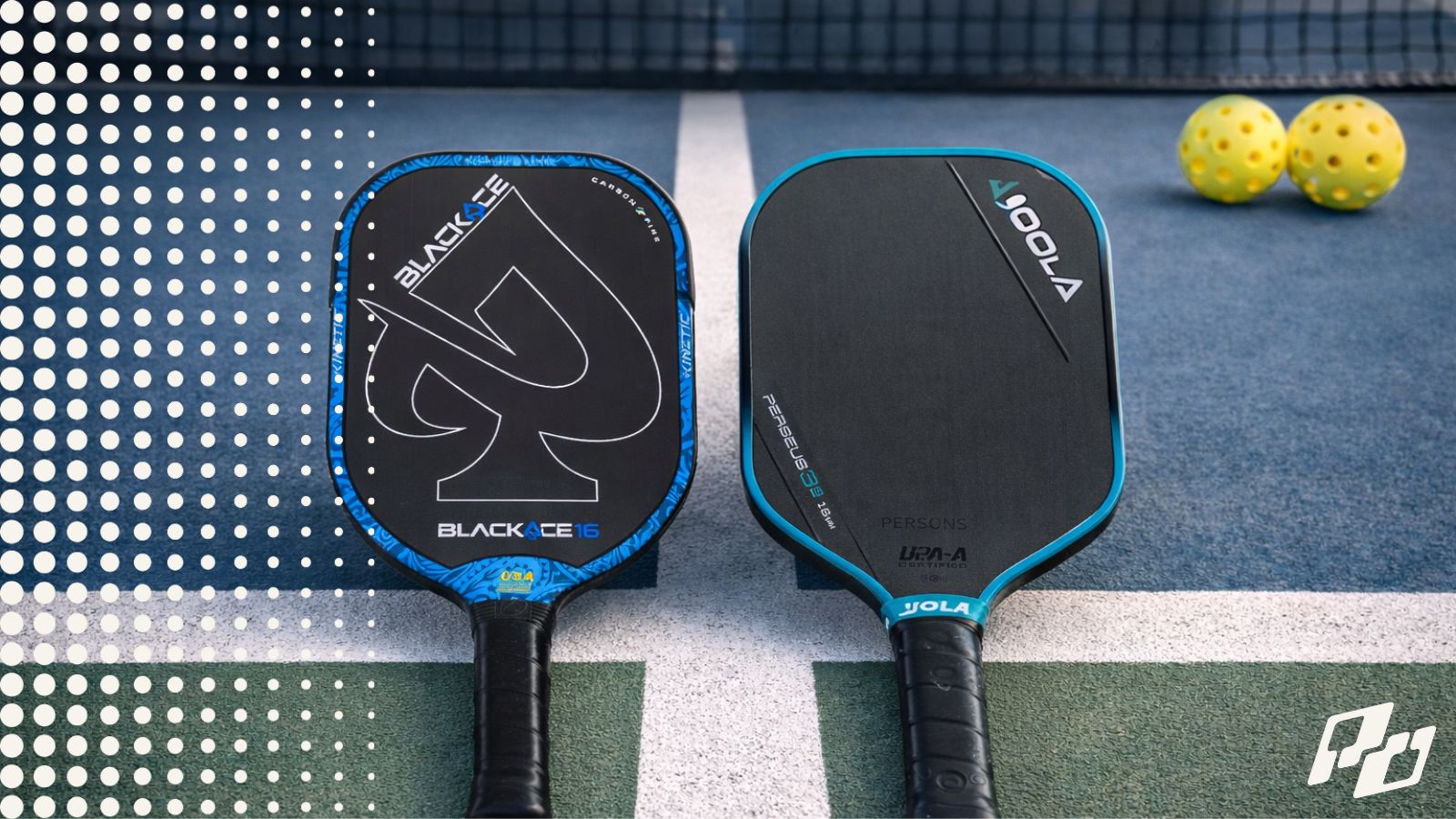
Control paddles are supposed to make the soft game easier. Better dinks. Better drops. Fewer errors.
So when you switch to one and suddenly start popping balls up at the kitchen, it feels backwards—and frustrating.
New to pickleball? Start with our best pickleball paddles for beginners, picked with lab data and 3,600 player survey responses.
Here’s the uncomfortable truth: control paddles don’t create pop-ups. They expose timing, spacing, and contact habits that power paddles quietly mask.
Once you understand why that happens, pop-ups stop feeling random—and start feeling fixable.
What “Control” Really Means (Technically)
Most paddles labeled control share a few core traits:
- Thicker cores (14–16mm) that absorb impact
- Lower trampoline effect (less rebound energy)
- Longer dwell time—the ball stays on the face slightly longer
- Softer feel, especially on resets and dinks
From a physics standpoint, these paddles return less energy to the ball than thinner or more powerful paddles. That’s great—if your mechanics are clean.
But here’s the tradeoff no one explains clearly:
When the paddle gives you less free power, your body and timing have to supply more of the outcome.
And that’s where pop-ups creep in.
Why Pop-Ups Appear After Switching to a Control Paddle
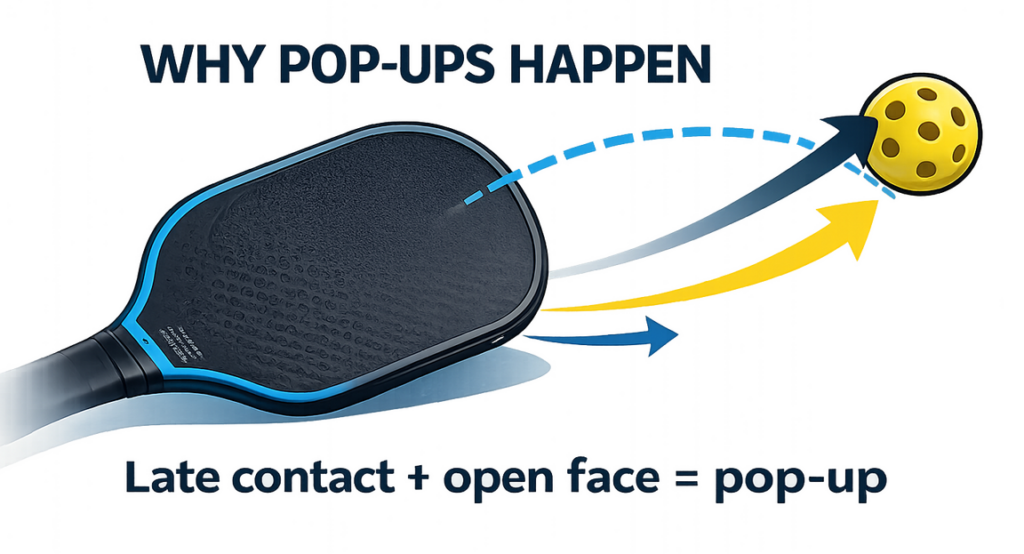
1. Late Contact Gets Punished, Not Masked
Power paddles often bail players out on late contact. Even if you’re slightly jammed or off-balance, the trampoline effect can still send the ball over the net with pace.
Control paddles don’t do that.
If you’re late:
- The paddle face opens unintentionally
- The ball stays on the face longer
- The upward angle becomes exaggerated
Result? A soft, floaty pop-up that sits right in your opponent’s strike zone. This is especially common at the kitchen during hand battles or rushed resets.
2. Reaching Instead of Moving Becomes Obvious
Control paddles demand clean spacing.
If you reach:
- Your paddle path becomes upward instead of forward
- Your wrist compensates
- Your contact point drifts behind your body
With a power paddle, you might still “get away with it.” With a control paddle, that upward compensation turns into—you guessed it—a pop-up.
This is why many players say, “I never had this issue before I switched paddles.”
You did. The paddle just stopped hiding it.
3. Slower Swing Speed = Higher Launch Angle
A lot of rec players subconsciously slow their swing when they hear the word “control.”
That’s a problem.
Control paddles already reduce rebound energy. Pair that with a decelerating swing and the ball leaves the face:
- slower
- higher
- with less penetration
Especially on blocks and soft volleys, this creates balls that clear the net comfortably—and then die perfectly for your opponent.
4. More Dwell Time Amplifies Face Angle Errors
Dwell time is a double-edged sword.
Yes, it helps with touch. But it also means whatever your paddle face is doing at contact matters more.
Tiny errors—slightly open face, unstable wrist, poor posture—get magnified. That’s why pop-ups with control paddles often feel soft and inexplicable.
They’re not random. They’re just more honest.
Why This Happens More to Recreational Players
➡️ Advanced players already:
- move their feet consistently
- contact the ball in front
- manage face angle under pressure
➡️ Many recreational players:
- rely on paddle forgiveness
- default to reaching
- prioritize “soft hands” over stable structure
When you combine rec-level habits with a paddle that removes margin, the paddle gets blamed—but the issue is mechanical and positional, not equipment-based.
The Situations Where Control Paddles Pop Balls Up Most
- Kitchen hand battles
- Defensive blocks against pace
- Transition-zone resets
- Jammed body shots
- Late backhand volleys
Notice a pattern? These are all moments where time, space, and posture break down.
How to Fix Pop-Ups Without Abandoning Your Control Paddle
First: “Respect the Ball Again” (What That Means in Real Games)
Control paddles don’t bail you out when you’re casual. So your goal is simple: stop making contact while your body is still moving or reaching. Here’s how to do that in real points:
1) Freeze your base before you swing.
If your feet are still sliding when you touch the ball, your paddle face will open and the ball will float.
On any volley/reset, think: plant → hit, not hit-while-drifting. Even a tiny “settle” step helps.
2) Keep your paddle in front like a shield.
Pop-ups happen when the paddle gets out to the side and you “scoop.”
Start rallies with your paddle in front of your chest, tip slightly forward, so your default contact is stable—not a last-second flip.
3) Let fast balls travel an extra 6–12 inches within your strike zone, so you can hit forward instead of up.
This sounds backwards, but it’s huge: if you swing at the ball the instant you see it, you’re usually early and upward. With a control paddle, that turns into a float.
Let it come a little deeper into your strike zone so you can hit forward, not up.
4) Make “forward” your default direction.
On blocks and resets, don’t lift. Think: push forward over the net tape, like you’re sending the ball through a low window.
If you feel your paddle going up, you’re building the pop-up.
5) Use your legs for soft—don’t “soften” with your wrist.
Rec players try to be gentle by loosening the wrist… and the face opens. Instead, keep the wrist quiet and create touch by bending knees and taking the ball slightly more in front.
Second: Prioritize Contact Point Over Softness
With control paddles, where you hit the ball matters more than how softly you swing.
Here’s the rule: if the ball is even slightly behind your front hip, the face opens and the ball lifts.
What to do instead:
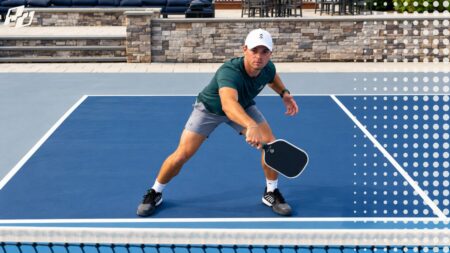
1) Contact the ball in front of your lead foot.
Not next to you. Not drifting past you. Picture a small window just in front of your body—that’s where control paddles behave best. When you miss that window, pop-ups show up.
2) If you’re late, don’t “save” it—reset deeper.
Trying to rescue a late ball with a soft flick is how you donate points. When you’re late, choose height and depth on purpose. A higher reset is better than a floaty half-volley.
3) Keep your chest facing the net on contact.
When your shoulders rotate away, your paddle angle opens. Staying square keeps the face neutral and the ball down—especially on backhand volleys.
Quick cue: if you feel the ball on your paddle longer than expected, you’re late.
Third: Move Your Feet One Step More Than You Think
Most pop-ups aren’t hand errors—they’re footwork shortcuts.
Here’s the problem: players stop moving once they reach the kitchen, then try to play pickleball with their arms only.
What to do instead:
1) Use a small adjustment step before every volley.
It doesn’t need to be a full split-step. Just a tiny “check step” as your opponent hits the ball resets balance and posture.
2) Step sideways, not forward, on fast exchanges.
Forward steps collapse space and jam you. Side steps keep the ball in front of you and preserve leverage.
3) Create space first—then swing.
If you feel crowded, don’t rush contact. One quick shuffle back gives you room to hit forward instead of up.
4) Let your legs absorb pace, not your hands.
Bent knees act like suspension. Straight legs force your wrist to compensate—and that’s where pop-ups live.
If the ball is coming faster but your feet aren’t adjusting, you’ll end up reaching or hitting late—which almost always leads to a pop-up.
Fourth: Add Intent, Not Power
Control paddles don’t respond well to indecision. Instead of “soft,” think “clean and committed.”
What that looks like:
- A smooth, continuous stroke (no stabbing)
- Paddle moving through the ball, not decelerating
- Face stable through contact
A slightly firmer, confident motion actually produces lower, safer balls than a tentative one.
When a Control Paddle Might Actually Be the Wrong Fit
Most pop-up problems are fixable with better spacing and timing—but not all of them should be fixed the hard way. In some cases, the paddle is simply asking more of your game than your current habits can reliably deliver.
If you regularly get jammed at the kitchen, play in fast hands-heavy exchanges, or find that your footwork fades late in long rec sessions, a fully muted 16mm control paddle can start working against you. With less rebound and a softer face, it gives you very little margin when reaction time or positioning slips—even slightly.
That doesn’t mean you need a power paddle or anything wild. Look for paddles labeled all-court or balanced, with a 13–14mm core, a raw carbon fiber or composite face (not heavily dampened), and language like “responsive,” “balanced power,” or “quick reset” rather than “maximum control” or “ultra-soft feel.”
Think of it as a bridge—not a downgrade. The right amount of built-in response can protect you while you clean up mechanics, instead of punishing every small breakdown.
The Big Picture Cue (Remember This)
If you remember nothing else, remember this:
Control paddles reward forward contact with stable posture.
They punish reaching, drifting, and hesitation.
Once you align your feet, contact point, and intent, pop-ups don’t just decrease—they mostly disappear.