If you’ve ever caught yourself glued to the baseline in pickleball—driving everything and avoiding the net—you’re not broken. You’re not slow. And you’re definitely not alone.
This fear shows up constantly in recreational doubles, especially among players with a tennis background. The anxiety isn’t irrational. It’s learned.
In tennis, moving forward means committing. You close distance fast, the ball travels fast, and mistakes get punished immediately. Pickleball looks similar… until it isn’t. The court is smaller, the ball behaves differently, and reaction time—not swing speed—becomes the real currency.
The problem is that many rec players try to “be brave” at the kitchen without understanding what actually makes the net safe—or dangerous. So let’s fix that.
The Real Fear Isn’t the Kitchen — It’s Loss of Time
Most players say they’re afraid of getting hit, jammed, or blown past at the net. But that’s not the root issue.
The real fear is feeling rushed with no escape plan.
At the baseline, you feel like you have time. Even if you miss, the rally feels familiar. At the kitchen, everything feels compressed—short swings, fast hands, no space to bail out.
Here’s the counterintuitive truth coaches emphasize: you actually have more time at the kitchen than you do in the transition zone or baseline exchanges.
Why? Because most volleys are blocked, not swung. The ball is slower. And you don’t need a full stroke—you need positioning and structure.
Why Staying Back Makes the Fear Worse (Even Though It Feels Safer)
Driving from the baseline feels aggressive, but in doubles it quietly hands control to your opponents.
When you stay back:
- your opponents get to volley down at you
- you see faster balls later, not sooner
- you’re reacting from farther away with less margin
That’s why former tennis players often feel more panicked the longer they stay back. They’re absorbing pace instead of neutralizing it.
At the kitchen, you’re not trying to win the point—you’re trying to remove speed from the rally.
That’s the mental flip that changes everything.
The Kitchen Isn’t About Courage — It’s About Shape
Most rec players think net play is about fast hands. It’s not. It’s about paddle position, spacing, and defaults.
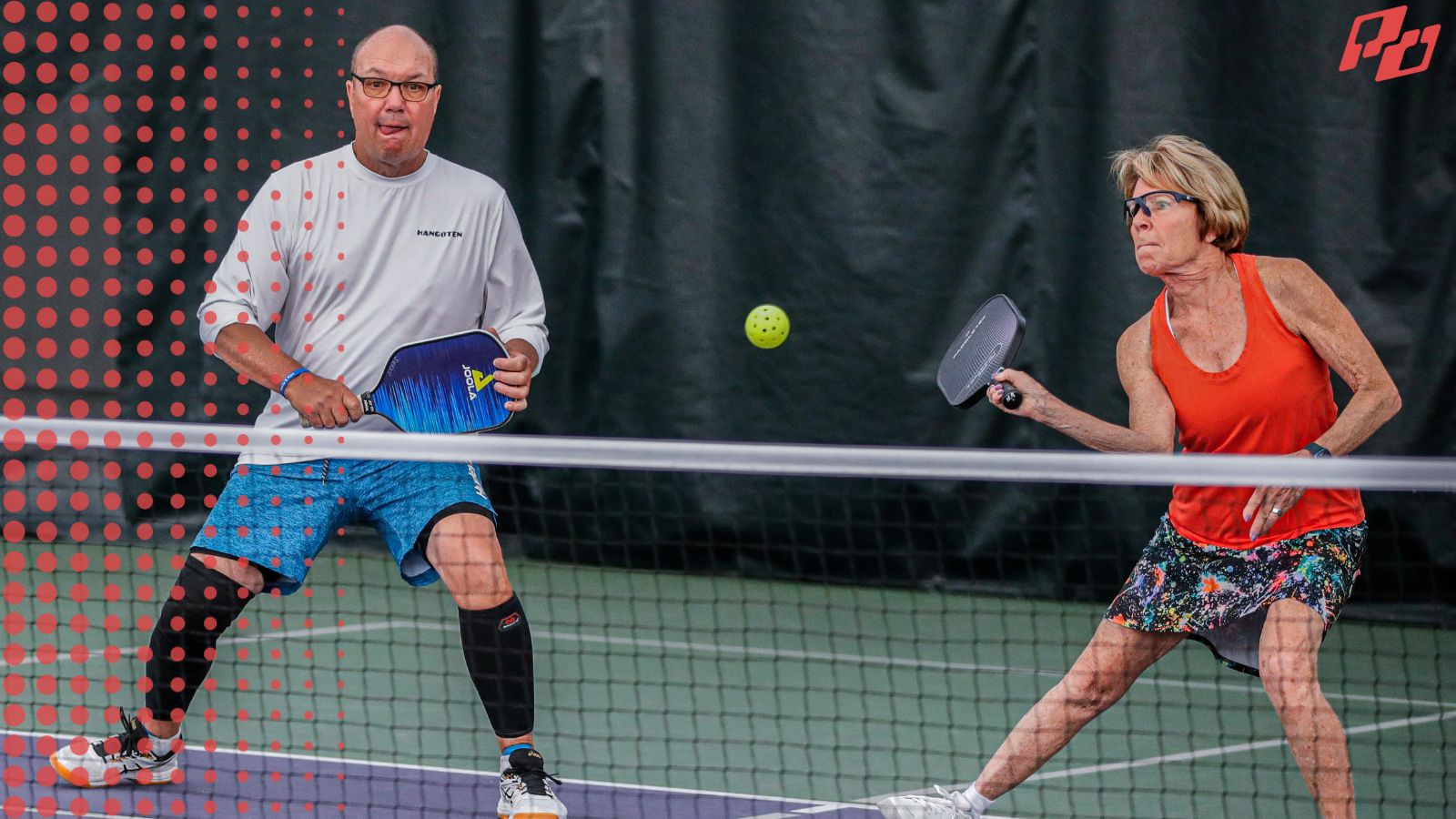
If you walk to the kitchen line with your paddle low, arms loose, and no plan, you’ll feel exposed. If you arrive with structure, the chaos calms down.
Here’s what actually makes players feel safe up front:
- Paddle starts high (chest level, not knees)
- Contact happens in front, not beside the body
- Default response is a block, not a swing
- Feet stay quiet and balanced

When those are in place, speed-ups stop feeling like ambushes.
The One Mistake That Keeps Players Afraid Forever
Most anxious net players try to hit their way through discomfort.
- They speed up back.
- They counter hard.
- They try to “end the point” to escape the pressure.
That does the opposite. Experienced coaches consistently point out that hard counters increase chaos, especially in rec doubles. Soft blocks, not fast hands, are what stabilize the exchange.
The moment you give yourself permission to not attack everything, the kitchen stops feeling hostile.
How Players Actually Build Confidence at the Kitchen (Step by Step)
Confidence doesn’t come from winning points up there. It comes from predictability. Players who get comfortable do three things differently:
1. They arrive later, not earlier
You don’t need to sprint to the line. Move forward behind a drop or a slow ball, stop short, then step in. That pause gives your brain time to settle.
2. They treat speed-ups as blocks, not shots
Your first job is to keep the ball low and alive. Direction and aggression come later.
3. They protect the body first
When you’re new at the kitchen, the goal isn’t to win the exchange—it’s to stay stable.
That’s why blocking speed-ups back to the middle or crosscourt works so well. Those targets give you more margin, keep the ball in front of you, and reduce the chances of a sharp reply coming straight at your body.
It’s not passive. It’s buying yourself time—and time is what makes the kitchen feel safe.
A Doubles-Specific Reframe That Helps Immediately
Here’s a mental shift that changes how players feel at the net:
“I don’t need to win this rally. I just need to not give it away.”
At the kitchen, your job is to:
- hold your ground
- take away angles
- force your opponents to hit one more ball
Once you stop trying to escape the rally, the fear fades fast.
When the Fear Goes Away (and What Replaces It)
The fear usually disappears in this order:
- Speed-ups feel less shocking
- Blocks start landing more often
- You notice opponents missing first
- You stop thinking about your paddle
What replaces fear isn’t confidence—it’s clarity. You know what to do, even when things get fast.
And that’s when the kitchen becomes the safest place on the court.
What Actually Makes the Kitchen Feel Safe
If the kitchen still feels uncomfortable, it doesn’t mean you lack touch or courage—it usually means you’ve been asking your hands to solve problems your positioning should handle.
The net isn’t a place to prove anything. It’s a place to slow the game down, simplify decisions, and let mistakes come from the other side.
Bonus advice: give yourself permission to be boring at first. Neutral blocks, middle targets, and longer rallies are how comfort develops. Once the chaos settles, confidence shows up on its own—and moving forward stops feeling risky and starts feeling obvious.