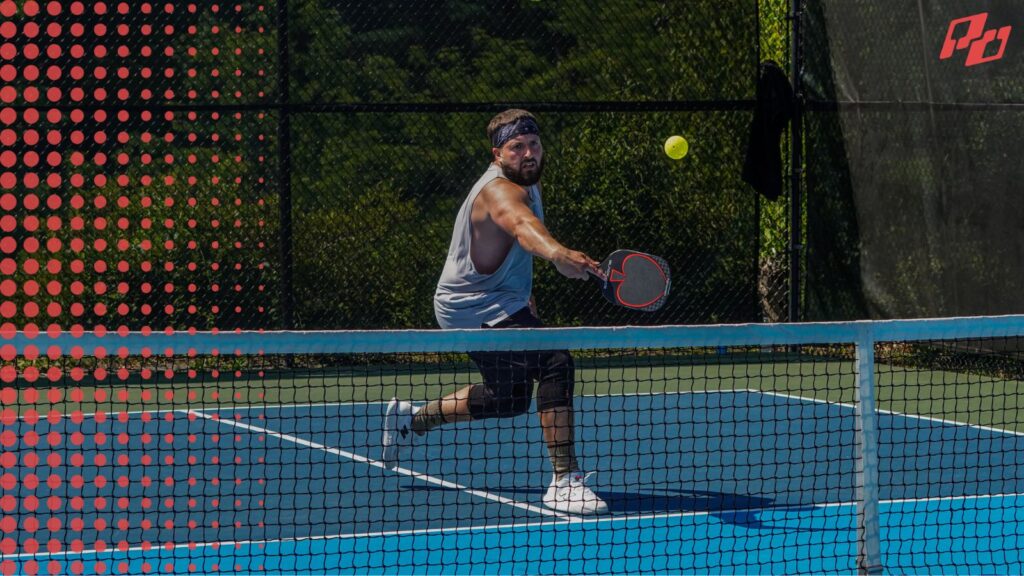
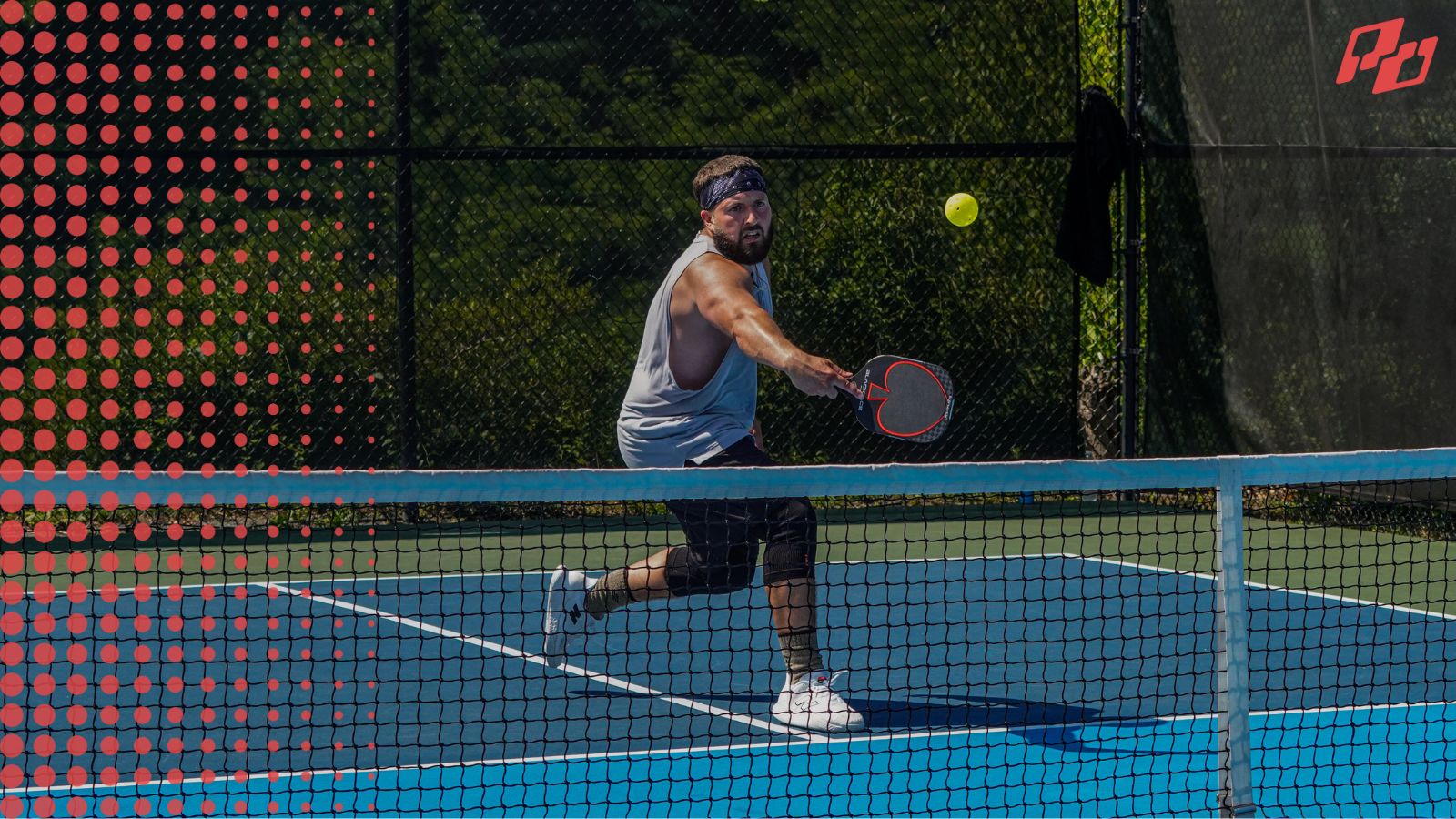
If you’ve ever tried to block or counter a hard ball on your backhand and felt like you either hit it long, popped it high, or simply lost control — welcome to (my) club. The backhand counter is one of the trickiest shots for recreational players because it demands real body-mechanics discipline under pace.
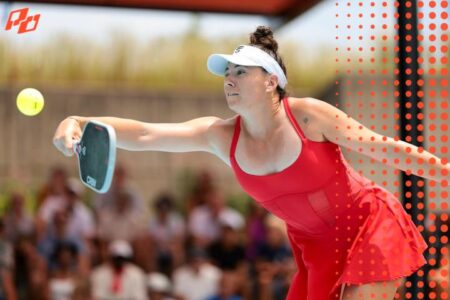
I recently watched a backhand counter clip from Gabe Tardio that shows just how powerful this shot can be when the mechanics are clean — he doesn’t just survive the exchange, he wins the point outright:
The good news? As a coach once explained to me when I was dealing with the exact same issue, most of these backhand counter mistakes aren’t about talent or hand speed. They’re about small, fixable habits you don’t even realize you’re repeating. Once you see them, you can correct them.
So let’s walk through them one by one—with real context, clear explanations, and simple cues you can actually use on court.
1. Paddle Face Closed — What That Really Means
The Problem You’re Probably Having
When your paddle face is slightly open (tilted upward) on contact, you unintentionally “launch” the ball.
That’s why many backhand counters you hit either go high, long, or float — even though you feel like you “meant” to keep it low.
What “Closed” Actually Means (Technically)
A closed paddle face means the face is angled slightly downward relative to the flight path of the ball at contact.
Not dramatic, just enough so that you’re neutralizing upward launch.
Why It Works
Pickleballs rebound off the face based on angle plus velocity direction. If your face is neutral or slightly upward, even a soft block will climb.
Slightly closing the face helps the ball rebound forward and down, which is exactly what you want on a counter.
How to Do It Every Time
- Bring the paddle so the face is slightly tilted toward the ground before contact
- As the ball arrives, think “paddle face toward the opponent’s feet” — not toward the sky
- Your target on the opposite side should be ahead of net level, not above it
Coach’s Cue
“Paddle face down just enough, like you’re slicing across a table.”
This helps beginners get the idea without over-closing.
2. Rotation — Use Your Body, Not Just Your Arm
The Common Beginner Thought
Many players think a backhand counter is all about the arm — they swing the arm, hoping the paddle does the rest.
What Actually Should Happen
Rotation starts from your feet and hips. On a backhand counter, your torso should rotate slightly toward your target as you make contact.
This is not a big turn — it’s a micro rotation that helps align power and control.
Why This Matters
Ball direction, paddle face orientation, and balance — all depend on the rotation of your shoulders and hips. If your body stays square or closed off, your arm tries to compensate, causing:
- missed contact timing
- open faces
- unstable follow-through
How to Do It
- Set your feet shoulder-width
- Turn your hips a little toward the direction you want the ball to go
- Let your backhand counter be a body motion first, arm motion second
Coach’s Cue
“Rotate just a little — like you’re opening a door toward your target.”
This teaches movement with purpose, not extraneous motion.
3. Swinging Forward — Not Down
What Most Rec Players Do
When a ball comes fast, beginners often instinctively “swing down” to try to “get under it” — but that’s exactly what causes:
- pop-ups
- mishits
- loss of direction
They’re not trying to elevate — they’re trying to beat the ball to the ground.
What Forward Really Means
Forward means your paddle moves toward the opponent, not toward the ground. It’s a short, straight line, not a downward arc.
Why Forward Works
Because:
- A downward swing increases upward rebound
- A forward motion transfers energy through the ball toward the target
- The counter becomes about placement, not lifting
How To Train This
Place a cone (or imagine a spot) about 2–3 feet in front of you on the court. When you practice your backhand counter, focus on swinging forward through that spot — not downward at the floor.
Your paddle path should move toward your opponent’s side of the court, not toward your shoes.
Think: through the ball, not down at it.
Coach’s Cue
“Swing to the target, not to the floor.”
That’s simple, actionable, and it changes the feel immediately.
4. Loose Wrists — Why Wrist Tension Kills Counters
The Hidden Problem
When the ball comes hard at your backhand, your natural reflex is to tense up. That makes your wrists stiff. A stiff wrist:
- opens the paddle face unintentionally
- creates unwanted angles
- reduces control
What “Loose Wrist” Actually Means
Not floppy. Not weak. It means:
- your wrist is active but relaxed
- it can absorb impact without collapsing
- it moves with the paddle, not against it
You want the wrist firm enough to hold structure but loose enough to adjust.
Why This Works
A tense wrist is like a rigid hinge: everything after contact becomes unpredictable. A relaxed wrist allows:
- a smooth rebound
- better micro-adjustments
- cleaner rebound direction
How To Practice
Stand close to a wall; hit backhand with a relaxed wrist. If the rebounded ball pops up, check your tension and reset. This is how to do it:
Coach’s Cues
- “Wrist soft but ready.”
- “Don’t grip the paddle like it’s a hammer.”
- “Let the wrist follow, don’t force it.”
These shift the mindset away from tension.
5. Compact Swing — Keep It Short and Simple
What Beginners Often Do
They try to “swing bigger” when the pace increases — thinking longer swing equals more control or power.
But bigger swings:
- take longer
- disrupt balance
- make timing worse
- lead to unnecessary rotation
What a Compact Swing Is
A compact swing starts just a few inches behind the ball, with your paddle already set in front of your body — not wrapped behind your hip or shoulder.
There’s little to no backswing. The motion begins near your contact zone and moves forward through the ball, finishing in front of your chest, not across it.
So in simple terms:
➡️ Start: Paddle in front, slightly set back a few inches
➡️ Contact: Out in front of your body
➡️ Finish: Short follow-through, paddle still in front of you
If your paddle travels behind your torso or finishes wrapped around your shoulder, it’s no longer compact — it’s too big for a fast counter.
How to Train It
Picture your swing path like a line segment, not an arc. From contact to finish, think:
“short forward push” rather than “big wind-up, big follow-through.”
Coach’s Cue
“Pocket the paddle — keep the movement tight.”
This cue helps players avoid waste motion.
Putting It All Together — The Clean Backhand Counter Sequence
Here’s what a good one feels like:
- Paddle face slightly closed — ready to direct the ball forward, not up
- Small body rotation — hips open just enough toward your target
- Swing forward — minimal downward motion
- Loose, active wrist — stable but not rigid
- Compact swing — consistent, fast, repeatable
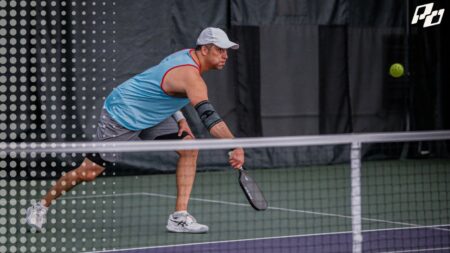
And here’s how it should look like:
When you string all of these together, your counter becomes:
- predictable
- controlled
- stable under pace
Common Mistakes and Quick Fixes
❌ Mistake: I feel like I’m blocking but the ball still pops up
Fix: Check your paddle face. If it’s even slightly open, it adds lift — especially under pace. Think, “tilt me just a degree downward,” not neutral. Also check your wrist tension — stiff wrists often open the face without you realizing it.
❌ Mistake: My counter goes long
Fix: You’re likely swinging down or your face is open at contact. Shift to a forward motion and slightly close the face. Also make sure contact is in front of your body — late contact often sends balls long.
❌ Mistake: I can’t keep up with fast pace
Fix: Shorten your swing. A compact motion reduces timing errors. If your paddle travels behind your body before contact, it’s too big.
❌ Mistake: My counter goes wide crosscourt
Fix: You’re probably not rotating slightly toward your target, or you’re swinging across your body. Turn your chest a little toward where you want the ball to go and finish forward, not sideways.
❌ Mistake: I get jammed on my backhand side
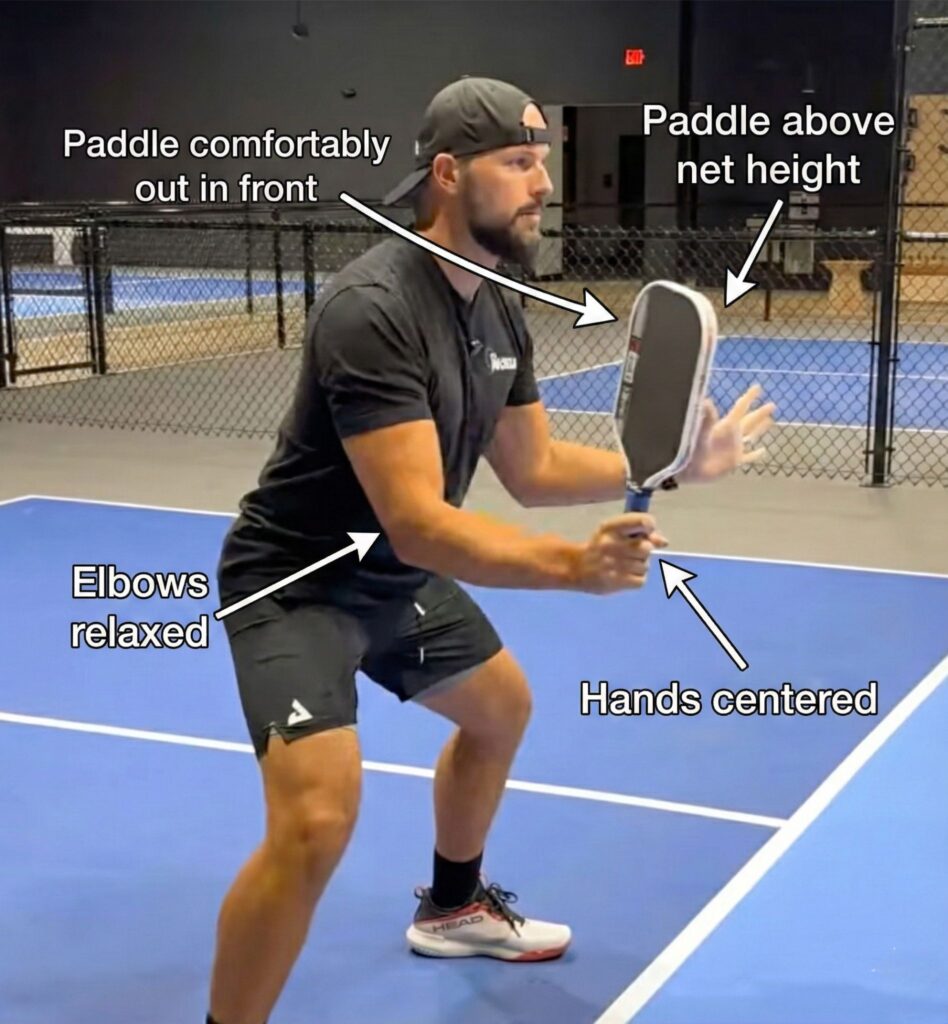
Fix: Your paddle is likely too close to your body in ready position. Keep your hands slightly out in front and away from your torso so you have space to work. Also widen your stance — narrow feet make you slow to adjust.
❌ Mistake: I hit one good counter, then lose the next one
Fix: You’re not resetting to ready position fast enough. After every contact, bring the paddle back to neutral immediately. Counters are about surviving the second ball, not just the first.
❌ Mistake: My counters feel rushed and panicked
Fix: Check your base. If you’re standing tall or drifting backward, everything feels faster than it is. Lower your stance slightly and keep your weight centered. Stability makes the pace feel slower.
The pattern behind most of these mistakes? It’s rarely about “slow hands.” It’s usually about structure — paddle face, contact point, body alignment, and swing size.
Clean those up, and your backhand counter starts feeling calm instead of chaotic.