
Pickleball Union earns a commission on purchases made through links in this article, at no extra cost to you. Our reviews are editorially independent – brands do not see or approve content before publication.
This article is brought to you by CURREX, the performance insoles trusted by the Pickleball Union team. Like us, CURREX is focused on helping players stay comfortable, move better, and keep playing longer. Use code PBUNION20 for 20% off CURREX products on Amazon.
Your paddle gets all the attention. Your feet are doing the harder job.
Every split step, kitchen shuffle, wide dink, lunge, emergency stop, and push back toward the middle starts at the floor. And if one foot collapses inward more than the other, rolls outward under pressure, or simply doesn’t feel stable when you load it, that can affect much more than comfort.
It can change how confidently you cut, how well you recover, and how much stress travels up through the ankle, knee, and hip.
The interesting part?
Your shoes may already be giving you clues.
Not a diagnosis.
Clues.
Flip Your Shoes Over First
Take the pair you play in most often and compare the soles. Look for three things:
- More wear on the inside edge.
- More wear on the outside edge.
- A big difference between left and right.
Those patterns can sometimes reflect how you load the foot, but don’t treat them like a home biomechanics lab.
Research shows shoe abrasion is influenced by more than pronation alone. Knee alignment, foot progression angle, body dimensions, walking style, surface, and other movement habits can all change where a shoe wears.
And visual pronation assessment itself is far from perfect. One study comparing visual observation with motion capture and pressure measurement found agreement for pronation assessment was only about 42–56%.
So think:
wear pattern = clue
not
wear pattern = diagnosis
Pronation and Supination, Without the Jargon
Pronation is not automatically bad.
Supination is not automatically bad either.
Your foot is supposed to move.
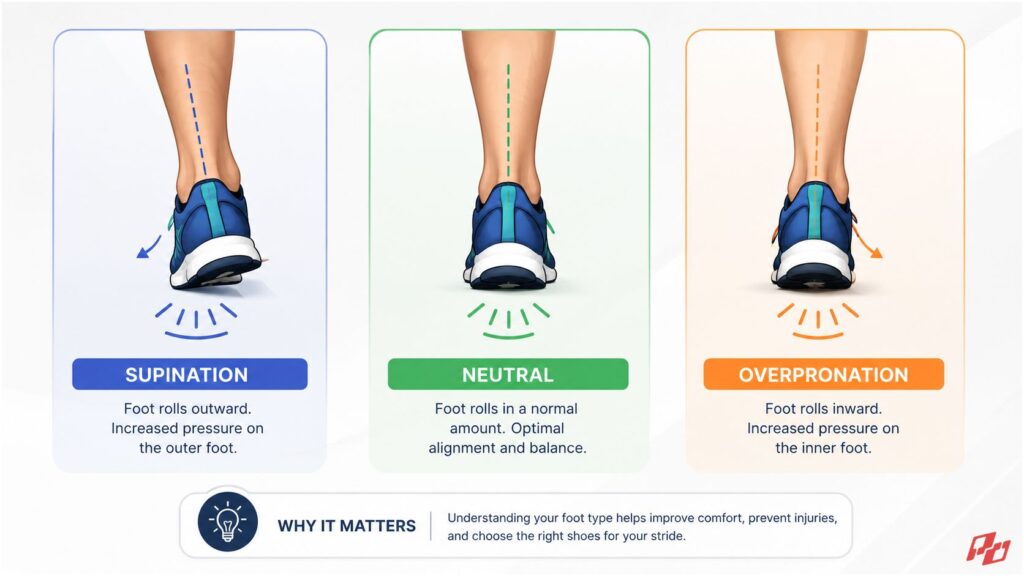
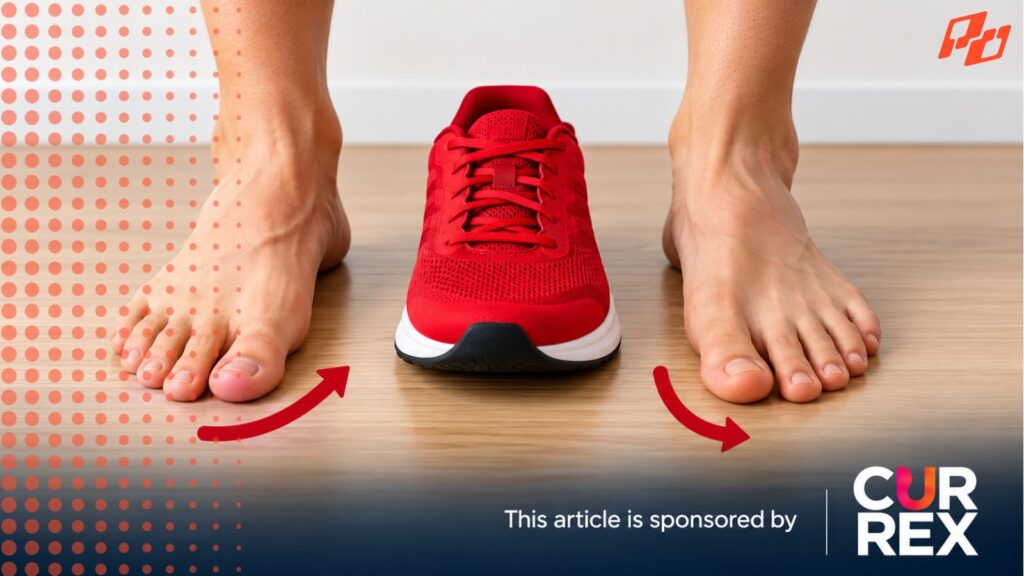
During loading, pronation is the combination of motions that lets the foot adapt and absorb force. In plain English, the foot tends to roll somewhat inward.
Supination is the opposite tendency: the foot becomes more rigid and loads more toward the outside edge as it prepares to push.
You need both.
The concern is not whether you pronate. The concern is whether you have:
- excessive or poorly controlled motion
- pain
- repeated instability
- unusually rigid loading
- or a major left-right difference
That nuance is important because research on foot posture and injury is much less dramatic than shoe marketing sometimes suggests.
A systematic review involving more than 6,200 participants found pronated foot posture was associated with a higher risk of medial tibial stress syndrome and, to a lesser extent, patellofemoral pain—but the effects were small. It was not associated with most other lower-limb overuse injuries studied.
So being a “pronator” does not mean you’re broken.
Try This 60-Second Pickleball Foot Check
This is not a diagnostic test. It is a comparison test. You’re looking for asymmetry, instability, and anything that reproduces pain.
1. Compare the soles
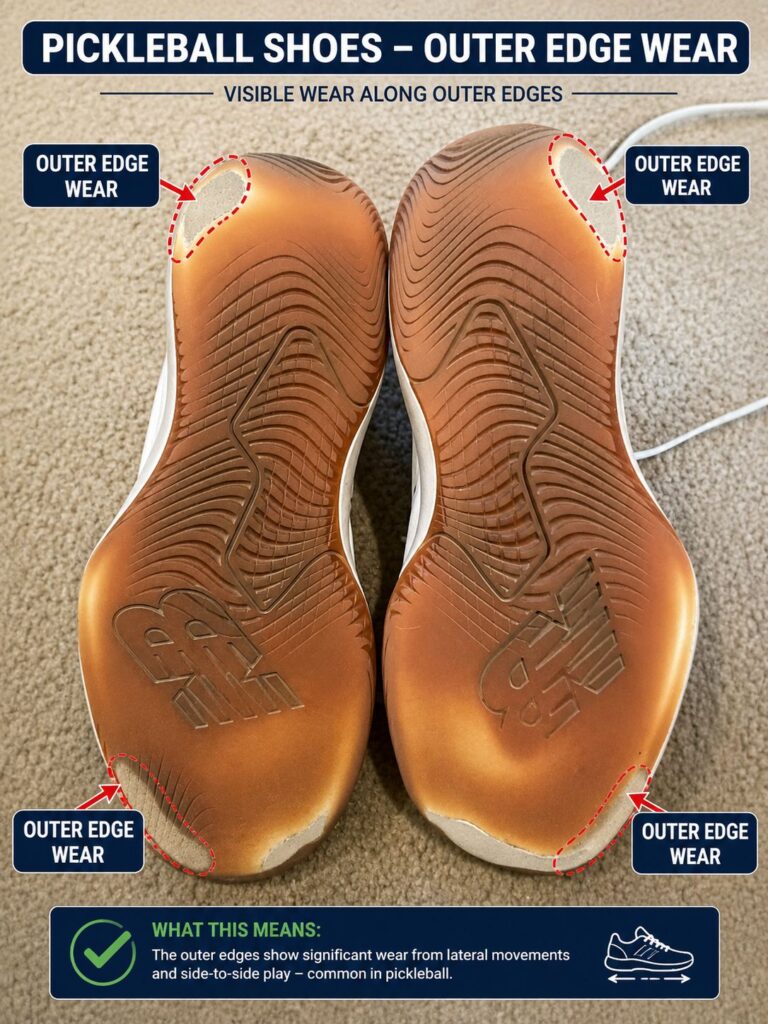
Put your shoes side by side. Look for:
- dramatically greater inside wear on one shoe
- dramatically greater outside wear
- or one shoe breaking down much faster
Don’t obsess over slight differences. You’re looking for obvious asymmetry.
2. Stand barefoot
Stand naturally. Don’t force your arches up. Compare both feet.
Does one arch appear much lower?
Does one ankle visibly collapse inward more?
Does one foot seem much more rigid?
Again: observation only.
3. Do five slow single-leg mini squats
Stand on one leg and bend only slightly. Watch what happens.
Does the arch collapse dramatically?
Does the knee dive inward?
Does the ankle wobble?
Is one side much harder?
This is more useful than staring at your arch while standing still because pickleball is a loaded movement sport.
4. Do a small lateral push
Start in an athletic stance.
Push gently to the right.
Reset.
Push gently left.
Compare.
Ask:
- Which foot feels more stable when I load it?
- Which side feels stronger when I push away?
- Which side makes me hesitate?
That hesitation can be useful information.
What Different Wear Patterns Might Suggest
Treat these as possibilities, not labels.
⮕ More inside-edge wear
This may go along with greater inward loading or pronation. But don’t immediately buy a “stability” shoe.
First ask:
✔ Does that foot hurt?
✔ Does the arch collapse under load?
✔ Does the knee move inward during your mini squat?
✔ Is the pattern dramatically different from the other foot?
One clue is weak. Several clues pointing the same direction are more interesting.
⮕ More outside-edge wear
This may go along with a more lateral or relatively supinated loading pattern. That can sometimes mean the foot behaves more rigidly and doesn’t distribute load inward as easily.
But outside heel wear is also very common and does not automatically indicate excessive supination. In one study of recruits, posterolateral heel wear was actually the dominant pattern.
That’s another reason outsole wear alone isn’t enough.
⮕ Major left-right difference
This is the pattern I’d pay the most attention to. Especially if it comes with:
- pain
- repeated ankle rolling
- noticeably different balance
- previous surgery
- or one leg feeling much weaker
Pickleball is brutally good at exposing asymmetry because the same movement appears on both sides over and over.
Why 50+ Players Should Care More
The aging foot changes.
A review of age-related foot biomechanics found that older adults tend to show reduced strength, decreased range of motion, greater soft-tissue stiffness, more pronated posture, and less efficient propulsion.
That does not mean decline is inevitable. But it does mean foot and ankle capacity becomes more valuable.
Research in older adults has linked foot and ankle strength and mobility with balance and functional ability.
And a 2025 meta-analysis found ankle-and-foot exercise programs produced improvements in plantar-flexor strength and eyes-open balance, although the overall certainty of evidence was low. Toe-strengthening and training around three times per week appeared particularly useful.
For pickleball players, that suggests something more useful than simply buying a more supportive shoe: train the system inside the shoe too.
Three Exercises Worth More Than Staring at Your Arch
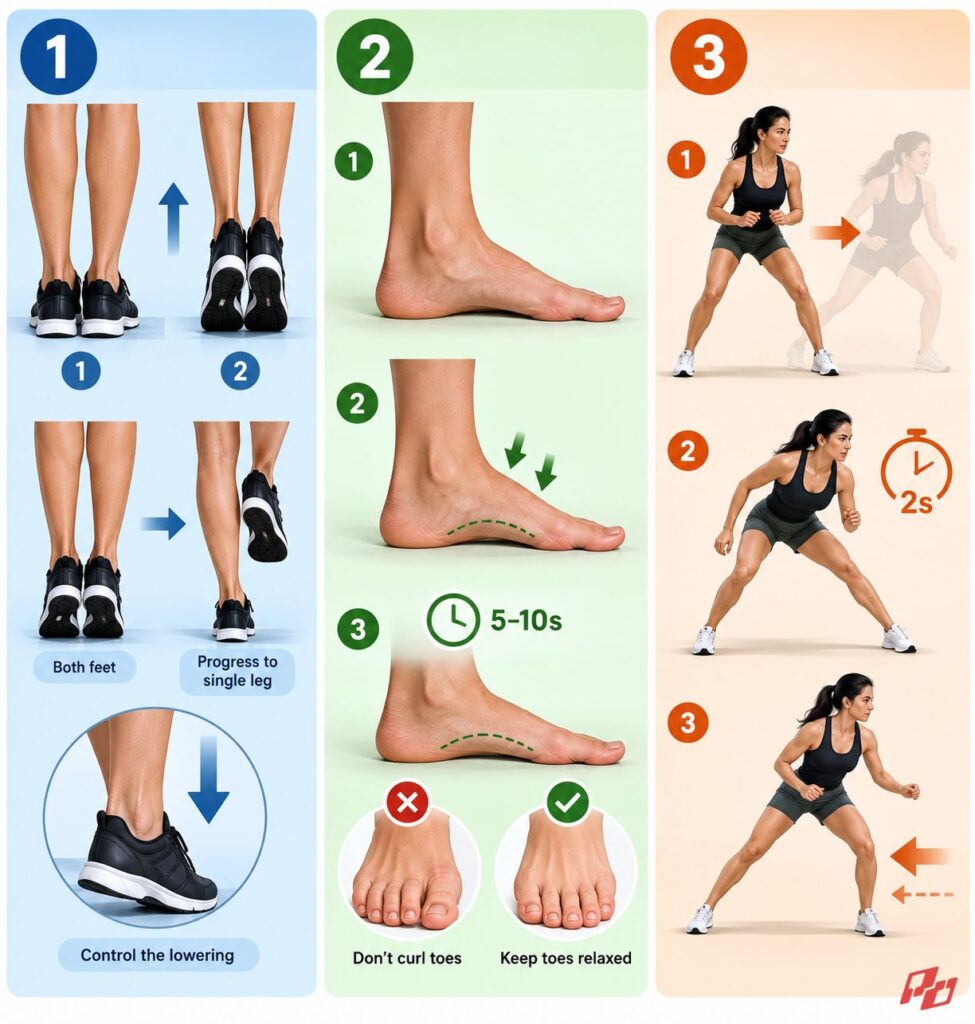
If you feel stable and pain-free, you don’t need to “fix” normal pronation. If you want stronger feet and ankles for court movement, these are much more practical.
1. Slow calf raises
- Rise on both feet.
- Progress toward single-leg.
- Control the lowering.
You’re training the plantar flexors that help with propulsion and balance.
2. Short-foot holds
Barefoot, gently draw the ball of the foot toward the heel without curling your toes.
Think: make the arch slightly shorter, not dramatically higher.
Hold 5–10 seconds.
This trains intrinsic foot control without forcing the foot into an artificial position.
3. Lateral load-and-hold
Take a small lateral step.
Land.
Hold for two seconds.
Push back.
This resembles the exact pickleball problem we’re trying to solve: load → stabilize → push.
If one side is noticeably shaky, you have something useful to work on.
What About Orthotics?
Orthotics can help some players with comfort, pressure distribution, arch support, and stability, but they are not a universal fix for pronation.
One option we like is the CURREX PICKLEBALLPRO™, which is designed for pickleball’s lateral cuts and quick stops. It comes in low, medium, and high arch profiles and adds targeted heel and forefoot cushioning plus a grippy top layer to help reduce foot movement inside the shoe.
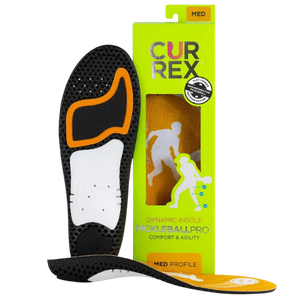
Best for: players who want more support and a more secure feel than a stock insole provides.
Just make sure the insert fits your shoe properly. If it lifts your heel, crowds your toes, or changes the fit too much, it can create new problems.
Persistent pain or instability is a better reason to see a sports PT or podiatrist than to keep experimenting with insoles.
Don’t Buy a Shoe Because It Says “Pronation”
Running shoes are often marketed as:
- neutral
- stability
- motion control
Pickleball shoes deserve a different priority. You’re not repeatedly running straight ahead. You’re cutting sideways.
A good court shoe should give you:
✔ Heel lockdown
✔ Secure midfoot hold
✔ Enough toe room
✔ A broad, stable platform
✔ Strong lateral containment
✔ Traction that lets you stop without your foot sliding inside the shoe
Foot-to-shoe coupling matters. Even running research has shown firmer lacing can reduce foot movement and influence pronation velocity and loading.
So before deciding a shoe is “supportive enough,” ask: Does my foot stay centered when I cut?
That matters more than the marketing category.
5 Pickleball Shoes Worth Considering
These aren’t prescriptions for pronators or supinators. They’re court shoes with different strengths that make sense for different feet and movement needs.
1. JOOLA R4LLy — Best for Lateral Stability
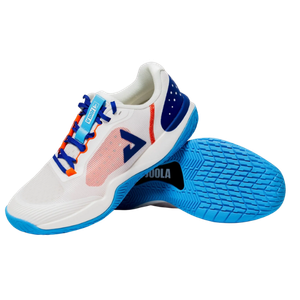
- Carbon-fiber stability shank
- Secure midfoot lockdown
- Responsive Qubit cushioning
- Built for lateral cuts
JOOLA built the R4LLy specifically around pickleball movement. The standout feature for this article is its carbon-fiber shank, designed to reinforce the midfoot and resist twisting during pivots and lateral cuts. It also uses a Dynamic Fit Sleeve to reduce in-shoe movement.
Best for: Players who feel unstable during hard cuts or want a very locked-in platform.
Less ideal for: Players who prefer a very soft, flexible court shoe.
2. Diadem Court Burst — Best All-Around

- Strong lateral stability
- Responsive Rebound X cushioning
- Secure 360° knit fit
- Available in wide sizing
The Court Burst uses Diadem’s Pro Stance X and Rebound X systems to provide lateral structure and help keep the foot centered during quick directional changes. It is also available in standard and 2E wide sizing, which is important because forcing a wide foot into a narrow “supportive” shoe is not a stability solution.
Best for: Players who want a strong mix of stability, speed, and fit options.
Less ideal for: Players who prioritize the lightest possible shoe.
3. Diadem Court Flo — Best Lightweight Option

- Lightweight court feel
- Breathable Airweave upper
- Responsive Flo Foam cushioning
- Built for quick lateral movement
The Court Flo uses a breathable mesh upper, an 8 mm drop, Flo Foam cushioning, and a carbon-rubber outsole. Diadem lists it at about 12.79 oz, with a medium-width fit.
Best for: Players who dislike heavy court shoes but still want real court traction and cushioning.
Less ideal for: Players who need a very wide fit or maximum lateral rigidity.
4. Franklin ACV Pro — Best Roomy Fit

- Roomy forefoot fit
- Secure heel lockdown
- Flexible forefoot grooves
- Built for quick court cuts
Franklin specifically describes the ACV Pro as having a roomier fit and even recommends going down half a size unless you prefer extra space. It also uses forefoot flex grooves, a herringbone outsole, heel padding, and a lace-to-strobel structure intended to improve lockdown.
Best for: Players who routinely feel squeezed in standard-width court shoes.
Less ideal for: Narrow-footed players unless sizing is dialed in carefully.
5. Skechers Viper Court Pro 2.0 — Best for Long-Session Comfort
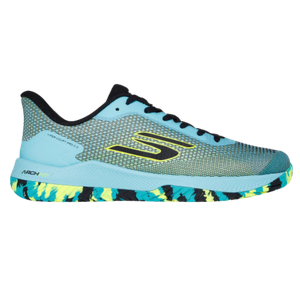
- Plush cushioning
- Roomy comfort fit
- Strong arch support
- Great for long sessions
The Viper Court Pro 2.0 combines Skechers’ Arch Fit EVA insole, ULTRA GO cushioning, and a Goodyear Gold outsole. It also uses a Relaxed Fit shape with extra toe and forefoot room and carries the American Podiatric Medical Association Seal of Acceptance.
Best for: Players who want cushioning, arch support, and room for longer sessions.
Less ideal for: Players who want a very minimal, low-to-the-ground court feel.
The Shoe-Wear Mistake Players Make
Most players replace shoes when the outsole looks bald. But a court shoe can be done before the tread disappears.
Watch for these signs:
✔ Heel counter feels soft
✔ Foot starts sliding sideways
✔ Midsole feels flatter
✔ One shoe leans more than the other
✔ You feel less secure when stopping
In pickleball, losing lateral stability can matter just as much as losing tread.
So don’t just ask: “Is the sole worn out?”
Ask: “Does this shoe still keep me stable when I plant?”
When It’s Time to See Someone
A shoe swap is not the answer to every problem. See a sports PT, podiatrist, or other qualified clinician if you have:
- persistent foot or ankle pain
- repeated ankle sprains
- recurring Achilles pain
- knee pain that continues despite modifying load
- a large and worsening side-to-side difference
- numbness
- or instability that makes you hesitate during play
That matters particularly in pickleball because foot and ankle injuries are not rare. In one clinical series, ankle sprains/strains were common and Achilles rupture accounted for 12% of lower-extremity cases.
Another recent study found pickleball-related Achilles ruptures occurred at an average age of 64.5, substantially older than the comparison population.
Don’t try to solve persistent pain with a different insole every two weeks. Get the actual problem assessed.
The 30-Second Takeaway
Tonight, do three things.
- Flip over your shoes.
- Compare left and right.
- Then test whether each foot can load, stabilize, and push laterally without pain or wobbling.
If the shoes look different but your feet feel strong and pain-free, don’t panic.
If the shoes look different and one side feels unstable, painful, or dramatically weaker, that’s worth paying attention to.