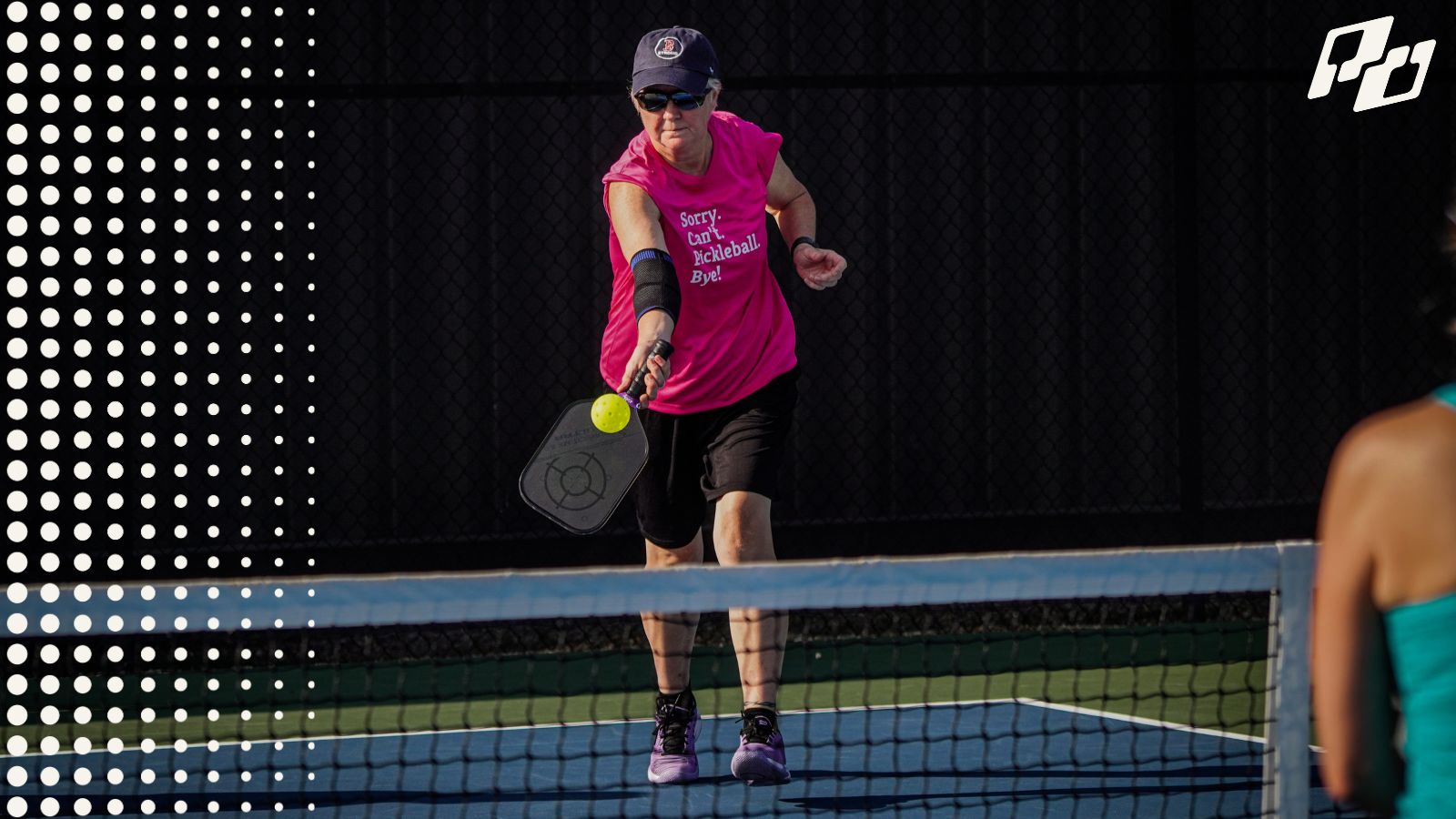
Last spring, three regulars from my 60+ rec group went down in the same month. One blew out his Achilles chasing a lob, another fractured her wrist falling backwards, and the third strained a shoulder after three overhead smashes in one rally.
It was a reminder that no matter how fun pickleball is, the game can be unforgiving if you don’t adjust with age. And the data proves it: over 90% of pickleball ER visits involve players over 50, with falls, sprains, and fractures topping the list. A separate orthopedic review found sports injuries in adults 65+ jumped from ~55,000 in 2012 to over 93,000 in 2021.
Pickleball isn’t dangerous—it’s how you move. After 60, your game isn’t about hitting harder; it’s about playing smarter. Here are the common traps older players fall into, why they’re risky, and how to adjust without losing your competitive edge.
The Smash Trap: Why Overheads Wear You Down
One of the most exhilarating shots in pickleball is the overhead smash. It feels decisive, dramatic, and crowd-pleasing. But after 60, constant overheads become a silent shoulder killer.
Research shows that more than half of adults over 60 already have partial rotator cuff degeneration even before symptoms appear. Smashing ball after ball magnifies the stress until something finally gives.
A smarter alternative: Learn to finish with angles and compact volleys. A sharp crosscourt put-away or a punch volley into your opponent’s body often wins points just as effectively—without ripping your rotator cuff to shreds.
👉 Bonus Tip: Count your smashes in a game. If you’re racking up more than five per match, chances are you’re forcing them. That’s when to switch gears and aim for control instead of theatrics.
“At 65, I stopped smashing everything. Now I save it for the clean setups—and oddly enough, I win more,” says George, a 4.0 player.
The Lob Chase: No Ball Is Worth a Fall
Few things frustrate older players more than a perfectly placed lob. Instinct says: run it down, swing away, prove you’ve still got it. But the numbers tell another story: falls chasing lobs are the leading cause of wrist fractures in pickleball, especially in the 60–69 group.
Backpedaling while looking up is a fall waiting to happen. Every ER doctor in pickleball-heavy states has seen the aftermath: broken wrists, cracked elbows, even concussions.
Smarter approach: Pivot and run sideways—never backward. Better yet, talk with your partner before the match: who takes overheads, and when? Sometimes the smartest move is to lob it back defensively instead of risking life and limb.
👉 Bonus Tip: Practice calling “Yours!” early on lobs. A little communication saves a lot of orthopedic bills.
The Hero Lunge: Chasing Every Low Ball
We’ve all done it—you’re in transition, the ball dips at your shoelaces, and you throw your entire body into a desperate lunge. At 25, that might be a spectacular save. At 65, it’s more likely a torn meniscus or groin pull.
As we age, cartilage stiffens and joints lose their “give.” Lunges that once felt athletic now strain knees and hips in ways that don’t recover quickly.
Smarter play: Bend your knees earlier. Stay lower in transition so you’re not forced into last-second lunges. Work on the “reset drop”—a compact, shoulder-driven stroke that floats the ball softly back into the kitchen. It buys you time to reset instead of sacrificing your body for one desperate dig.
👉 Bonus Tip: Think of your legs as shock absorbers. If they’re bent early, you glide. If they’re straight, you collapse.
Twists at the Kitchen: Small Shuffles Save Knees
Most older players don’t get hurt during spectacular shots—they get hurt at the kitchen line. The culprit? Quick sideways lunges or pivots while a foot is planted. That torque rips through ACLs and meniscus tissue that, by 60, doesn’t have the elasticity it once did.
Smarter play: Stay on your toes and use tiny, constant shuffles. Anticipate the crosscourt dink before it arrives, so you’re already in position. And remember: your paddle has more reach than your legs. Extend your arm before you sacrifice your knee.
“My rule now is: small steps, early prep,” says Linda, 68. “If I’m lunging late, I’ve already lost the point.”
The Slice Habit: Why Wristy Backhands Bite Back
Backhand slices are satisfying, but overuse at low height is brutal on the spine and wrist. Aging discs are less flexible, and wrist tendons more prone to inflammation. That’s why many 60+ players develop back pain or tendonitis after weeks of heavy slicing.
Smarter play: Switch to the neutral backhand drop—compact, paddle face open, driven by the shoulder. For stability, use two hands. And if the ball’s too low? Reset to the middle instead of forcing a highlight-reel slice.
👉 Bonus Tip: If your backhand feels like work, it probably is. Switch hands occasionally in drilling just to balance the stress.
Hidden Risks You Don’t Think About
Some of the biggest dangers for 60+ players aren’t the highlight-reel shots—they’re the invisible habits that wear you down quietly until something snaps.
Here’s what to watch for:
1. Playing Tired
Studies on reaction time show it drops significantly with both age and fatigue. For older players, performance begins to decline after 90–120 minutes of continuous play. That’s when you’re more likely to stumble, misstep, or mistime a shot. Most falls in rec play happen late in a session.
Better habit: Limit yourself to two hours of play per day if you’re 60+. If you want more, break it into shorter sessions with real breaks in between (not just switching courts).
2. Wrong Shoes
Running shoes are built to move you forward, not side-to-side. On court, they catch and twist—one bad step equals an ankle sprain or worse. Players 60+ have less ligament elasticity, so those “minor rolls” don’t bounce back like they used to.
Better habit: Always wear pickleball or tennis court shoes with strong lateral support. Rotate pairs every 6–9 months or every 300 hours of play to keep cushioning fresh. If you have ankle instability, consider light ankle braces or supportive insoles.
3. Playing Every Day Without Rest
Here’s the tough truth: tendons and joints at 60+ need 48 hours to fully recover from heavy stress. Back-to-back sessions overload the same tissues and set you up for Achilles tendonitis, plantar fasciitis, and elbow pain.
Better habit: If you’re 60+, cap it at 3–4 pickleball days per week, not 7. Use off-days for walking, stretching, or light resistance training to keep muscles strong without pounding the joints.
4. Dehydration
Even mild dehydration—just 2% of body weight lost in fluids—reduces balance and reaction time. Older adults are at higher risk because the body’s thirst response dulls with age.
Better habit:
- Drink at least 16–20 oz (500–600 ml) of water 1–2 hours before you play.
- Sip 7–10 oz (200–300 ml) every 20 minutes during play.
- For sessions longer than an hour, add electrolytes (sodium + potassium) to avoid cramps and fatigue.
👉 Rule of thumb: If your urine is dark yellow after play, you didn’t hydrate enough.
Strategy Tweaks That Protect You—and Win Points
Here’s the irony: the safer strategies often win you more matches.
- Aim middle more often. Confusion beats brute force.
- Play deeper, not faster. A deep neutral ball buys you time and makes opponents uncomfortable.
- Favor crosscourt dinks. Less lunging distance, more margin for error.
- Use lob resets. Instead of diving for a desperate reset, lob it deep and regroup.
“I started aiming for the middle instead of going for sidelines. Suddenly my error rate dropped—and my knees thanked me,” says Paul, 70.
Quick Safety Checklist for 60+ Players
✅ Don’t backpedal for lobs—pivot instead
✅ Limit overheads—favor angled volleys
✅ Stay low early—don’t lunge late
✅ Shuffle, don’t twist, at the kitchen
✅ Switch to compact drops over constant slices
✅ Commit forward or back—don’t linger mid-court
✅ Build in recovery days and hydrate often
Longevity Beats Heroics
Pickleball after 60 is about longevity. You want to be playing at 70, not sidelined at 61. That means making smarter choices—letting a ball go here, playing a reset there, aiming for consistency over drama.
And here’s the paradox: when you stop lunging for everything, when you let your body—not your ego—decide your shots, you don’t just protect yourself. You actually play better. The game slows down. You conserve energy. And your opponents feel the pressure of your control.
So remember: no single shot is worth your season. Play smarter today, and you’ll still be on the court, laughing with friends, years from now.