
The returner is often a smart third-shot target because they’re still moving forward. But as players improve, don’t target them automatically. Read the return, their footwork, the middle, and available space. The best third shot is the one that forces a weaker fourth and gives you an easier fifth.
You’ve probably heard this third-shot rule: hit the returner. Every time. And there’s a very good reason coaches teach it.
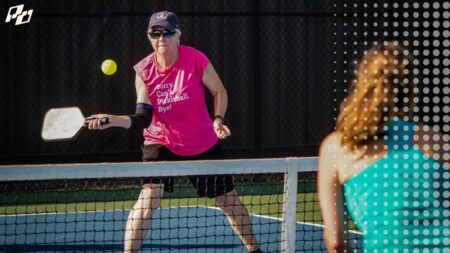
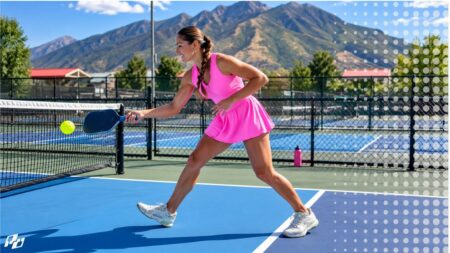
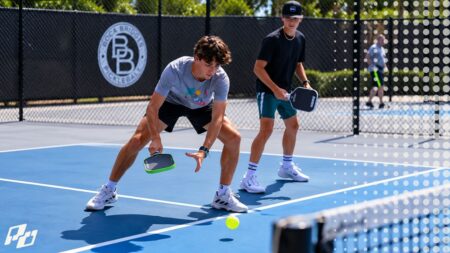
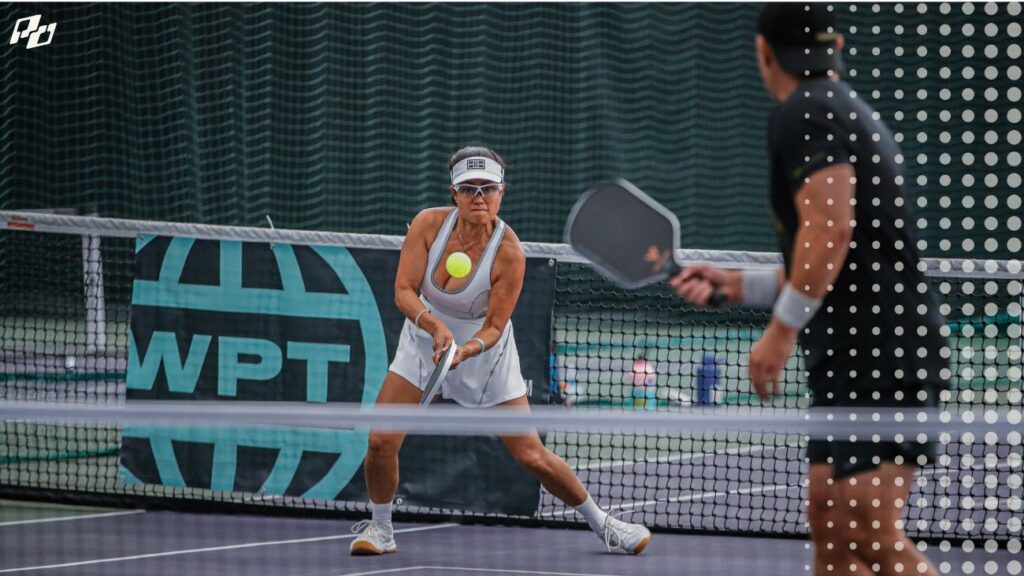
The returner has just hit the second ball and is usually moving from the baseline toward the kitchen. Their partner, meanwhile, started closer to the kitchen and is often already planted, balanced and waiting.
So who would you rather make play the fourth?
The player standing comfortably at the line?
Or the player trying to organize their feet while moving forward?
One popular coaching breakdown makes exactly that argument: attack the player whose feet are still moving. Another recommends hitting third-shot drops at the incoming returner unless the established kitchen player overcommits toward the middle, creating space behind them.
That advice is excellent. But there’s a catch. The better you get, the less useful “hit the returner” becomes as a rule.
Because the real target was never the returner.
It was their bad position.
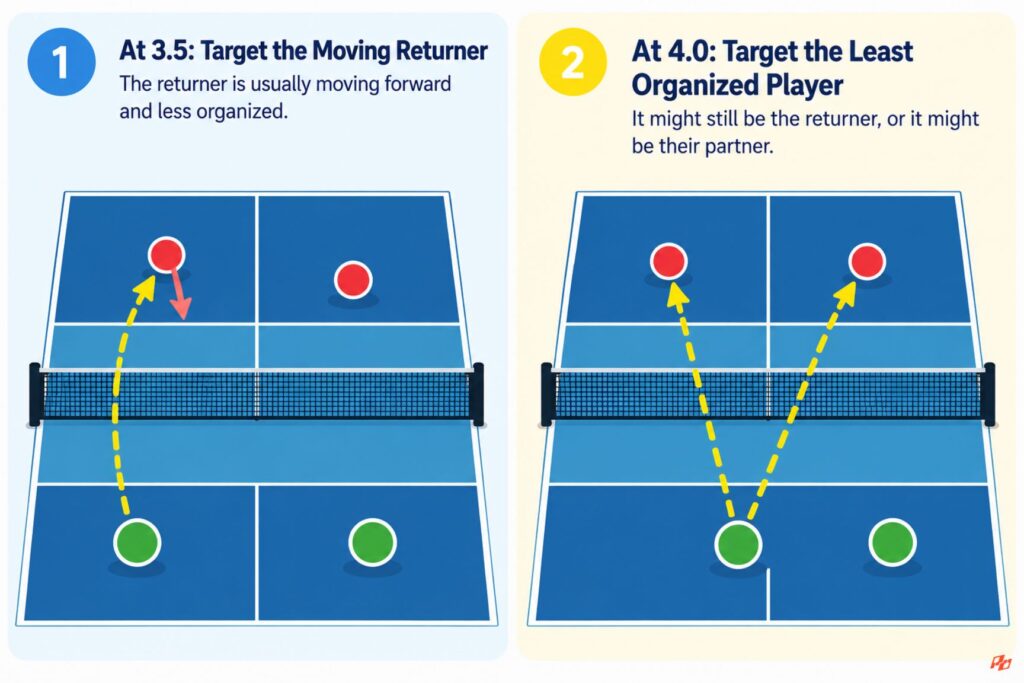
At 3.5, “the returner” and “the vulnerable player” are often the same person
This is why the strategy works so beautifully at intermediate levels.
Players around the 3.0–3.9 level will often get more value from directing the third-shot drop toward the returner moving forward, since that player may not be fully established at the kitchen yet. Their partner is already there and better positioned to attack.
Think about what the moving returner is managing simultaneously.
They’ve hit the return.
They’re accelerating forward.
They’re deciding where to stop.
They’re trying to split-step.
They’re reading your paddle.
And now they’re being asked to volley a ball arriving at their feet.
That’s much harder than standing still and simply using your hands.
So at 3.5, returner = excellent default target.
But defaults are supposed to save you from thinking when nothing unusual is happening. They’re not supposed to replace thinking.
The 4.0 upgrade: stop identifying players and start identifying states
This is the shift that makes third-shot decisions look smarter almost immediately.
Instead of thinking: “That’s the returner, so I’m going there.”
Think: “Who is least organized at the moment I contact this ball?”
Sometimes that’s still the returner. Sometimes it isn’t.
At higher levels, returners recognize the danger sooner and get to the kitchen faster. Advanced players are generally better at both establishing NVZ position early and moving through transition with more coordinated drops and resets.
The tactical window shrinks.
If the returner is already planted by the time you strike your third, you’re no longer attacking movement. You’re simply hitting to the person you expected to be moving.
That’s a huge difference.
Here’s the cue:
Don’t look at who returned. Look at whose feet are unfinished. A player can technically reach the kitchen and still be vulnerable.
Watch for someone who is:
- moving through contact
- leaning
- crossing their feet
- recovering from a wide return
- still turning their shoulders
- or stopping abruptly
A player six inches from the kitchen with bad balance can be a better target than a perfectly settled player three feet behind it.
That is pickleball IQ.
Read No. 1: Feet Before Reputation
Don’t target the returner just because they hit the return. Target them if they’re still moving.
That’s the real idea behind the common advice to “hit the returner.” It’s not about choosing a player. It’s about choosing the player who is least settled.
Smart third-shot targets often include:
✔ The weaker backhand
✔ The middle
✔ The returner who is still moving
The key distinction is simple:
Not the returner because they’re the returner.
The returner because they’re moving.
That’s the version of the rule worth carrying into 4.0 play.
Read No. 2: Your ball gets a vote too
Here’s where players trying to become “strategic” often overdo it. They identify a vulnerable opponent and then force a shot they shouldn’t hit.
Don’t.
Your incoming ball determines which options are actually available.
If the return is short and sits up, you may have a genuine attacking third. USA Pickleball recommends the third-shot drive particularly when the return gives you time to prepare and an attackable contact.
If the returner is still charging forward?
Now you have a beautiful combination: attackable ball + moving opponent.
Drive low toward their feet, hip or available seam.
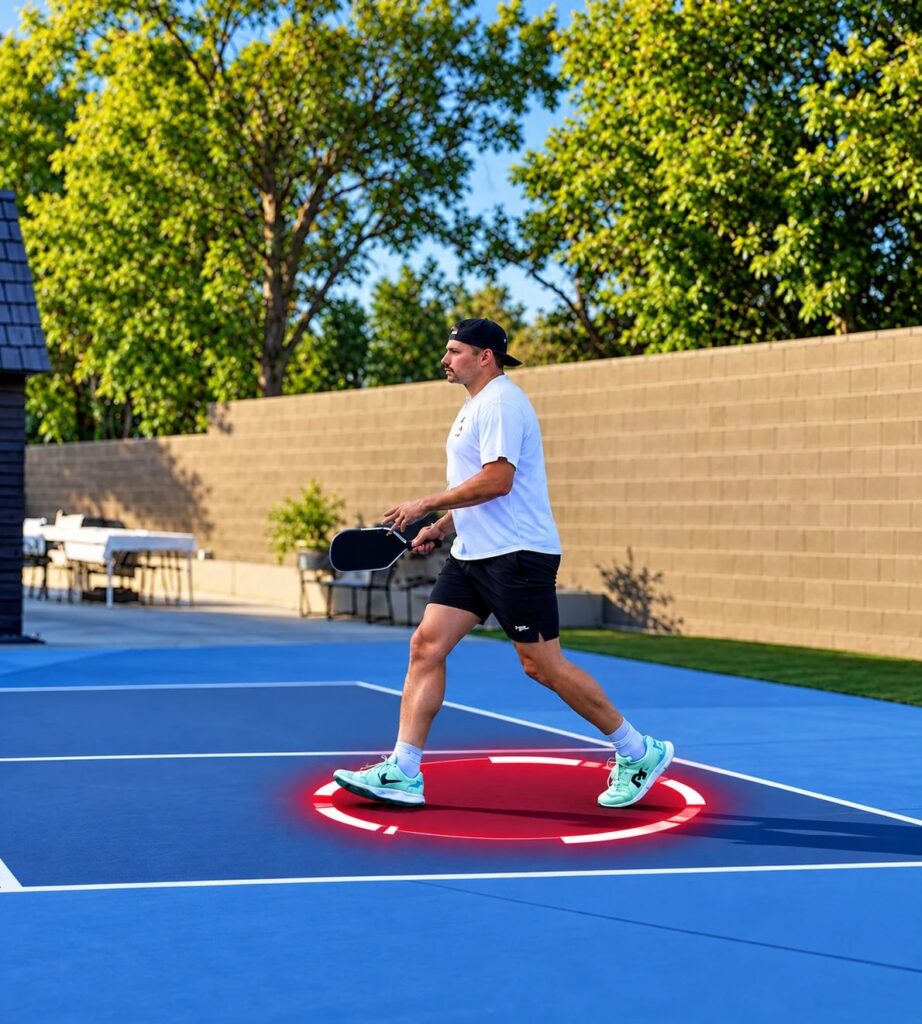
But suppose the return lands deep, pushes you behind the baseline and forces contact near your shoelaces.
Trying to blast the moving returner simply because “that’s the target” can turn a good tactical idea into a bad shot.
The better decision may be a high-margin drop. So your hierarchy should become: Ball first. Opponent second. Target third.
Not the other way around.
| Return | Opponent | Best third shot |
|---|---|---|
| Short and high | Returner still moving | Drive at feet or hip |
| Short and high | Returner already set | Drive to seam or weaker side |
| Deep but comfortable | Returner still moving | Drop toward their feet |
| Deep and low | Anyone | High-margin drop |
| Pulled wide | Court is open | Use the open space |
| Both players settled | No obvious weakness | Choose the shot that sets up an easier fifth |
Read No. 3: Sometimes the middle beats the returner
This is one of the easiest ways to surprise players who expect every third to come back toward the returner.
The middle offers several advantages.
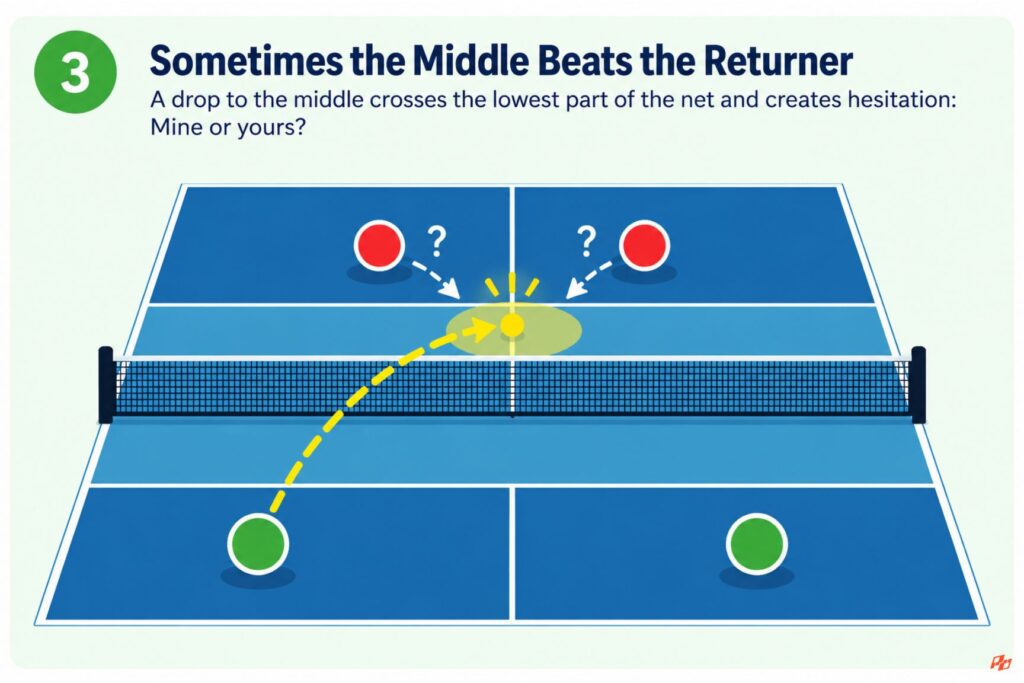
The middle is often the safest third-shot drop target because it crosses the lowest part of the net, limits attacking angles, and can create hesitation over who should take the ball.
But there’s an even smarter reason to use it. Middle can change the fourth-ball hitter.
Imagine the returner is racing in expecting your third to come directly at them. Their partner sees the same pattern and starts shading toward that side.
Now instead of obediently giving them the expected ball, you drop toward the seam.
Suddenly both players have to solve: Mine or yours?
That’s a much more sophisticated goal than simply “make someone move.” You’re manipulating decision-making.
At 4.0, that starts mattering.
The exception coaches mention is more important than it sounds
A good exception comes when the established kitchen player starts taking up too much of the middle.
That can open space behind or outside them.
Why?
Because your earlier pattern has changed their positioning.
You go toward the moving returner.
They start anticipating it.
They lean.
They poach.
They squeeze the middle.
Now you have a new target.
So the progression becomes:
Establish the pattern → make them respect it → punish the adjustment.
That’s how strategy moves beyond memorized targets.
You don’t change just to be unpredictable.
You change because the opponent gives you a reason.
The smartest third shot is often really a fifth-shot decision
This is one of the biggest upgrades an intermediate player can make.
Stop asking: “Can I win with this third?”
Ask: “What fourth ball will this third probably create?”
A third-shot drive does not have to be a winner. Its job may simply be to force a shorter, less comfortable fourth and make the fifth-shot drop easier.
Drive at the moving returner.
They block awkwardly.
The ball lands shorter.
You step forward.
Now your fifth-shot drop comes from several feet closer.
You didn’t drive because you expected to blast through them. You drove to buy an easier fifth.
That is a much smarter use of power.
Try the “Feet → Ball → Space” scan
You don’t need a twelve-item checklist while a return is flying at you. Use three reads.
1. FEET
Who is moving, leaning, recovering or late?
2. BALL
What did the return actually give me?
High and attackable?
Deep and low?
Pulling me sideways?
3. SPACE
Where is the easiest uncomfortable ball?
Returner’s feet?
Backhand?
Middle seam?
Behind an aggressive poacher?
That entire calculation can happen quickly once you train it.
And here’s the important part: You don’t need the perfect answer.
You need a better reason than: “Someone told me third shots go to the returner.”
A drill that teaches this faster than hitting 100 drops
Don’t do another basket drill where every ball goes to the same target. Play serve-return-third live.
Receiver returns and comes forward normally. Before the third-shot player hits, they must visually read the receiving team and choose one of three targets:
Mover. Middle. Behind.
Then play the point out.
Afterward, the hitter answers one question: “What did I see?”
Not: “Did I make the shot?”
You might hit a perfect drop to the wrong target. That’s still a poor decision.
You might slightly miss the execution but make exactly the right tactical read. That’s progress.
Coaching drills built around serve-return-third sequences similarly emphasize reading opponent position and the return before committing to drive or drop.
Here’s what advancement actually looks like
At 3.5: Hit the returner.
It’s simple. Usually logical. Far better than feeding the already-established kitchen player. Then you improve.
At 4.0: Hit the moving returner.
Better.
Then: Hit the least-balanced player.
Better again.
Then: Choose the shot that produces the fourth ball you want.
Now you’re playing the rally rather than merely hitting the third shot.
And eventually: Show them a pattern until they adjust—then attack the adjustment.
That’s where pickleball IQ becomes visible.
So don’t throw away “hit the returner.”
Keep it.
It’s a terrific default.
Just understand what the rule was trying to teach you all along:
You’re not hunting the returner. You’re hunting the moment when one opponent has more problems to solve than the other.