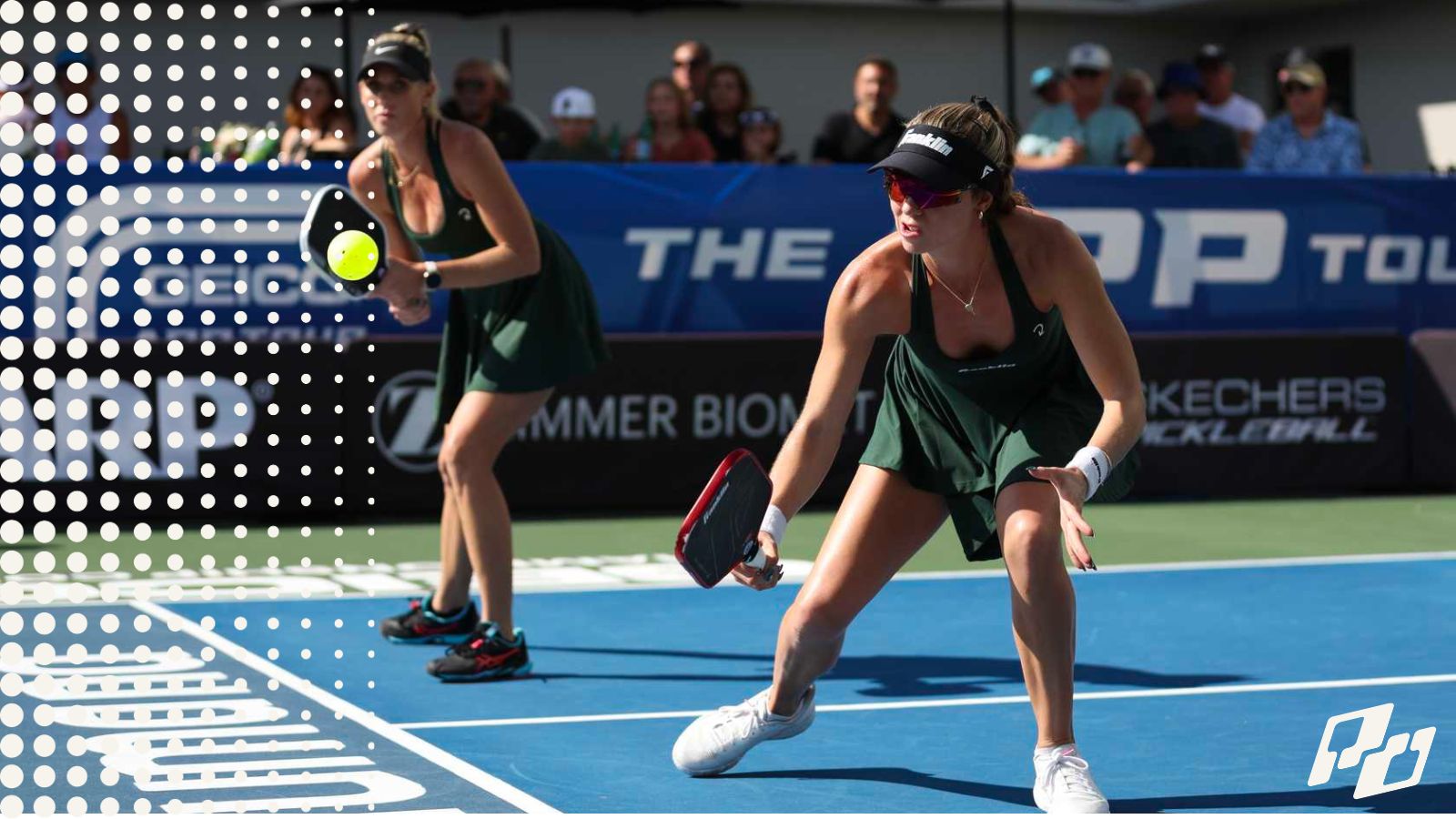
If you watch strong rec players or pros at the kitchen, one thing becomes obvious fast: not every dink is hit the same way.
Some dinks are rolled with topspin. Some are pushed flat. And some are sliced—soft, controlled, low, and annoying in exactly the right way.
The slice dink is one of the most useful shots in pickleball, but it is also one of the most misunderstood. A lot of players think “slice” means chopping down on the ball, flicking the wrist, or trying to carve spin aggressively. That usually leads to exactly what you do not want: pop-ups, inconsistencies, late contact, and dinks that sit up instead of staying low.
A good slice dink is not a trick shot. It is a control shot. It helps you neutralize pace, buy time, keep the bounce low, and stay in rallies when a topspin dink is not the smartest option.
If you are an intermediate rec player, this is the real goal: not just learning to “cut” the ball, but learning to hit repeatable, balanced, purposeful slice dinks on both sides.
Let’s build that properly.
What a Slice Dink Actually Is
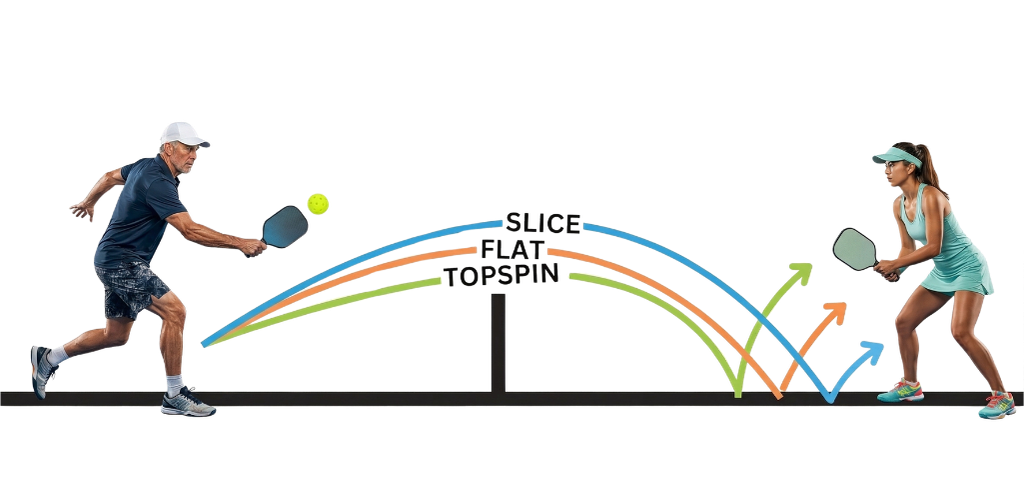
A slice dink is a soft kitchen shot hit with a slightly open paddle face that creates underspin or backspin. The spin matters, but the bigger point is what the shot does:
- It keeps the ball lower after the bounce
- It slows the rally down a bit
- It gives you more margin and more time
- It helps you neutralize while staying controlled
That last part is huge.
A lot of intermediate players treat every dink like an attack opportunity. But many of the best kitchen players are excellent at recognizing when they should stop trying to force offense and simply hit a controlled ball that resets the exchange. That is where the slice dink shines.
The slice dink is usually a neutral or defensive kitchen tool, not your primary weapon for creating offense. It can absolutely be strategic and pressure-building, but its core job is consistency, shape, and control.
Why Slice Dinks Are So Useful
There are a few reasons slice dinks matter so much.
First, the ball tends to travel a little more calmly through the air. That gives you a touch more time to recover and get balanced for the next shot.
Second, because of the open face and softer, controlled path, the ball often stays lower and is less likely to jump up into your opponent’s strike zone after the bounce.
Third, the mechanics can be simpler than topspin for many rec players in neutral or slightly defensive situations. If you are stretched, late, or not fully set, a controlled slice dink is often much more realistic than trying to roll a topspin dink with perfect timing.
That is why better players often use slice when:
- they are under pressure,
- the incoming ball is aggressive,
- they are a little off balance,
- or they need to regain control of the rally.
So the slice dink is not just about spin. It is about problem-solving.
The Biggest Misunderstanding: Slice Does Not Mean Chop
This is the first major correction most players need.
When people hear “slice,” they often try to manufacture spin by cutting down sharply on the ball. That feels logical, but it is usually the wrong motion for a dink. Chopping creates too much vertical instability, makes contact less repeatable, and often sends the ball into the net or floats it high.
The backspin on a slice dink does not come from violently carving the ball. It comes mostly from:
- a slightly open paddle face,
- a stable wrist,
- clean contact,
- and a smooth forward path through the ball.
Think less “hack down on it” and more “guide it through a shallow tunnel.”
The Core Mechanics of a Consistent Slice Dink
Before we split into backhand and forehand, let’s cover the universal fundamentals.
1. Start with a Stable Ready Position
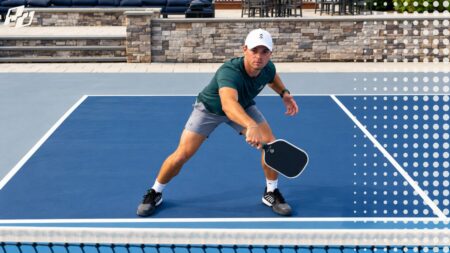
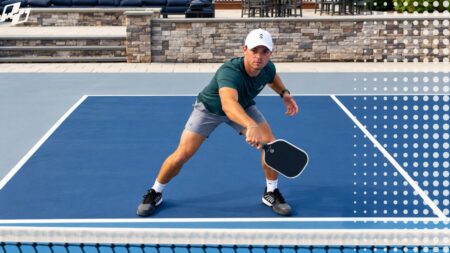
Your paddle should be out in front, not dangling low. Your knees should be bent. Your chest should be engaged forward, not upright and relaxed.
If you are late organizing your body, your hand will try to rescue the shot. That is when wrists get flippy and dinks get messy.
Consistent slice dinks start before the swing even begins.
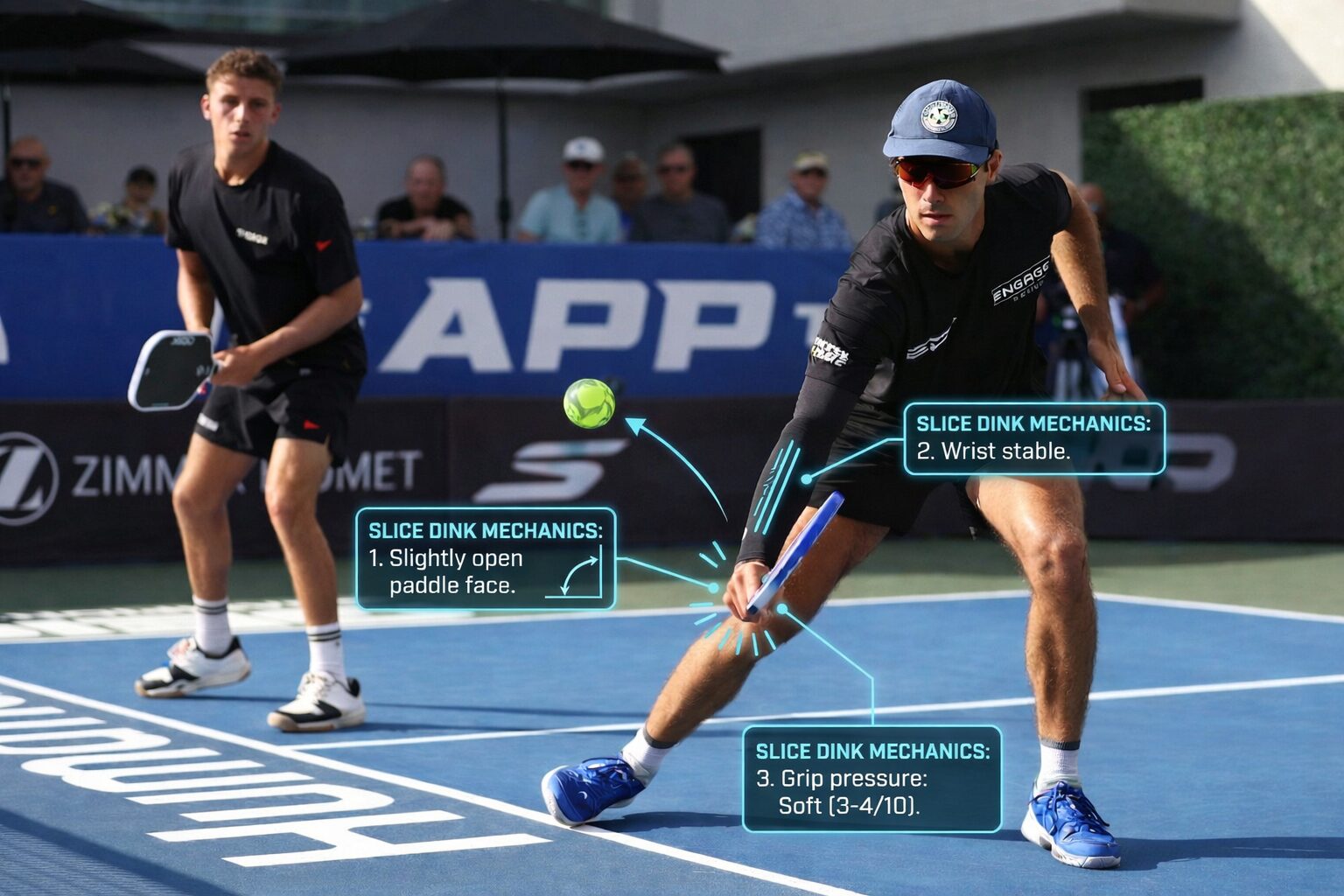
2. Use a Slightly Open Paddle Face
This is the heart of the shot.
The paddle face should usually be slightly open—often around that general “tilted to the sky” feel coaches talk about. Not wildly open. Not scooping under the ball. Just open enough to support the ball and create underspin naturally.
✖️ Too closed, and you drive it into the net.
✖️ Too open, and you float it.
Intermediate players often overdo the openness. You do not need much.
3. Keep the Wrist Stable
This comes up over and over in good coaching because it is one of the biggest difference-makers.
A stable wrist helps you control paddle face angle. And paddle face angle largely determines where the ball goes and how high it travels.
If your wrist is constantly changing during the shot, the ball will come off differently each time. That is why some players feel like their slice dink is “on” one rally and gone the next. It is not the spin that is inconsistent. It is the face.
A stable wrist does not mean tension everywhere. It means the paddle structure is quiet while the arm and body handle the shot.
4. Keep Grip Pressure Soft
This is where a lot of players get confused. The wrist should be stable, but the grip pressure should still be soft.
That is not a contradiction.
Think of it this way: you want the paddle face organized, but you do not want to strangle the handle. A death grip makes touch harder and often turns soft dinks into stiffer, poppier contact.
On a scale of 1 to 10, many coaches like the 2–3 range for dinking. That is a useful feel. Enough control to keep the paddle steady, but soft enough to absorb and place the ball.
5. Make the Motion Compact and Linear
The best slice dinks are short and efficient.
✖️ Not big.
✖️ Not flashy.
✖️ Not fast.
The motion should feel like a controlled push with a slight upward and forward path—not a downward cut. You are guiding the ball, not attacking it.
If your swing is getting big, fast, or vertical, you are almost always drifting away from consistency.
Backhand Slice Dinks (Your Most Reliable Tool)
For most intermediate players, the backhand slice dink becomes the foundation of their kitchen game. Why?
Because the structure is naturally more stable.
The Setup
Your paddle should already be out in front, slightly to your backhand side. Avoid reaching across your body late—that’s where mishits happen.
Your shoulders stay relatively square, and your movement comes from a small, controlled push using your shoulder and forearm.
Contact Point
Contact should be:
- Slightly in front of your body
- Around waist to knee height
- With your paddle already set (not adjusting mid-swing)
Late contact is the #1 reason backhand dinks pop up.
The Motion
Think:
- Small forward push
- Slightly open face
- Minimal backswing
The paddle travels through the ball on a gentle, level-to-slightly-upward path. You are not carving across it. You are supporting and guiding it.
Common Backhand Mistakes
- Reaching instead of moving your feet → leads to unstable contact
- Flipping the wrist at contact → inconsistent height
- Too much slice attempt → ball floats or dies in the net
If your backhand slice dink feels inconsistent, it’s almost always a contact and balance issue, not a “spin” issue.
Forehand Slice Dinks (More Feel, More Discipline)
The forehand slice dink is trickier—not because it’s harder mechanically, but because players tend to overdo it.
The Setup
Keep your paddle in front, but slightly toward your forehand hip. Avoid dropping it too low or taking it too far back.
A big takeaway here: the forehand slice dink should look almost boring.
The Motion
Same principles:
- Slightly open face
- Stable wrist
- Compact push
But here’s where players mess up: they try to “add something extra.” They flick, roll and slice at the same time, accelerate too much,
All of that kills consistency.
The Feel
On the forehand slice dink, think: “Place it, don’t shape it.” Let the paddle face do the work. Don’t try to manufacture spin.
When to Use Slice Dinks (And Why)
This is where better players separate themselves. They don’t just hit slice dinks well—they choose them at the right time.
Use Slice When:
1. You’re Under Pressure
Fast incoming ball? Late contact?
Slice gives you more margin and control.
2. You’re Slightly Off Balance
Topspin requires better timing and body position.
Slice is more forgiving when you’re not perfectly set.
3. You Want to Slow the Rally Down
Slice naturally softens tempo. Great when things feel rushed.
4. You’re Resetting the Point
Instead of forcing offense, you’re re-establishing a neutral rally.
Avoid Slice When:
✖️ You’re in a strong offensive position
If the ball is high and attackable, slice is usually the wrong choice. That’s where topspin or a speed-up makes more sense.
Slice vs. Topspin Dinks (When to Use Each)
This is one of the most important distinctions for intermediate players.
Slice Dink
- More controlled
- Lower bounce
- Better for neutral or defensive situations
- Slows tempo
Topspin Dink
- More aggressive
- Jumps forward after bounce
- Applies pressure
- Better when you are balanced and early
👉 The key insight:
Slice keeps you in the point.
Topspin can help you win the point.
The best players use both—not randomly, but based on position, balance, and intent.
@ryanfupb Forehand Slice Dinks in pickleball from the Right side
♬ original sound – ryanfupb
The Mistakes That Kill Consistency
Let’s clean up the big ones.
1. Over-Slicing
Trying to create too much spin leads to:
- Floating balls
- Inconsistent contact
- Poor control
You don’t need much slice. Subtle is better.
2. Too Much Wrist
Every time your wrist changes angle mid-shot, your paddle face changes. That means unpredictable results.
Keep it quiet.
3. Big Swings
Big swings = big problems at the kitchen.
You lose touch, timing, and control.
4. Late Contact
If the ball gets too close to your body:
- You lose leverage
- You pop it up
Fix this with footwork, not your hands.
5. Standing Too Tall
If your knees are straight:
- You lose control of height
- You end up reaching instead of moving
Stay low. Always.
A Simple Mental Model That Works
If you take nothing else from this, take this:
👉 “Soft hands, quiet wrist, small push.”
That one phrase fixes most slice dink problems.