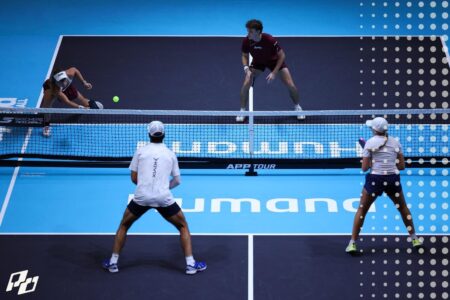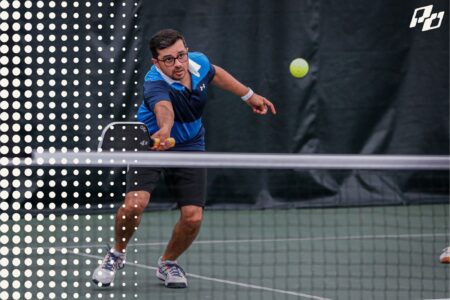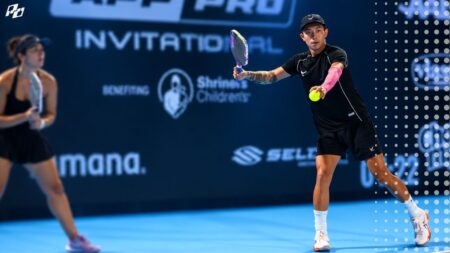

Holding shots longer in pickleball means preparing early, then delaying contact slightly so your dink, speedup, or redirect looks similar longer. For intermediate players, this creates disguise, makes opponents move early, improves decision-making, and helps you attack or dink based on what they reveal.
There is a moment in pickleball that most rec players rush right through. The ball bounces. It rises. It reaches the top of the bounce. And almost immediately, they hit.
That seems normal. It even seems correct. After all, coaches are always telling players to be ready early, make clean contact, and avoid being late.
But once you reach the intermediate level, there is another layer to the game: sometimes the best move is not hitting sooner. It is holding the shot just a fraction longer.
Not late. Not lazy. Not passive.
Just long enough to make your opponent show their movement first.
That small delay can change everything. Your dink and your speedup start looking similar. Your opponent cannot tell whether you are going crosscourt, middle, line, soft, or fast. They hesitate. They lean. They slide early. They split-step at the wrong time.
And suddenly, you did not just hit a shot. You controlled their timing.
This is why pros and high-level coaches talk so much about disguise, delay, and “holding” at the kitchen. Zane Navratil and Jack Munro have explained this as a way to create more time on dinks and mess with an opponent’s movement.
The key idea is simple: by waiting slightly longer, especially as the ball starts to fall after the apex, you can see your opponent’s early movement and make a more informed shot choice.
But here is the important part for rec players: holding your shot is not a beginner trick. It is an intermediate-to-advanced timing skill.
If you cannot make a basic dink yet, holding longer will probably just make you late. But if you are already a 3.5-ish player who can dink, reset, and speed up with some control, this is one of those upgrades that makes your game feel smarter almost immediately.
What Does “Holding Your Shot” Actually Mean?
Holding your shot does not mean freezing forever. It does not mean letting every ball drop below your knees. It does not mean doing a dramatic fake like you are trying to win an acting award.
In pickleball, holding your shot usually means you get into position early, prepare your paddle, and delay contact just long enough to disguise your intention or read the opponent.
Most commonly, this happens at the kitchen during dinking exchanges.
Instead of always taking the ball immediately at the same timing point, you vary when you contact it:
You might take one dink slightly on the rise.
You might take the next at the apex.
You might hold the next one just after the apex, as it starts to fall.
That timing variation is what bothers opponents.
A lot of 3.0–4.0 players time their footwork based on your rhythm. If you always hit immediately, they start moving immediately. If you always dink crosscourt at the same speed, they start sliding crosscourt before you even contact the ball.
Holding breaks that rhythm.
You are basically saying: “I’m ready. But I’m not telling you yet.”
Why This Works: You Make the Opponent Move First
Pickleball is not just about where the ball goes. It is about when people move. At the kitchen, players are constantly reading clues:
Paddle angle.
Shoulder turn.
Grip change.
Backswing size.
Contact timing.
Body lean.
Eyes.
Foot pressure.
When you rush your shot, you often reveal the answer early. Your paddle path shows crosscourt. Your body opens toward the sideline. Your hand speeds up before contact. Your opponent sees it and moves.
When you hold the ball longer, you reduce those early tells.
When you rush contact, your body and paddle path become easier to read. When you delay contact, you force your opponent to guess instead of simply react — which can make them commit early, lean the wrong way, or get caught off balance.
That is the magic. You are not trying to become faster. You are trying to make them earlier than they want to be.
There is a difference.
Fast players react well. Smart players make opponents react badly.
The Rachel Rohrabacher Example: Calm, Not Flashy
One reason this topic matters is that the best examples are often not the flashiest players.
Rachel Rohrabacher is a great model here. She is not always trying to overwhelm opponents with wild speedups or giant swings. What makes her so difficult is that her dinks and speedups can look similar for a long time. She holds her paddle, waits, and keeps opponents unsure whether she is going aggressive or soft:
That is exactly the kind of skill rec players should notice.
At the intermediate level, players often think “advanced” means bigger speedups, more spin, or harder counters.
Sometimes advanced means this: make two different shots look the same until the last possible moment.
That is much harder to play against than raw power.
The Three Timing Windows: Rise, Apex, Fall
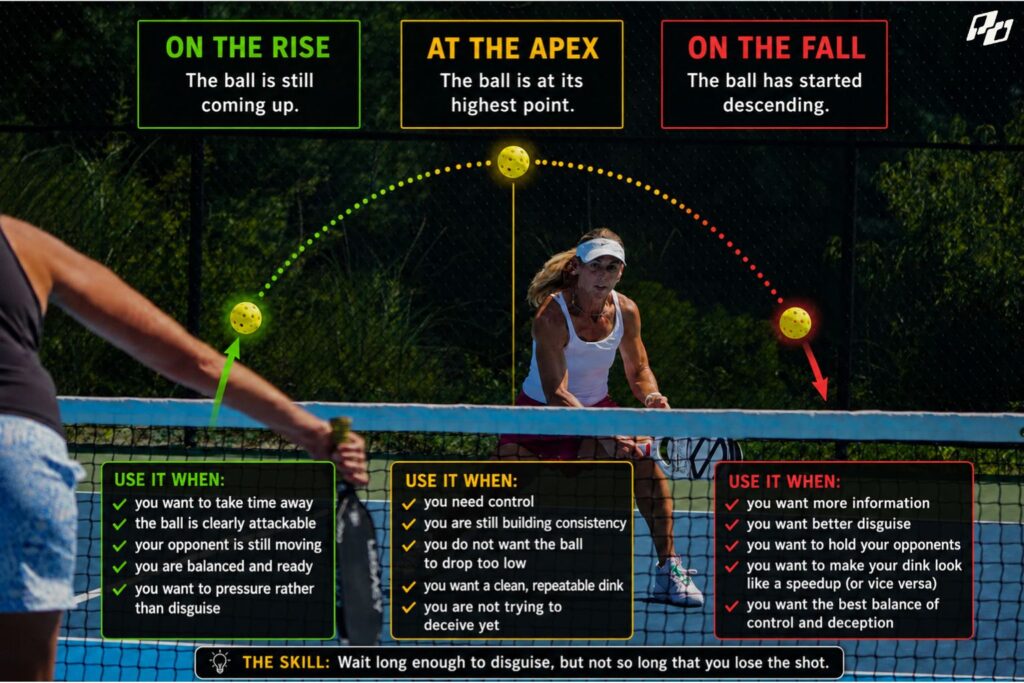
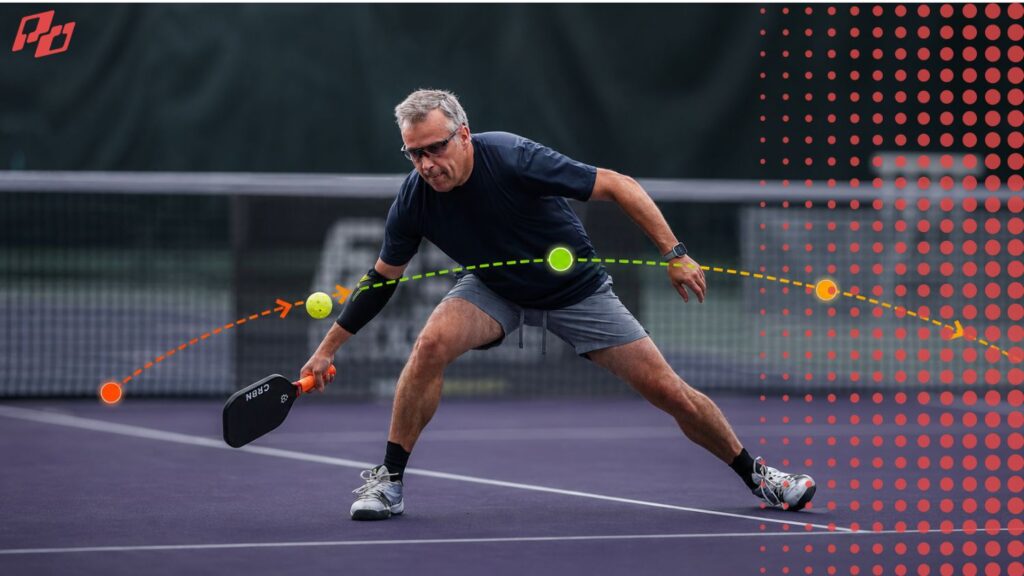
To understand holding, you need to understand the ball’s bounce. After the ball bounces, it moves through three basic timing windows:
On the rise: the ball is still coming up.
At the apex: the ball is at its highest point.
On the fall: the ball has started descending.
Each window gives you a different advantage.
Taking the Ball on the Rise
This is the pressure option.
When you take the ball early, you take time away from your opponent. This can be great when you want to keep someone pinned, rush their recovery, or attack a ball before it drops too low.
But taking the ball on the rise is harder. The ball is still climbing, so your timing has to be cleaner. It can also reduce disguise because you are committing early.
Use it when:
✓ you want to take time away
✓ the ball is clearly attackable
✓ your opponent is still moving
✓ you are balanced and ready
✓ you want to pressure rather than disguise
Taking the Ball at the Apex
This is the stable, high-control option.
Many coaches teach players to contact dinks and drops near the apex because it gives you a predictable height and cleaner timing.
Use it when:
✓ you need control
✓ you are still building consistency
✓ you do not want the ball to drop too low
✓ you want a clean, repeatable dink
✓ you are not trying to deceive yet
Taking the Ball on the Fall
This is the hold.
You are not letting the ball collapse all the way down. You are letting it fall just after the apex.
That slight wait gives you more information. You can see if the opponent slides early. You can see if they cheat middle. You can see if they lean back expecting a speedup. You can make your dink look like a speedup or your speedup look like a dink.
Zane Navratil and Jack Munro describe this as a split-second delay, not a huge pause. If you wait too long, the ball drops below the net and your offensive options disappear.
That is the trade-off: the longer you hold, the more information you get — but the lower the ball gets.
So the skill is not “wait as long as possible.”
The skill is: wait long enough to disguise, but not so long that you lose the shot.
The Big Myth: Holding Means Slowing Down Your Game
This is where some rec players get confused. Holding your shot does not mean playing slow pickleball.
It means changing the timing.
Sometimes you speed the game up by taking the ball early. Sometimes you slow the rhythm by holding. Sometimes you hold and then speed up. Sometimes you hold and dink softly behind their movement.
The point is not to be slow.
The point is to be less predictable.
A predictable player has one timing.
A better player has multiple timings.
That is why holding can make your game feel more advanced even without adding a new stroke.
The “Same Setup” Principle
If your dink and speedup look different from the start, your opponent does not have to guess. They know.
A lot of rec players have obvious tells:
They tighten the grip before speeding up.
They raise the paddle before attacking.
They take the paddle back farther.
They lean forward.
They change their wrist angle.
They stare at the target.
They rush contact.
A good player sees those tells and gets ready.
So your goal is simple: same setup. Different finish.
Your paddle preparation for a dink and speedup should look almost identical until late. That is what makes holding powerful.
If you hold but your paddle screams “speedup,” you are not fooling anyone.
The Best Cue: “Show Dink, Decide Late”
This is probably the easiest cue for rec players.
Show dink, decide late.
That means your initial preparation looks calm and soft. Paddle in front. Body balanced. No giant backswing. No obvious grip change. No panic.
Then, at the last moment, you decide:
Dink crosscourt.
Dink middle.
Push deeper.
Roll speedup.
Flick at the hip.
Drop it short.
Go behind their movement.
This does not mean guessing randomly. It means delaying your final commitment until you have more information.
A good hold is not indecision. It is delayed decision.
How to Read Your Opponent While Still Watching the Ball
One question always comes up: “How am I supposed to watch the opponent and the ball at the same time?”
The answer is peripheral vision.
You do not take your eyes fully off the ball. You keep your primary focus on the ball, but you allow your peripheral vision to pick up your opponent’s movement.
Zane and Jack talk about this exact idea: your eyes stay on the ball, but you can still sense whether the opponent is sliding, cheating, or standing off the kitchen line.
That takes practice, but it is very learnable.
Start with one simple read: are they moving before I hit? That is enough.
You do not need to process everything. Just notice whether they are:
- leaning crosscourt
- cheating middle
- stepping back
- crowding the line
- or sliding early
Then choose the shot that punishes that movement.
When Holding Works Best
Holding is most useful when the ball is:
✓ in front of you
✓ around knee-to-waist height after the bounce
✓ not too low
✓ not too fast
✓ in a dink exchange
✓ in a predictable crosscourt pattern
✓ high enough that a speedup is still possible
✓ controlled enough that you can choose
Holding works when you have options. If you have only one realistic shot, there is not much to disguise.
The Difference Between Holding and Being Late
This distinction is everything.
Holding is when you are ready early and choose to delay. Being late is when you are not ready and the ball forces you to delay.
They look similar to beginners. They are completely different.
Holding feels calm.
Being late feels rushed.
Holding keeps the paddle organized.
Being late makes the wrist save the shot.
Holding gives you options.
Being late removes options.
Holding makes the opponent guess.
Being late makes you guess.
So if your “hold” causes pop-ups, mishits, or panicked wrist flicks, you are probably not holding. You are late.
The Technical Mechanics of Holding
Here is how the shot should feel.
1. Get Ready Early
You cannot hold if you are still preparing.
The paddle has to be in position before the ball reaches the contact zone. Your feet need to be quiet. Your body needs to be balanced.
A good cue: early prep, late choice.
That is the whole skill.
If you prepare late and choose late, you are in trouble.
2. Keep the Paddle Compact
A big backswing ruins disguise.
At the kitchen, your paddle should stay in front of you. The hold comes from timing, not from pulling the paddle back.
Think: quiet paddle. Late release.
If your paddle starts moving too early, your opponent reads the direction. If it gets too big, your timing breaks.
3. Let the Ball Fall Slightly
For the true “hold,” contact usually happens just after the ball’s apex. Not way below the net. Not at your shoelaces. Just slightly on the decline.
This gives you the extra beat without sacrificing too much height.
Cue: apex, then act.
4. Keep the Wrist Quiet
A lot of players ruin holds by getting wristy. They wait, then panic-flick.
That creates pop-ups and errors.
Instead, keep the wrist stable and let the paddle face do the work. If you speed up, it should be compact and controlled. If you dink, it should still be simple.
Cue: hold with the body, not the wrist.
5. Finish Toward the Target
Holding does not mean guiding the ball lazily.
After the delay, commit.
If you dink, finish calmly toward the spot. If you speed up, go through the ball with purpose. If you redirect, make the target clear.
Cue: wait, then commit.
The Best Shots to Pair With a Hold
Holding works because it creates multiple possible outcomes from the same setup. Here are the best pairings.
Hold + Crosscourt Dink
This is the base layer.
You hold just long enough to see if the opponent moves early, then dink crosscourt with shape. If they stay disciplined, fine. You made a solid dink.
Hold + Middle Dink
If the opponent slides early crosscourt, the middle opens.
This is one of the best rec-player uses of holding because it does not require a huge speedup. You are simply putting the ball where they left.
Cue: if they slide, slide it middle.
Hold + Speedup
This is the dangerous version.
If your opponent is leaning, off balance, or late to recover, you hold and then speed up into a smart target: dominant hip, paddle shoulder, middle seam, or open space.
But only do this when the ball is high enough.
A speedup from too low is not deception. It is donation.
Hold + Short Angle
If the opponent backs up or freezes too upright, a held soft angle can be nasty.
This is especially useful when they are expecting pace.
Hold + Behind the Movement
This is the most satisfying version.
If your opponent cheats one way, you calmly send the ball behind them.
No extra power needed. Just timing and awareness.
Why Holding Makes Speedups Better
A speedup is not dangerous just because it is fast. It is dangerous when it is unexpected.
Deception makes speedups more effective and notes that speedups often set up the next ball, rather than simply ending the point immediately.
That is important.
At higher levels, a speedup is often a setup. You attack to force a predictable counter, then finish the next ball.
Holding helps because it makes that first attack harder to read. If your opponent sees the speedup early, they counter cleanly. If they see it late, their counter may float, jam, or come back predictably.
For rec players, this means you do not need to hit harder. You need to hide better.
Why Holding Makes Dinks Better
This is the underrated part.
Holding is not only about speedups. It also makes your dinks more effective.
When you hold your dink, the opponent cannot settle into the same rhythm. They cannot just lean crosscourt and wait. They cannot assume the ball is going where it went last time.
Even a normal dink becomes more annoying because it arrives after a slightly different rhythm.
That is why some high-level dinkers look so frustrating to play against. They are not just consistent. They are uncomfortable.
The Rec Player Progression: How to Learn This Without Ruining Your Game
Do not start by trying to hold every ball in games. That is how you turn a good concept into a mess.
Use this progression.
Stage 1: Hold Only on Cooperative Dinks
Start in warmup or drilling.
Dink crosscourt with a partner. Take five balls normally. Then on every sixth ball, let it fall slightly after the apex before sending it back.
Your only goal is to feel the timing. Do not attack yet.
Stage 2: Hold and Change Direction
Now hold, then redirect one ball middle or line.
Keep the swing small. You are learning to delay the decision without changing the setup.
Cue: same shape, new direction.
Stage 3: Hold and Watch Movement
Ask your partner to exaggerate their recovery. If they slide early, hit behind them. If they stay, continue crosscourt.
This trains the actual skill: reading movement.
Stage 4: Add the Speedup
Only now add speedups.
Hold the dink setup. If the ball is high enough and your partner shifts early, speed up compactly.
Keep the target big: hip, shoulder, middle. No hero lines.
Stage 5: Use It 2–3 Times Per Game
In real games, start small.
Do not become the player who tries to manipulate every ball.
Use the hold on a few controlled dinks per game. If it works, build from there.
The Biggest Mistakes Rec Players Make
1. Holding balls that are too low
If the ball drops too far, your speedup disappears and your dink gets harder.
Fix: Hold only when the ball still gives you options.
2. Making the hold too obvious
A dramatic pause can work occasionally, but it often looks forced and makes you late.
Fix: Think “fraction longer,” not “statue.”
3. Changing the paddle early
If your paddle changes before contact, your disguise is gone.
Fix: Same setup. Different finish.
4. Looking up too much
If you stare at the opponent, you mishit the ball.
Fix: Eyes on ball. Opponent in peripheral.
5. Speeding up from bad height
Holding can make you feel clever, but clever does not beat physics.
Fix: Attack high balls. Shape low balls.
6. Waiting because you are unsure
A hold should be intentional, not hesitation disguised as patience.
Fix: Decide your options before the ball arrives.
How to Know It Is Working
You will know your hold is working when:
✓ opponents lean before you hit
✓ opponents get caught reaching
✓ your normal dink causes more pop-ups
✓ your speedup feels less forced
✓ you see more open middle
✓ opponents stop sitting on your crosscourt pattern
✓ your kitchen game feels calmer
✓ you feel like you have more time
That last one is the biggest giveaway.
Holding does not actually give you more time in the physics sense. The ball still travels at the same speed.
But it gives you more usable time because you are prepared earlier, choosing later, and making your opponent uncomfortable.
The Simple Rule for Intermediate Players
Here is the rule I would give most 3.5–4.0 players: hold when you are balanced, the ball is high enough, and you have at least two believable options. Hit normally when you are late, low, stretched, or just trying to survive.
That keeps the concept useful.
You do not need to turn every dink into a mind game. You need to add just enough timing variation that opponents stop reading you easily.