
One of the most common beginner mistakes in pickleball isn’t about grip, paddle, or even strategy.
It’s when you hit the ball.
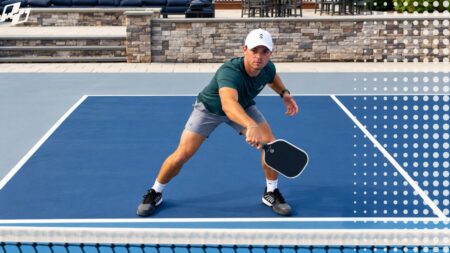
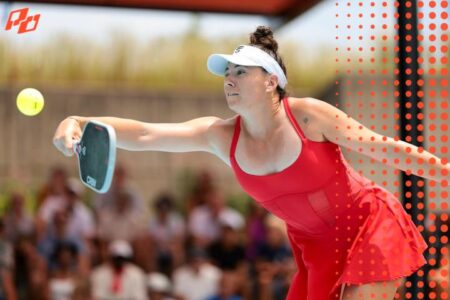
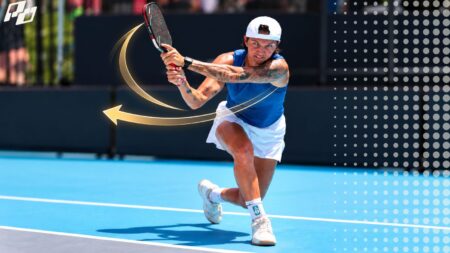
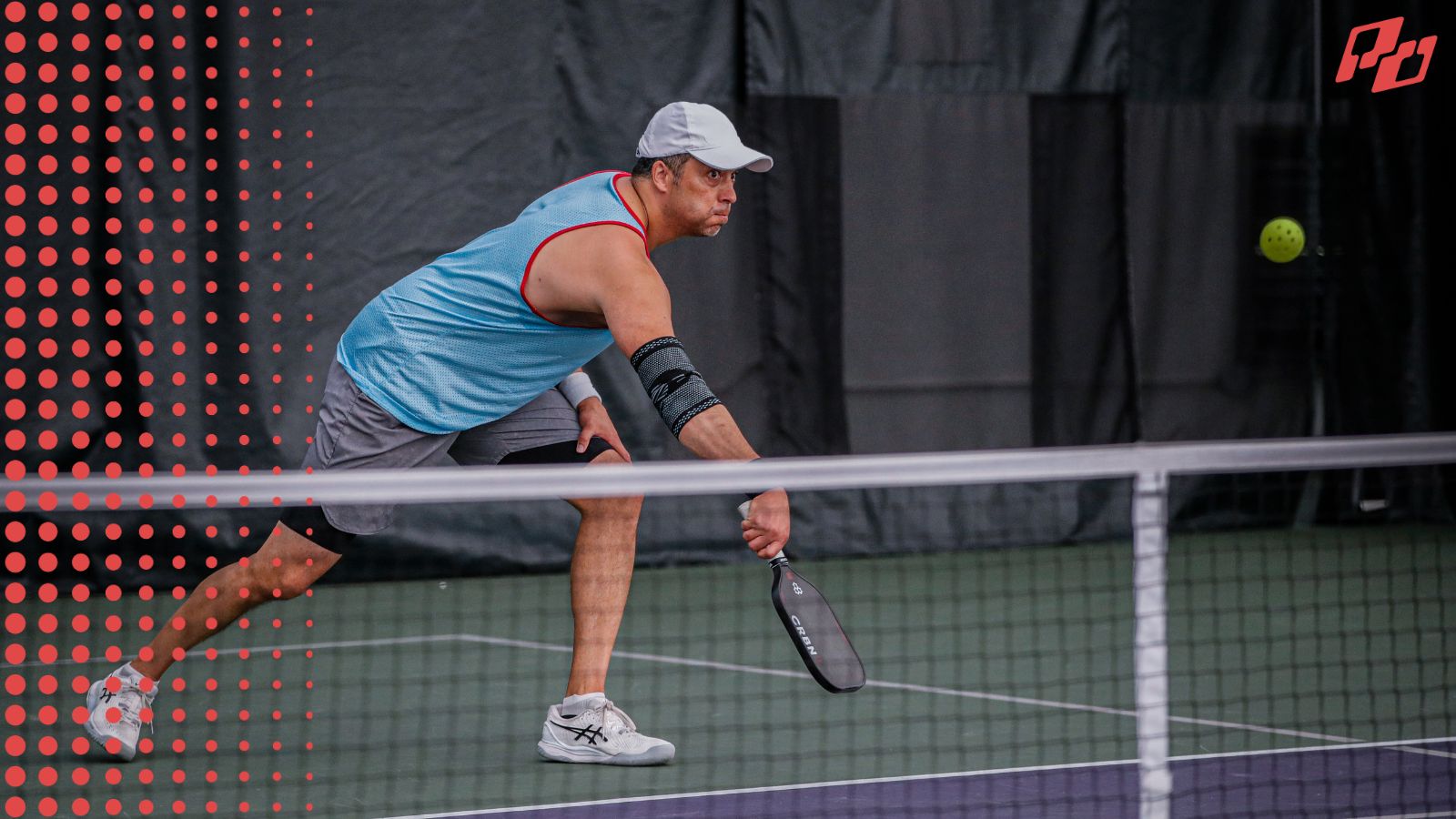
Specifically: hitting your dinks immediately after the bounce — right off the short hop — when the ball is still near ankle height.
It feels efficient. It feels quick. It even feels “advanced.”
But here’s the truth: most players who do this aren’t being aggressive — they’re being rushed. They’re reacting to the bounce instead of organizing for it.
And for most recreational players, taking the ball too early quietly forces every dink into a defensive shot.
Let’s break down why — and how to fix it.
What Happens When You Hit a Dink Too Early
When you take the ball immediately off the bounce, three things happen:
- The ball is low (often below net height).
- Your paddle face has to open to lift it.
- Your margin for error shrinks dramatically.
Let’s expand that.
At ankle height, your contact window is tiny. The net is effectively taller relative to the ball. That means your only safe option is upward.
You’re not choosing lift — you’re forced into it.
And when your paddle face opens to lift, a few mechanical things happen:
- Your contact becomes more vertical than forward.
- Your control shifts from placement to survival.
- You start guiding instead of striking.
From a coaching perspective, this is important: when players hit too low, they subconsciously switch from shaping the rally to just keeping the rally alive.
That’s defensive pickleball.
Now, there are advanced players who intentionally short-hop dinks to speed up rhythm. But they do it with exceptional balance, early preparation, and precise paddle control. They’re not reacting — they’re choosing.
For most beginners and intermediates, taking the ball too early creates:
- Pop-ups (because you over-lift)
- Net dinks (because you under-lift)
- Panic lifts (because you felt rushed)
- Inconsistent contact
- Rushed mechanics
And worst of all — it hands control to your opponent because your ball is predictable.
The Fix: Contact at the Apex
Instead of hitting the ball right after it bounces, let it rise.
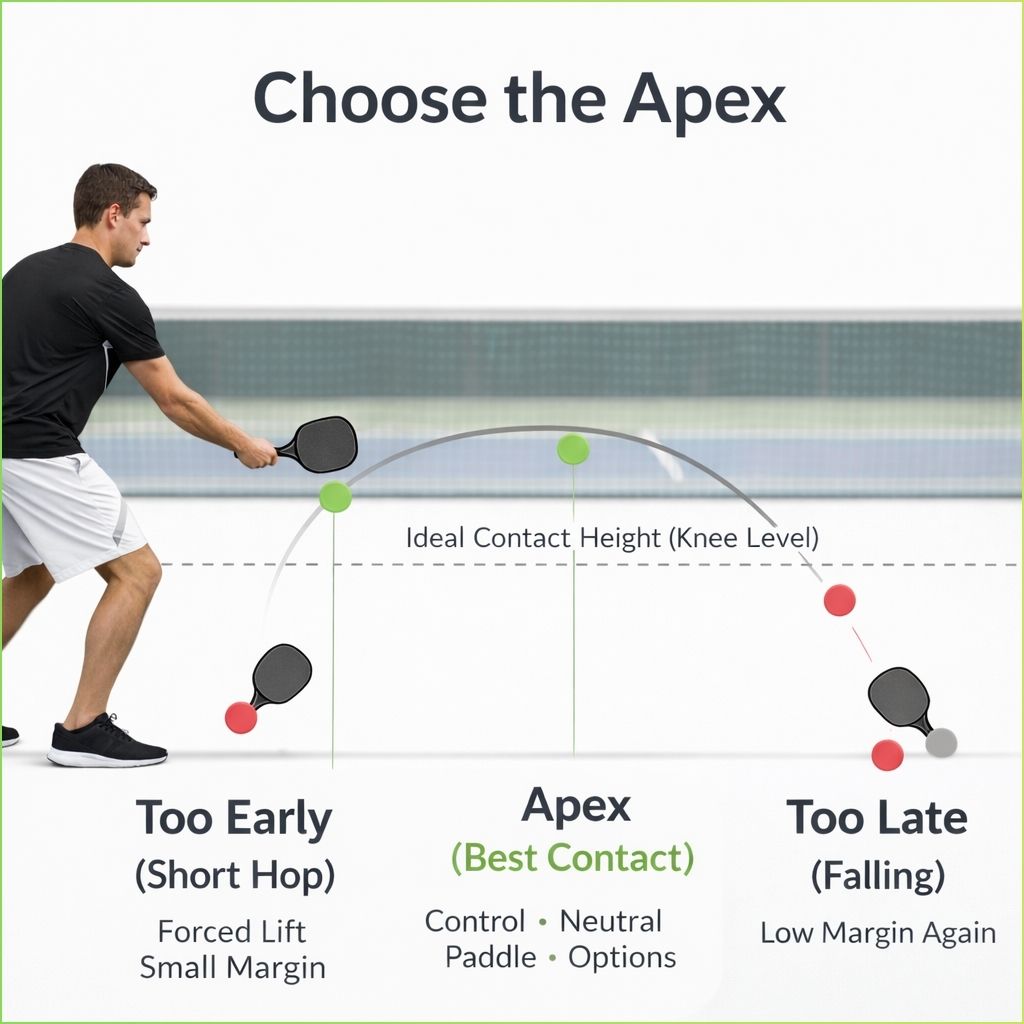
Specifically, let it reach its apex — the highest point of the bounce — and strike it there.
This usually happens around mid-shin to knee height, depending on the depth of the dink and court conditions.
And here’s what’s important: you don’t “wait.” You prepare early so the ball rises into your strike zone.
That’s a big difference.
Why does apex matter? Because at the apex:
- The ball has slowed slightly from the bounce.
- The vertical energy of the bounce has peaked.
- You have more height relative to the net.
- You gain an extra split second to decide.
That extra fraction of time is massive at the kitchen. And options are offense. Our friend Danea Zeigle from AllThingsPickleball breaks it down perfectly:
Why Apex Contact Gives You More Control
1️⃣ You Can Hit Through the Ball (Not Just Lift It)
At ankle height, you’re scooping.
At apex height, you can push forward, roll slightly, or redirect crosscourt or middle without feeling like you’re flipping the paddle.
This is the shift from reactive dinking to intentional dinking. And once players feel that difference, they don’t go back.
2️⃣ Your Paddle Face Becomes More Neutral
When the ball is low, your paddle face must open upward to clear the net.
When the ball is higher, your paddle face can stay more neutral — meaning your wrist and forearm don’t have to compensate as much.
Neutral face = predictable launch angle.
Predictable launch angle = fewer pop-ups and fewer surprise nets.
From a coaching standpoint, this is huge because most “touch” issues are actually angle-control issues.
3️⃣ You Can Add Spin (If You Want)
Topspin dinks require brushing slightly upward and forward. That brushing motion is controlled and subtle — not wristy.
It’s nearly impossible to execute cleanly when the ball is inches off the ground because your paddle path becomes too vertical.
At apex height, you can brush forward with a stable paddle face. That’s how stronger players apply pressure without blasting the ball.
Spin becomes intentional, not accidental.
The Hidden Benefit: You Slow the Rally Down
Many beginner errors happen because players rush the kitchen exchange. Taking the ball at the apex forces you to:
- Track the bounce visually.
- Stay balanced through contact.
- Keep your body organized.
It calms the tempo.
- When players feel rushed, their hands speed up.
- When hands speed up, swings get jerky.
- When swings get jerky, contact drops.
Letting the ball rise naturally slows your internal tempo — not the rally, but you.
And calm players make better decisions.
But Won’t Waiting Make Me Late?
This is the most common concern. Players think: “If I wait, I’ll get jammed.”
But here’s the key clarification: waiting for the apex does NOT mean standing still. It means adjusting your feet so the ball rises into your strike zone.
If the ball is bouncing too close to your body, you’re not “too early.” You’re poorly spaced.
And spacing is solved with feet — not faster hands.
Practical Cues You Can Use Tomorrow
Instead of thinking “Wait longer,” think: “Let it rise.”
Or: “Mid-shin to knee.”
Or: “Strike zone, not ankle zone.”
Another simple self-check: if your paddle face feels dramatically open at contact, you’re probably too low.
If you feel like you’re scooping, you’re too early.
Try this in warm-up: consciously allow one extra beat before contact and notice how much calmer the shot feels.
Common Mistakes When Trying This
Mistake 1: Letting It Rise Too High
If you wait past the apex and let the ball drop again, you’re back to ankle height — just later.
Timing matters. The goal is the peak — not the fall.
Mistake 2: Standing Too Tall
Locked knees kill adjustment ability. Stay athletic:
- Slight knee bend
- Chest forward
- Paddle up in front
Think “ready to move,” not “standing to hit.”
Mistake 3: Watching the Opponent Instead of the Bounce
The bounce determines timing. If your eyes leave the bounce early, your contact timing suffers.
Track bounce → strike → then look up.
When Is a Short Hop Okay?
Short-hopping isn’t wrong. It’s just a higher-level choice. You might intentionally short-hop when:
- You want to take time away from a heavy topspin dinker.
- The ball is sitting high and attackable.
- You’re balanced and prepared early.
But here’s the rule: if your short hop produces more errors than pressure, it’s not a weapon yet.
Build apex consistency first. Then experiment.
One More Thing Most Players Don’t Notice
Here’s something that doesn’t get talked about enough: your decision-making improves when your contact height improves.
When you’re hitting at ankle level, your brain is in survival mode. All you’re thinking is, “Just get it over.” There’s no bandwidth left for placement, disguise, or moving your opponent.
But when you contact higher — around the apex — you suddenly have time to see the court. You can recognize if your opponent is leaning middle. You can change direction. You can hold the ball a fraction longer before sending it crosscourt.
That’s the real advantage.
Another practical tip: start paying attention to how your dinks feel, not just where they land. Clean apex contact feels solid and quiet. Low, rushed contact feels stabby or flicked. That sensation is feedback — use it.