
Many beginner pickleball rules are useful starting points—but they shouldn’t stay rigid forever. As your skills improve, ball quality, balance, positioning, and opponent movement should matter more than simple rules like “never attack below the net” or “always dink crosscourt.” Better players learn when to break the rule—and why.
Jill Braverman’s recent “bad pickleball advice” breakdown got us thinking about something bigger: a lot of the rules beginners are taught are useful at first, but they’re not supposed to stay rigid forever.
That’s the tricky part of getting better.
At 3.0, simple rules keep you out of trouble. At 3.5–4.0, those same rules can start making you predictable, passive, or late.
So instead of asking whether the old advice is “wrong,” here’s the better question: when does the rule stop helping—and what replaces it?
1. “Never Attack a Ball Below the Net”
This is probably the biggest one Braverman challenges. Most players learn some version of the traffic-light system:
Red: below the net, don’t attack.
Yellow: around net height, maybe.
Green: above the net, go.
That is excellent beginner guidance. It teaches restraint. It stops newer players from ripping low dinks straight into the net.
But eventually, height alone becomes too crude a filter.
Braverman’s argument is that a low ball can still be attackable if it is “dead”—meaning it arrives without much pace, you have room around the ball, and your weight is stable or moving forward.
That matches how modern speed-up coaching has evolved. Better players look at more than height: they consider whether the ball sits in front, whether they’re balanced, whether the opponent is vulnerable, and whether they can accelerate compactly without reaching.
So the intermediate rule becomes: don’t ask only, “How high is it?” Ask, “Do I own this ball?”
A low ball that is:
- slow
- in front
- with space around it
- and you are balanced
may absolutely be attackable. A slightly higher ball that has you stretched or falling sideways may not be.
That’s the upgrade.
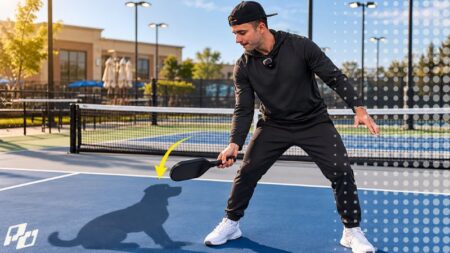
Our friends at PlayPickleball make a great point below about recognizing a dead dink—and when it’s actually the right ball to speed up:
2. “Hit It High, You Die”
This one has been repeated forever. And again, it has value. If you float a dink, yes, you have probably given the opponent an attackable ball.
Instead of freezing after a bad dink, recognize it immediately, adjust your position, get your paddle ready, and expect the next ball to come back with pressure.
That’s a major difference between lower-level and better rec pickleball.
A 3.0 player pops the dink and thinks: “Oh no.”
A 4.0 player pops the dink and thinks: “Here comes the attack.”
Then they prepare for it.
Braverman specifically talks about stepping back, getting the hands up, and keeping weight forward instead of assuming the point is dead.
So, if you know immediately that you left the ball high, you actually have a head start because you can reposition before the opponent contacts it.
So the old beginner rule: high ball = danger.
Becomes: high ball = danger, then immediate recovery job.
That is much more useful.
3. “When in Doubt, Dink Crosscourt”
This is one of the first geometry lessons everybody learns.
Crosscourt gives you:
- more distance
- a lower portion of the net
- more room to land the ball
And those advantages are real. Basic instruction still correctly describes crosscourt dinking as the safer default in many neutral situations.
Players can start treating crosscourt as the automatic answer, even when they’re stretched, panicked, or badly positioned.
That’s where it breaks.
If you’re pulled wide and off balance, trying to send another sharp ball crosscourt may require more rotation, more reach, and a much more precise paddle face.
In those moments, the middle—or just off middle in front of you—can be a much cleaner escape. Braverman specifically argues that when she feels more panicked, she wants the shot to become softer, calmer, and closer to the middle rather than attempting a heroic crosscourt dink.
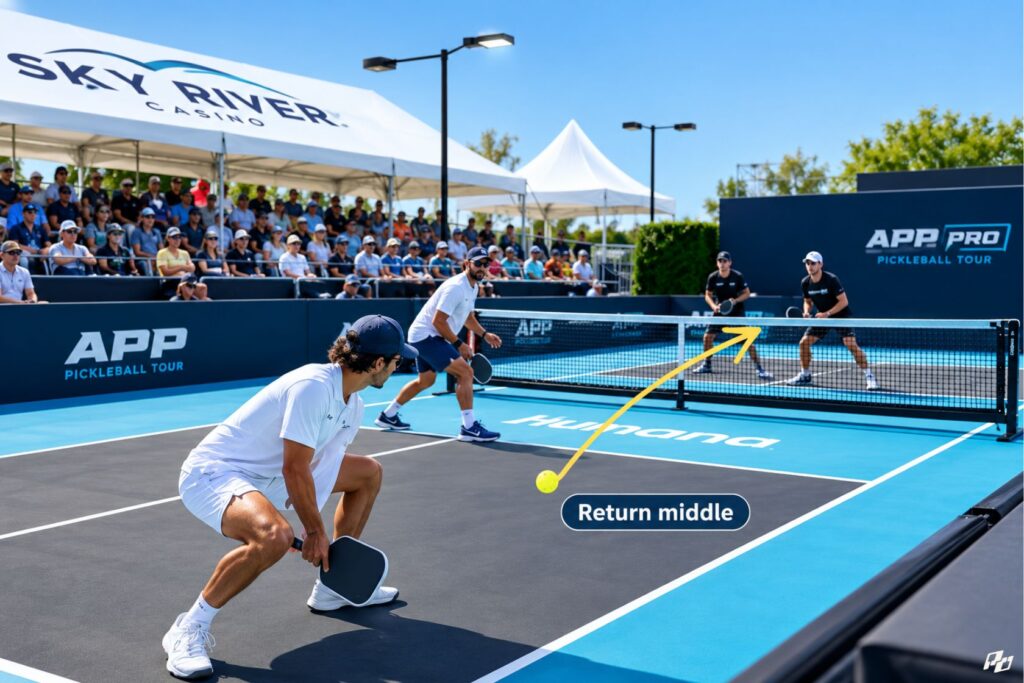
So the updated rule is: balanced? Crosscourt is great. Stretched? Simplify toward middle.
Crosscourt should be a choice.
Not a reflex.
4. “Track the Ball With Your Paddle”
This sounds harmless. It even sounds smart. The problem starts when players interpret that cue literally and begin moving the paddle first.
Then the paddle starts drifting away from the body.
The arms get disconnected.
The player begins guessing early.
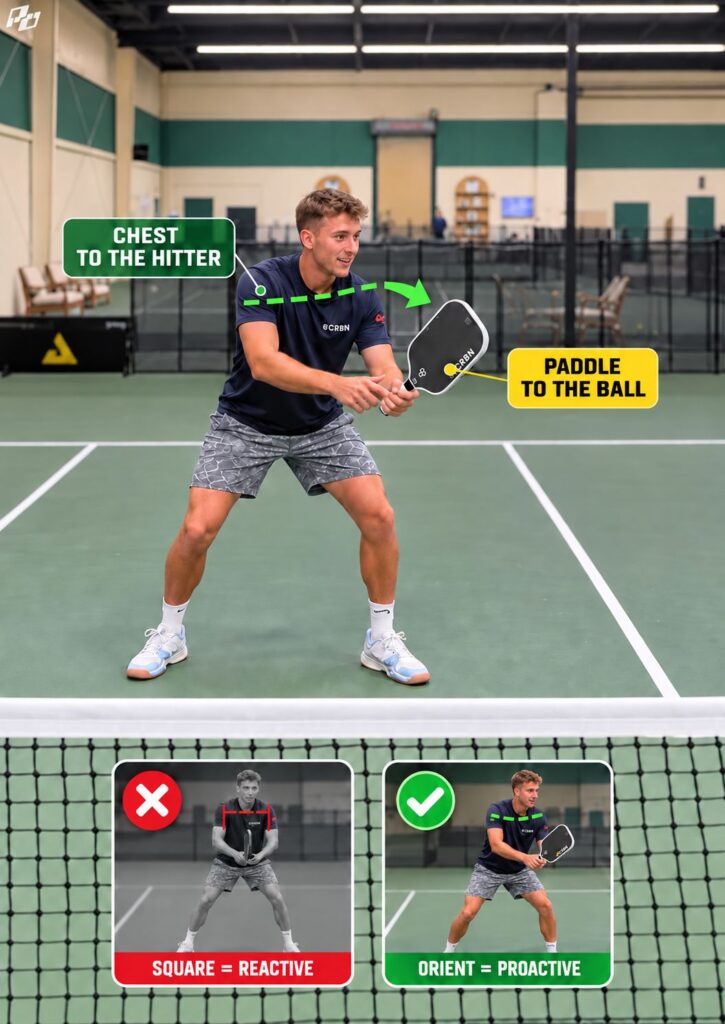
Let the lower body track the ball first while the paddle stays relatively neutral in front.
Think of the paddle and belly button moving together so the paddle stays inside your “cone of power.”
That is a much better image.
Instead of: ball moves left → paddle reaches left.
Think: ball moves left → feet and knees shift → paddle comes with the body.
This is especially important during dinking and hand battles.
If the paddle gets too far outside your center line too early, you’ve already committed. A good opponent now knows exactly where you are sitting.
So the upgraded rule becomes: track the ball with your body. Let the paddle stay connected to you.
That keeps you balanced, neutral, and much harder to read.
5. “Get to the Kitchen as Fast as Possible”
Yes, the kitchen line is where you want to be. The problem is the word fast.
A lot of 3.0–3.5 players hear: “Get to the kitchen.” and translate it as: “Sprint there immediately.”
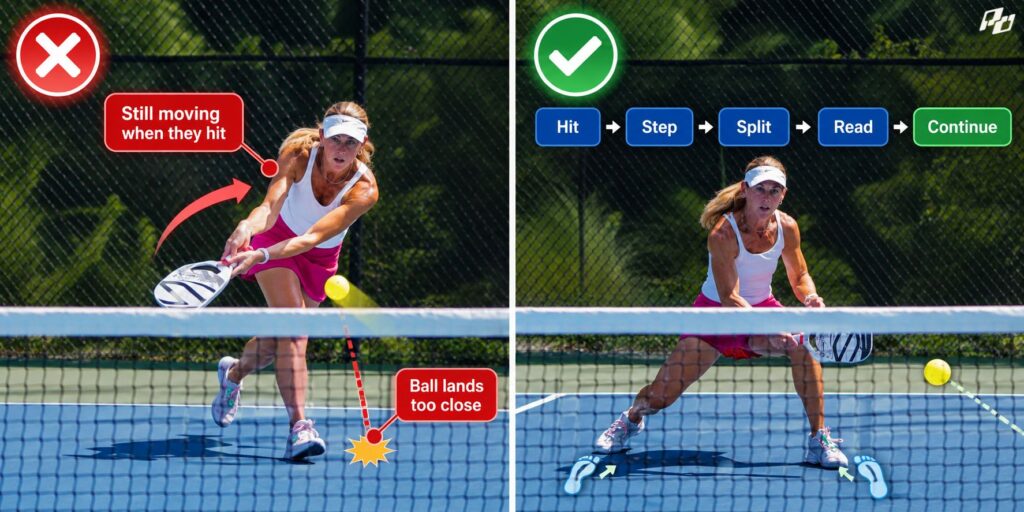
Then they hit a third-shot drop, charge through transition, and are still moving when the opponent strikes the fourth.
Now the ball lands at their feet while their weight is flying forward.
That’s not an upgrade.
That’s a trap.
Transition is not a race. The better pattern is controlled advancement: hit, move, stabilize, read, then move again.
A useful rhythm is: hit → take a couple of steps → split → read → continue.
You may reach the kitchen in two shots.
You may need five.
That is completely fine.
You are trying to reach the net safely, not quickly, and your movement should depend on the quality of the shot you just hit.
So the beginner rule: get to the kitchen fast, becomes: earn your way to the kitchen.
A great drop earns more movement.
A mediocre one earns less.
A ball your opponent can attack may mean stopping completely and defending first.
That distinction can clean up a huge number of rec points.
So Were the Beginner Rules Wrong?
No. That’s the interesting part. Most of them are actually good teaching shortcuts.
A beginner does need simple filters:
- Don’t attack everything below the net.
- Crosscourt gives you margin.
- A high dink is dangerous.
- Move toward the kitchen.
- Keep your paddle involved.
Those ideas help players build structure.
The problem comes when the shortcut gets mistaken for the full game. That’s why intermediate players often plateau.
They’re still obeying rules that were designed to stop beginner mistakes rather than help them solve advanced situations.
The Upgrade Is Adding Conditions
Beginner pickleball is full of simple rules:
Always do this.
Never do that.
Intermediate pickleball gets more specific: do this when the conditions are right.
For example:
Instead of: Never attack below the net.
Think: Attack if the ball is dead, in front, and you’re balanced.
Instead of: Always dink crosscourt.
Think: Go crosscourt when balanced; simplify toward the middle when stretched.
Instead of: Get to the kitchen immediately.
Think: Advance only as far as your shot earns.
That’s the real upgrade.
You stop playing by memorized rules and start playing by conditions, balance, ball quality, and position.