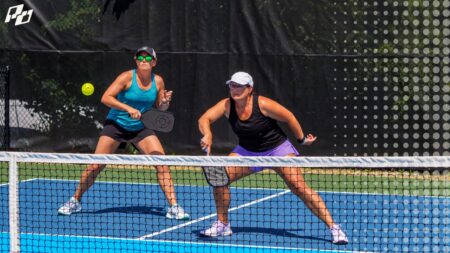
If you’re over 50 and love pickleball, chances are your body occasionally feels like it should file a formal complaint.
Knees? Barking.
Back? Tight.
Plantar fascia? Don’t even talk about it.
Hips? Negotiating early retirement.
And if you’ve ever wondered, “How can sprinting around a tiny court beat me up more than tennis, jogging, or the gym?” — you’re not alone. Thousands of experienced, fit older athletes are saying the same thing.
But here’s the twist:
It’s not your age causing most pickleball injuries. It’s your movement pattern.
And once you understand what’s going wrong, you can dramatically reduce pain without playing slower, weaker, or more cautiously.
Let’s break down the #1 movement mistake older rec players make — and exactly how to fix it.
The Big Mistake: Playing “Emergency Pickleball” Instead of “Anticipation Pickleball”
Rec players over 50 don’t get hurt because they’re out of shape. They get hurt because they’re late.
Late to the ball.
Late to the bounce.
Late to the kitchen.
Late to see what’s coming next.
And when you’re late, your body has exactly two options:
(1) Make a violent, last-second lunge
Think:
- panic steps
- full-stretch reaches
- abrupt braking
- sudden direction changes
- awkward torso twists
These motions hit your:
- knees
- plantar fascia
- lower back
- Achilles
…harder than any other sport.
(2) Or let the ball go and feel like you “should have gotten it”
…so you don’t let the next one go.
You chase it.
Your brain says “GO!”
Your body says “Are you sure?”
And boom — calf pull, hamstring tweak, or knee twist.
The real issue isn’t effort. It’s timing.
Most rec players react after the ball leaves their opponent’s paddle.
But the best players move BEFORE contact — which makes their game look slower, calmer, and way less injury-prone.
Why Older Players Fall Into This Trap
Pickleball is tricky because it looks like a slower, easier sport… right until the ball starts flying at you like a ping-pong cannon.
And because the court is small, most players think:
“I can get ANY ball!”
Which leads to:
- overcommitting
- chasing balls outside their safe range
- sprinting from bad positions
- trying to retrieve impossible shots
- “hero-ball footwork”
The truth?
Good players move less, not more. Better anticipation → less chaos → less wear and tear.
The Fix: Move One Second Sooner (Not Faster)
If you want to cut pickleball injuries in half, here’s the secret:
**Improve your anticipation.
Not your speed.**
Anticipation is the “hidden fitness” of aging athletes — it makes you feel younger without training harder.
Here’s how to build it.
1. Watch the Paddle, Not the Ball
You know how in baseball, the outfielder reads the swing?
Same idea.
Before the ball even leaves your opponent’s paddle, you can see:
- where their paddle is facing
- how far back their backswing is
- whether they’re jammed, stretched, or balanced
- their shoulder and chest angle
- their grip tightness
- the height of the incoming ball
These clues tell you exactly where the ball is going before it goes there.
What this leads to:
- earlier first step
- smoother movement
- no desperate lunges
This ONE change reduces joint load instantly.
2. Stop Drifting Back — Get to the Kitchen and Stay There
Most older rec players stay 2–3 feet behind the kitchen line and don’t realize it.
This is a disaster for joints.
Why?
- You have farther to reach
- You get jammed by fastballs
- You lunge for drops
- You hit overheads from the wrong place
- You sprint forward from too deep
The rule:
Your toes should be inches from the line unless you’re retreating on purpose.
This one change alone reduces:
- calf strains
- meniscus irritation
- plantar fasciitis flareups
- lower-back torque
because you remove 80% of your desperate forward lunges.
3. Pre-Move Before Your Opponent Contacts the Ball
This is the magic move pros use that rec players don’t.
The “Half-Step Load”
Right before your opponent hits the ball:
- soften your knees
- rise onto the balls of your feet
- take a tiny split step or micro-bounce
This prepares your muscles and joints for motion before the ball direction is chosen.
Biomechanically, this reduces:
- reaction time
- peak braking force
- twisting torque
- knee strain
- Achilles load
Think of it as: starting the car before hitting the gas.
4. Let the Unreachable Balls Go (Yes, Really)
Here’s the truth nobody likes admitting:
Many injuries happen trying to win points that don’t matter.
If you’re sprinting corner-to-corner for a ball you have no business touching, your body pays the price.
This doesn’t make you weak. It makes you smart.
Elite older players have a rule:
“If the setup is bad, the chase is dumb.”
What counts is your next rally, not the hero save.
5. Replace “Chasing” With “Shifting”
Instead of running to balls late, learn to shift early.
Use these three predictive zones:
1) Crosscourt dink → most likely crosscourt back
Shift one step left or right BEFORE they swing.
2) Attack through the middle → expect a fast block back middle
Shift your paddle and feet to center.
3) Opponent is jammed or stretched → expect a high, weak ball
Shift INTO the court instead of waiting flat-footed.
These micro-shifts prevent:
- lunges
- sudden braking
- last-second pivots
- awkward reaches
Your joints will think they’ve aged backwards five years.
6. Choose the “Safe Shot” Over the “Hard Shot”
Older players often get hurt hitting aggressive shots from bad positions.
Instead:
- reset when off-balance
- soften the ball when stretched
- block instead of countering from behind the line
- drop instead of driving when late
- lob only from a stable base
This isn’t passive.
It’s smart.
And it saves your hips, back, and knees.
7. Build “Prehabilitation” Into Your Weekly Routine
You don’t need a gym membership or an hour a day.
Here are the three “injury shields” older players swear by:
a) 5-Minute Dynamic Warmup
- calf raises
- ankle circles
- hip openers
- torso rotations
- mini squat → rise → mini squat
Or if you’re more of a follow-along person, check out Pickleball Union’s strength coach Brady Burman-Magday. He’s got a super solid 7-minute warm-up that feels easy, wakes everything up, and seriously cuts down injury risk.:
b) 5-Minute Post-Game Mobility
- calves
- hamstrings
- glutes
- thoracic spine
- plantar fascia
c) Strength Work 2–3 Times a Week
Focus on:
- glutes
- quads
- core
- shoulders
- calves
Even resistance bands are enough.
The Bottom Line
You don’t need to slow down.
You don’t need to stop playing.
You don’t need to “act your age.”
You simply need to:
Move sooner, not faster.
Anticipate earlier, not more aggressively.
Position smarter, not harder.
Pickleball becomes dramatically less painful when you stop playing “emergency pickleball” and start playing “anticipation pickleball.”
Your body will feel better. Your game will look cleaner. And you’ll play longer — with fewer aches, fewer injuries, and a whole lot more joy.