After pickleball, older players should cool down with a few minutes of easy movement, gentle mobility, fluids, and food after longer sessions. Avoid automatically icing normal stiffness. The goal is to gradually recover, restore movement, replace fluids and energy, and notice any pain before the next session.
Most pickleball players over 50 finish a session the same way: last point. Paddle in the bag. Straight to the car.
Then the next morning, the calves feel tight, the hips feel stiff, the shoulder reminds you about every overhead you hit, and getting out of bed feels noticeably harder than it did the day before.
That does not mean you need a 30-minute recovery routine.
But for older recreational players, going from repeated lunges, pivots, overheads, and short sprints to complete stillness is not always the smartest transition.
The better approach is simple:
Keep moving briefly, let your heart rate come down gradually, restore some comfortable range of motion, rehydrate, and check how your body actually feels before you leave the court.
The evidence is more nuanced than it may seem. A cool-down does not magically prevent soreness or injuries, and post-exercise stretching has not consistently been shown to reduce delayed-onset muscle soreness.
But a gradual cool-down can help your cardiovascular system settle, maintain mobility, and give older players a smoother transition from hard play to rest.
First: Don’t Stop Cold
This is the part I would prioritize most.
After a hard game, especially in heat or after a long session, spend about 3–5 minutes walking slowly instead of immediately sitting down.
Why?
During play, your heart rate, breathing, and blood flow are elevated. Cooling down gradually allows those systems to move back toward resting levels more progressively. The National Institute on Aging specifically recommends cooling down after exercise so heart rate and breathing decrease gradually, and Mayo Clinic makes the same point about blood pressure and cardiovascular recovery.
For older players, that matters more than trying to “flush lactic acid,” which is an outdated explanation.
A good post-game walk can simply be:
- one slow lap around the court complex
- walking while you pack your gear
- gentle side-to-side movement
- easy arm swings while breathing normally
Cue
Don’t finish at 100% effort and go straight to 0%.
What a Cool-Down Can—and Cannot—Do
This is where we need to be accurate.
A major review of active cool-downs found that they can help blood lactate clear faster and may speed cardiovascular and respiratory recovery, but they do not reliably reduce next-day soreness, prevent injury, or improve next-day performance.
That means your cool-down should not be sold as a miracle recovery tool. Its real value is more practical:
- gradual cardiovascular recovery
- keeping stiff joints moving while tissues are still warm
- restoring comfortable range of motion
- noticing pain or asymmetry before you sit for 30 minutes in the car
- creating a consistent recovery habit
For a 55-, 65-, or 75-year-old recreational player, that is still useful.
Stretch After You Move—Not Instead of Moving
A lot of players finish, stand still, then immediately start stretching. I would reverse that order.
Walk first.
Then stretch.
Static stretching is generally more appropriate after activity than before explosive play, and the American Orthopaedic Society for Sports Medicine notes that older athletes often experience reduced flexibility with age and may benefit from gentle stretching to maintain mobility.
But stretching should be comfortable. You are not trying to force new flexibility at the end of a tiring session.
Think restore, not maximize.
A good post-pickleball stretch should feel like:
“That area is opening back up.”
Not:
“I can almost touch the floor if I push harder.”
The Two Areas I’d Prioritize First
If you only have a few minutes, focus on the areas pickleball repeatedly loads.
1. Calves, hips, and hamstrings
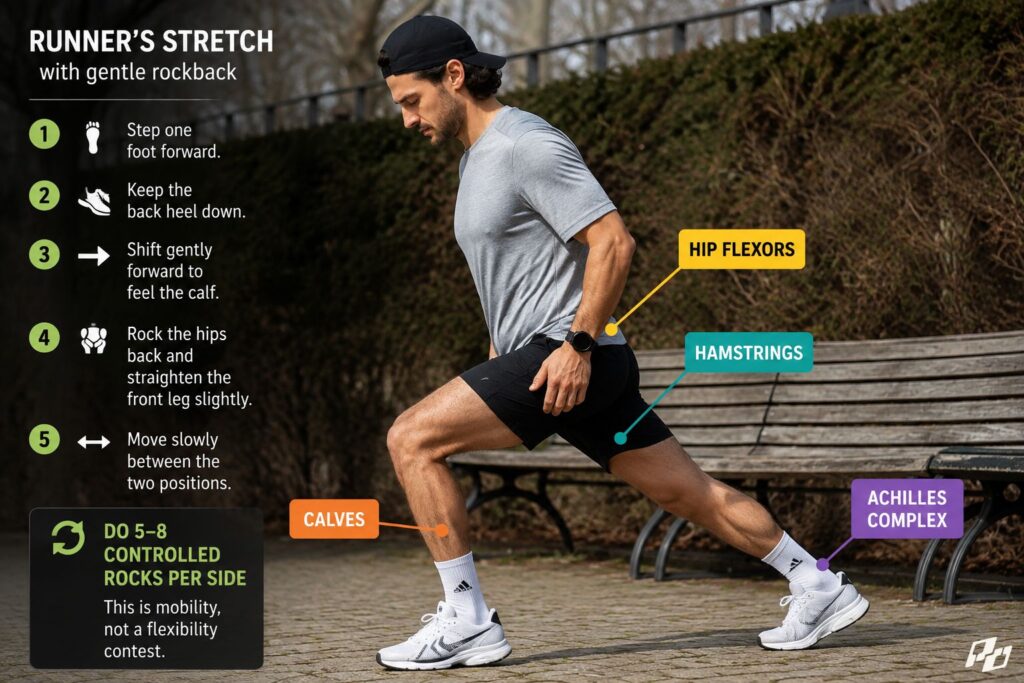
Pickleball involves constant pushing, stopping, lunging, and recovering. That puts repeated demand on the calves, Achilles complex, hamstrings, and hip flexors.
A simple runner’s stretch with a gentle rockback works well because it moves through several of those tissues rather than isolating one muscle.
Try:
- Step one foot forward.
- Keep the back heel down.
- Shift gently forward to feel the calf.
- Then rock the hips backward and straighten the front leg slightly.
- Move slowly between the two positions.
Do 5–8 controlled rocks per side rather than forcing one long hold.
This is mobility, not a flexibility contest.
2. Shoulders and upper back
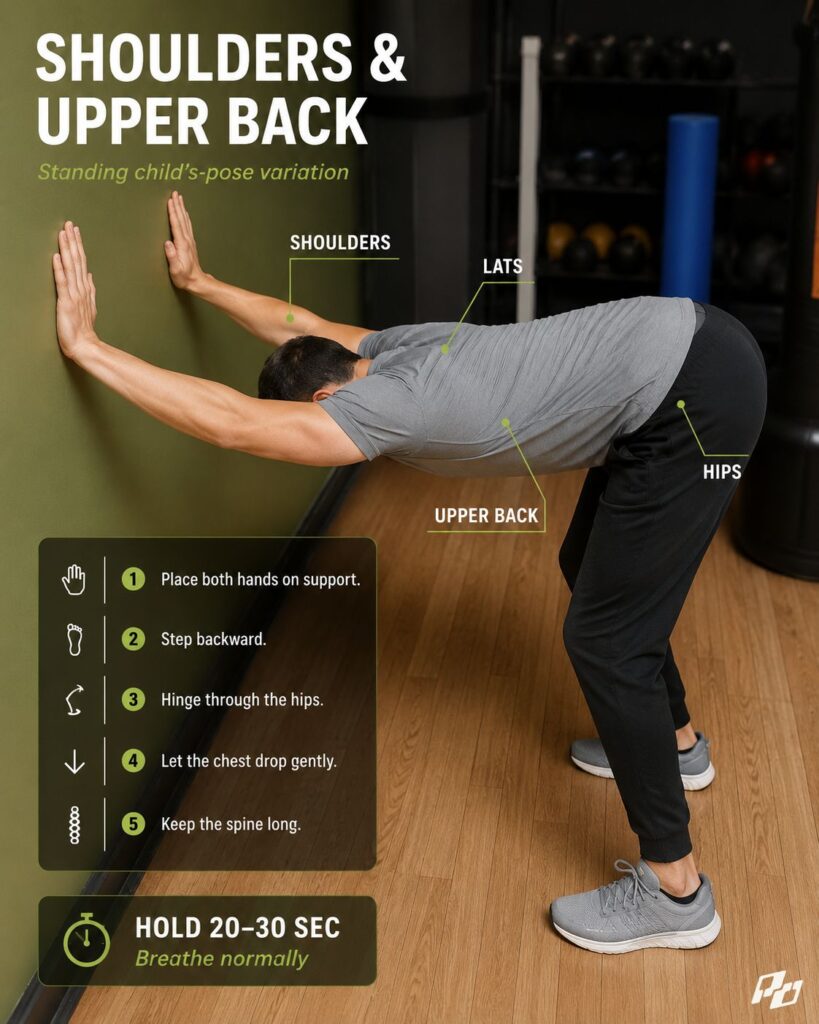
Serves, drives, volleys, and overheads all involve the shoulder and thoracic spine.A standing child’s-pose variation is simple:
- Place both hands on a fence, bench, or net post.
- Step backward.
- Hinge through the hips.
- Let the chest drop gently between the arms.
- Keep the spine long rather than collapsing.
Hold for about 20–30 seconds, breathing normally.
This opens the shoulders, lats, upper back, and hips at the same time.
Add One Rotation Drill
This is the part I think many older players miss. Pickleball involves a lot of rotation:
- serves
- forehands
- backhands
- overheads
- reaching dinks
After playing, the hips and upper back may feel locked into whatever movement pattern dominated the session.
Add a gentle standing rotation:
- feet shoulder-width apart
- hands across the chest
- rotate slowly left and right
- keep the movement comfortable
- do 5–8 each direction.
Do not crank the lower back. Think about rotating through the hips and upper torso.
This takes less than a minute and often feels better than another aggressive hamstring stretch.
What About Foam Rolling?
Useful if you like it. Necessary? No.
Foam rolling can temporarily improve range of motion and may make some players feel less stiff, but it is not required to recover well. If you use one, keep it brief and target areas that feel loaded:
- calves
- quads
- glutes
- upper back
One to two minutes per area is plenty. Do not aggressively roll directly over painful joints or injured tissue.
For most recreational players, walking plus simple mobility gives you most of what you need immediately after play.
Rehydrate Before You Drive Home
This sounds basic, but older players can underestimate fluid loss—especially during long doubles sessions or hot-weather play.
You may not feel drenched in sweat, yet pickleball still combines heat exposure, repeated movement, and long periods on court.
A practical starting guide:
| When | How Much | What to Drink |
|---|---|---|
| 2–3 hours before play | About 16–20 oz (475–600 mL) | Water; sports drink if you know you’ll be playing long or in heat |
| 10–20 minutes before | About 7–10 oz (200–300 mL) | Water |
| During play | Roughly 7–10 oz (200–300 mL) every 10–20 minutes | Water for shorter/easier sessions; electrolyte drink for long, hot, or very sweaty play |
| After play | Replace what you lost | Water plus sodium/electrolytes if sweat loss was substantial |
These ranges line up with National Athletic Trainers’ Association guidance, which also stresses that the best plan should be adjusted to your sweat rate and conditions.
For a typical 60–90 minute recreational session in mild weather, water is usually enough. Consider an electrolyte-containing drink when:
- you play for 90 minutes or longer
- conditions are hot or humid
- you are a heavy or salty sweater
- your clothes are noticeably soaked
- you have another session later the same day
The important caution is not to force huge amounts of plain water. Excessive fluid intake can also be dangerous because it can dilute blood sodium. Drink enough to replace losses, not simply as much as possible.
If you have heart, kidney, or other conditions that affect fluid or sodium intake, follow your clinician’s guidance rather than generic sports-hydration targets.
Eat Something if the Session Was Long
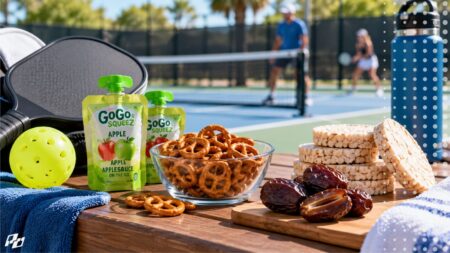
If you played casually for 30–45 minutes, you probably do not need a special recovery meal. But after 90 minutes to several hours of harder play, getting some protein and carbohydrate afterward can support muscle repair and replenish energy stores.
You do not need a complicated recovery shake. Regular food works.
| When | What to Aim For | Easy Options |
|---|---|---|
| Within 30–60 min | Protein + carbs if hungry or another meal is several hours away | Greek yogurt + fruit, milk + banana |
| Within 1–2 hours | Balanced meal with protein + carbohydrate | Eggs + toast, turkey sandwich, chicken + rice |
| Playing again soon | Prioritize carbs + protein + fluids | Yogurt + banana, sandwich + fruit |
| Short/easy session | Normal next meal is usually enough | No special recovery food needed |
For older players, protein is particularly worth paying attention to because aging muscle responds less strongly to smaller protein doses. A practical target after a demanding session is roughly 20–40 grams of high-quality protein, depending on body size and overall diet.
The goal is simple: replace what a long session took out of you so you are ready to play again—not turn recovery into another complicated training program.
Use the Cool-Down as a Body Check
This is one of the most valuable reasons not to rush directly to the car. While walking and moving, ask:
- Is one calf unusually sore?
- Did the Achilles feel tight during play?
- Does one knee hurt when I straighten it?
- Is my shoulder painful overhead?
- Does anything feel sharp rather than simply tired?
- Am I limping?
That information matters.
If you sit immediately after playing, everything stiffens and you may not notice a meaningful problem until later.
A few minutes of movement gives you a better sense of whether the body is just tired or whether something needs attention.
Persistent or worsening pain is not something to stretch harder through.
Don’t Automatically Ice Everything
Ice can be useful, but it should solve a specific problem—not become your automatic post-pickleball routine.
Use this simple rule:
- Normal muscle fatigue or mild stiffness: keep moving gently, hydrate, eat, and rest.
- New swelling or a clearly irritated area: a short period of icing may help with pain and swelling.
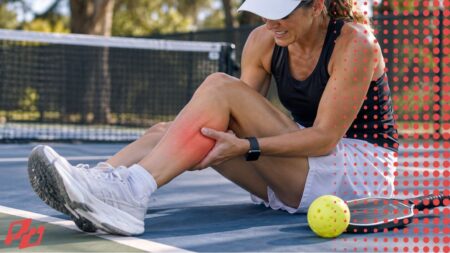
- Sharp pain, major swelling, weakness, or loss of normal movement: stop playing and consider medical evaluation.
- Soreness that keeps worsening or does not improve: don’t keep masking it with ice—get it checked.
If you do use ice, keep it brief—typically 10–20 minutes at a time—and avoid placing it directly on bare skin.
The bigger point is that ice is mainly a pain-management tool. It is not necessary after every hard session, and routine icing does not automatically speed recovery.
For ordinary post-play stiffness, the better first move is usually: walk, move gently, rehydrate, refuel, and see how the area feels over the next several hours.
If pain changes the way you walk, swing, or move, that is a stronger signal to stop and reassess rather than simply icing it and playing again.
A 6-Minute Post-Pickleball Routine
You do not need more than this:
| Time | What to Do |
|---|---|
| 0–3 min | Easy walk, gradually slowing your pace |
| 3–4 min | Runner’s stretch with rockback |
| 4–5 min | Standing child’s pose + shoulder opening |
| 5–6 min | Gentle standing rotation + deep breathing |
Then: Drink. Eat if needed. Check for pain. Go home.
That is enough for most recreational sessions.
What I Wouldn’t Promise
I would not tell you that six minutes of stretching will stop tomorrow’s soreness. The evidence does not support that.
I would not tell you a cool-down guarantees fewer injuries. It does not.
And I would not tell you that you need an elaborate recovery protocol just because you are over 50. You probably don’t.
The better reason to cool down is simpler:
You have just asked your body to sprint, stop, rotate, reach, lunge, and swing for an hour or more.
Give it a few minutes to transition back to normal before you fold yourself into a car seat.
For older recreational players, the habit is less about “recovery hacks” and more about staying mobile, noticing problems early, and making the next session easier to come back to.
Your warm-up gets you ready to play. Your cool-down helps you leave the court like someone who intends to keep playing for years.